A bird bath can be one of the kindest things you offer backyard birds, but only when the water stays fresh enough to trust. Many beginners picture cleaning as a long outdoor chore, which is exactly why the job gets postponed until the basin looks green, slimy, and much harder than it needed to be.
The good news is that a calm bird bath cleaning routine does not have to take over your morning. When you keep a brush nearby and follow the same short order each time, most cleanings become a quick empty-scrub-rinse-refill habit instead of a rescue mission.
Cornell's bird bath guidance says birds need a dependable supply of fresh, clean water, and Audubon notes that routine rinsing and scrubbing help keep a bath inviting instead of risky. That means the best routine is usually the one you can repeat without dread.
Why a Short Bird Bath Cleaning Routine Works So Well
Bird baths get dirty in ordinary, predictable ways. Leaves blow in, birds splash mud onto the rim, droppings collect, and warm weather helps algae form a slippery film. None of that means you are failing. It simply means outdoor water needs a rhythm.
The Centers for Disease Control and Prevention advises people to empty and scrub standing-water containers, including bird baths, once a week to remove mosquito eggs from the inner walls. In everyday birding terms, that weekly scrub gives you a clear baseline, while lighter refills in between keep things from getting out of hand.
Small routines prevent bigger messes
If you wait until the basin smells stale or feels slimy, the job becomes heavier and much less appealing. A ten-minute routine works because it catches the dirt early.
Birds notice fresh water quickly
Clean water is not just prettier from the kitchen window. It is also more likely to stay useful for drinking and bathing during warm, busy backyard days.
Keep a Tiny Cleaning Kit Near the Bath
The easiest routine is the one that starts without hunting for supplies. A dedicated stiff brush, lightweight gloves, and a small bucket or watering can are usually enough. If your bath needs more than that every time, the setup may be more complicated than it needs to be.
If you are still working out the best setup, BirdPeep's guide to choosing an easy-clean bird bath can help you simplify the basin itself before you worry about technique. A smooth, reachable bath makes every later cleaning easier.
- One dedicated brush: keep it only for the bird bath, never for kitchen or pet use.
- Light gloves: useful when the rim is muddy or the water needs dumping away from a walkway.
- A nearby water source: a small hose, watering can, or bucket keeps refilling simple.
- A regular place to dump old water: aim it onto soil or a planting area rather than creating a slippery path.
The 10-Minute Empty, Scrub, Rinse, Refill Routine
This is the heart of the routine. You are not trying to make the bath look brand-new every single time. You are giving birds clean water again before grime settles in deeply.
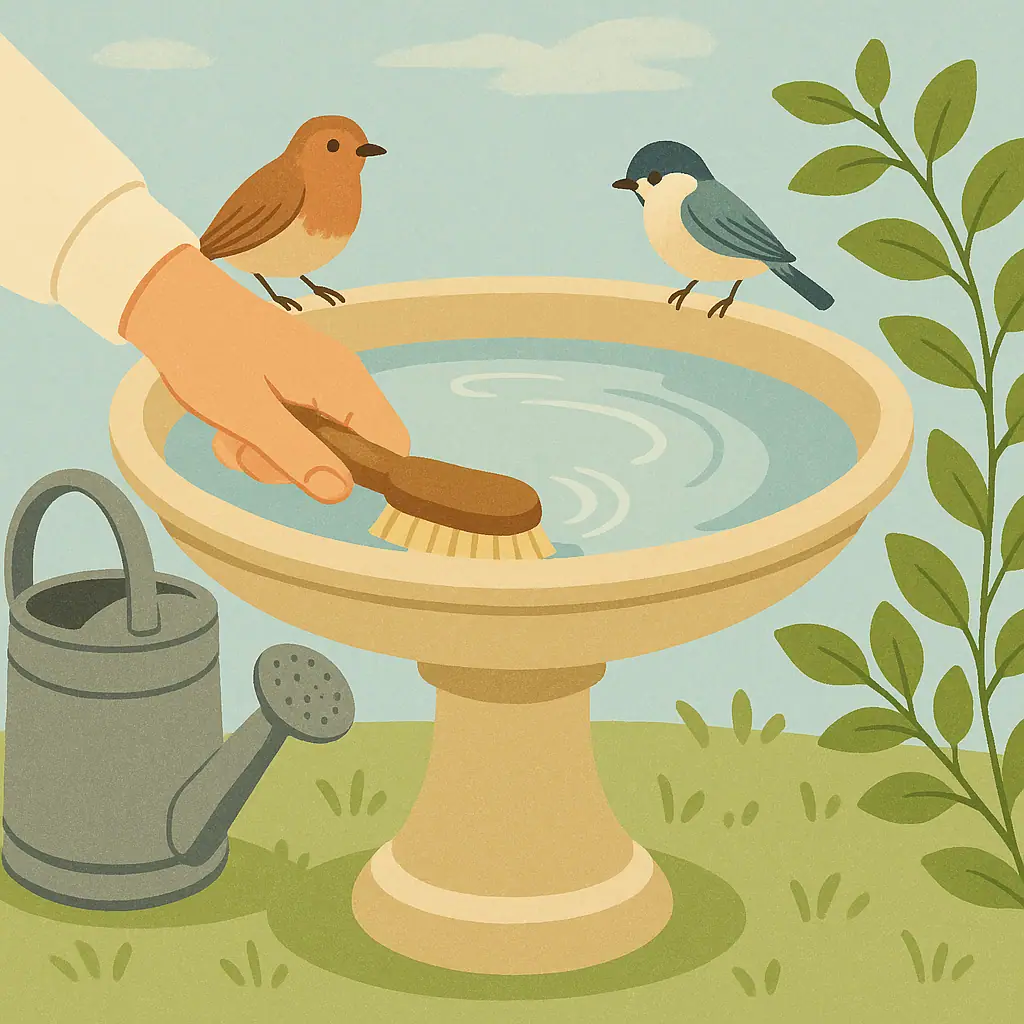
- Empty the old water: tip it out completely so you can see what is collecting on the bottom and sides.
- Brush away loosened debris: leaves, droppings, and seed hulls usually come off quickly when they are still fresh.
- Scrub the basin walls and floor: focus on the water line and any slippery green patches.
- Rinse thoroughly: make sure loosened dirt and any cleaning residue are fully gone.
- Refill with fresh water: keep the depth friendly for small birds and check that the bath sits steady again.
Audubon's cleaning advice recommends a simple vinegar-and-water scrub rather than synthetic soaps when a bath needs extra help, while still emphasizing a careful rinse afterward. That keeps the process practical without turning it into a chemistry project.
When plain scrubbing is enough
Many routine cleanings need nothing more than water, a brush, and a quick rinse. If the basin was only slightly dirty, do not overcomplicate it.
When to use the vinegar step
If the bath looks scummy, has a stronger odor, or shows stubborn film that brushing alone is not removing, a mild vinegar-based scrub can help. Rinse very well before refilling.
How Often to Do the Quick Version
A short routine works best when it is tied to what the weather is doing. In hot weather, water evaporates faster and can get dirty sooner. During cooler stretches, the bath may stay pleasant longer, but it still benefits from regular attention.
Audubon suggests refilling every other day to keep water from getting buggy, and the CDC's once-a-week empty-and-scrub advice gives you a useful minimum standard for standing water. Together, those two ideas make an easy plan: refill sooner when the bath looks tired, and do a true scrub at least weekly.
If you also use water movement, BirdPeep's article on adding moving water safely explains how bubblers and drippers still need the same cleaning rhythm. Motion can help, but it does not replace maintenance.
- Hot weather: check daily and expect more frequent refills.
- Heavy bird traffic: clean sooner if multiple birds are bathing often.
- After wind or rain: inspect for leaves, mud, or cloudy water.
- At minimum: do the full empty-and-scrub step once each week.
Signs It Is Time for a Deeper Cleaning
Most sessions stay short, but sometimes the bath tells you it needs more attention. The trick is noticing those signs before the whole routine feels discouraging.
If the inside feels slick after a normal scrub, if you see algae returning very quickly, or if debris is collecting in hard-to-reach corners, that is your cue to slow down and do a more thorough pass. A bath that is awkward to reach or overly decorative may also be creating extra work that has nothing to do with the birds.
Watch for texture changes
A basin that still feels slippery after rinsing is not ready yet. Go back over the bottom and water line until the surface feels cleaner under the brush.
Watch for repeat buildup in the same spots
If one edge always traps debris, move nearby feeders, trim the source of falling leaves, or change the bath position slightly so the routine stays manageable.
Pros and Cons of a 10-Minute Routine
It is easy to repeat
A short routine fits real life better than waiting for the perfect free afternoon.
It keeps grime from taking over
Regular quick scrubs prevent the thick buildup that makes cleaning feel unpleasant later.
It supports fresher water for birds
Birds benefit when the bath gets reset before algae, insects, and debris settle in deeply.
You still need a weekly scrub
Quick rinses help, but they do not replace the full empty-and-scrub step the CDC recommends for standing water.
Hard-to-clean baths stay hard to clean
If the basin is too heavy, too rough, or too decorative, even a good routine can feel harder than it should.
A Simple Checklist You Can Repeat Without Thinking
- Brush nearby and ready: if the tool is missing, the routine becomes easier to skip.
- Old water emptied fully: do not just top off cloudy water.
- Slippery film removed: pay attention to the water line and the center basin.
- Rinse finished well: no loosened grime or cleaner left behind.
- Fresh water added: leave the bath shallow enough for small birds to use confidently.
- Weekly scrub remembered: quick refills between deep cleans are helpful, not a substitute.
Frequently Asked Questions
How often should I clean a bird bath if birds use it every day?
Refresh it whenever the water looks tired, and plan on a true empty-and-scrub at least weekly. In hot weather or heavy use, you may clean sooner.
Can I just keep topping off the water?
No. Topping off alone leaves old debris and film behind. Emptying first is what resets the bath properly.
What should I use if plain water is not enough?
A mild vinegar-and-water scrub can help with stubborn film, followed by a thorough rinse before birds return.
What if my bird bath keeps getting dirty too fast?
Look for the cause. Falling leaves, feeder mess, strong sun, or a hard-to-clean basin can all shorten the clean-water window and make the routine feel harder.
Final Thoughts
A bird bath cleaning routine works best when it feels small enough to begin right away. Empty, scrub, rinse, refill, and move on with your day. That simple pattern is often all it takes to keep the bath useful and welcoming.
The point is not perfection. It is making clean water easy to give again tomorrow, and next week, without turning a peaceful backyard habit into a tiring project.