If you've ever set up a beautiful feeding station only to watch it get taken over by starlings or house sparrows, you're not alone. These birds are clever, social, and persistent — and managing them can feel like a frustrating battle. The good news is that you don't have to choose between a wild, out-of-control feeding area and an empty yard. With a few thoughtful strategies, you can encourage the birds you love while gently discouraging the ones causing problems.
What Are "Pest Birds" in the Backyard?
The term "pest bird" doesn't mean a bird is bad. It simply means certain species have adapted so well to human environments that they can outcompete native birds, monopolize feeders, and take over nesting sites. In North American backyards, the two most common offenders are the European Starling and the House Sparrow — both introduced species that are not protected by the Migratory Bird Treaty Act.
Why These Two Species Stand Out
Starlings travel in large, noisy flocks and can empty a suet feeder in minutes. House sparrows aggressively claim nest boxes meant for bluebirds or chickadees and displace native cavity-nesting birds. Neither species migrates, so the pressure is year-round. Understanding this helps you respond with calm, consistent strategies rather than frustration.
Other Common Backyard Intruders
Depending on your region, you may also encounter grackles, brown-headed cowbirds, or pigeons crowding your feeders. The same gentle management principles apply to all of these species.
🌿 Why Humane Management Matters
The goal of humane pest bird management is never elimination — it's balance. You're creating an environment where native birds have a fair chance at food, water, and nesting habitat. This matters for the health of your local ecosystem and for the enjoyment you get from watching a diverse variety of species.
Humane strategies also protect you legally. Using toxic deterrents or harming native birds can violate federal and state wildlife protection laws. The approaches below are safe, effective, and entirely legal.
🛠️ Humane Strategies That Actually Work
There is no single magic fix, but combining a few of these methods creates a real and lasting difference at your feeding station.
Feed More Selectively
The easiest first step is changing what you offer. Starlings and house sparrows love millet, cracked corn, and bread crumbs. By switching to seeds they dislike, you can dramatically reduce their visits:
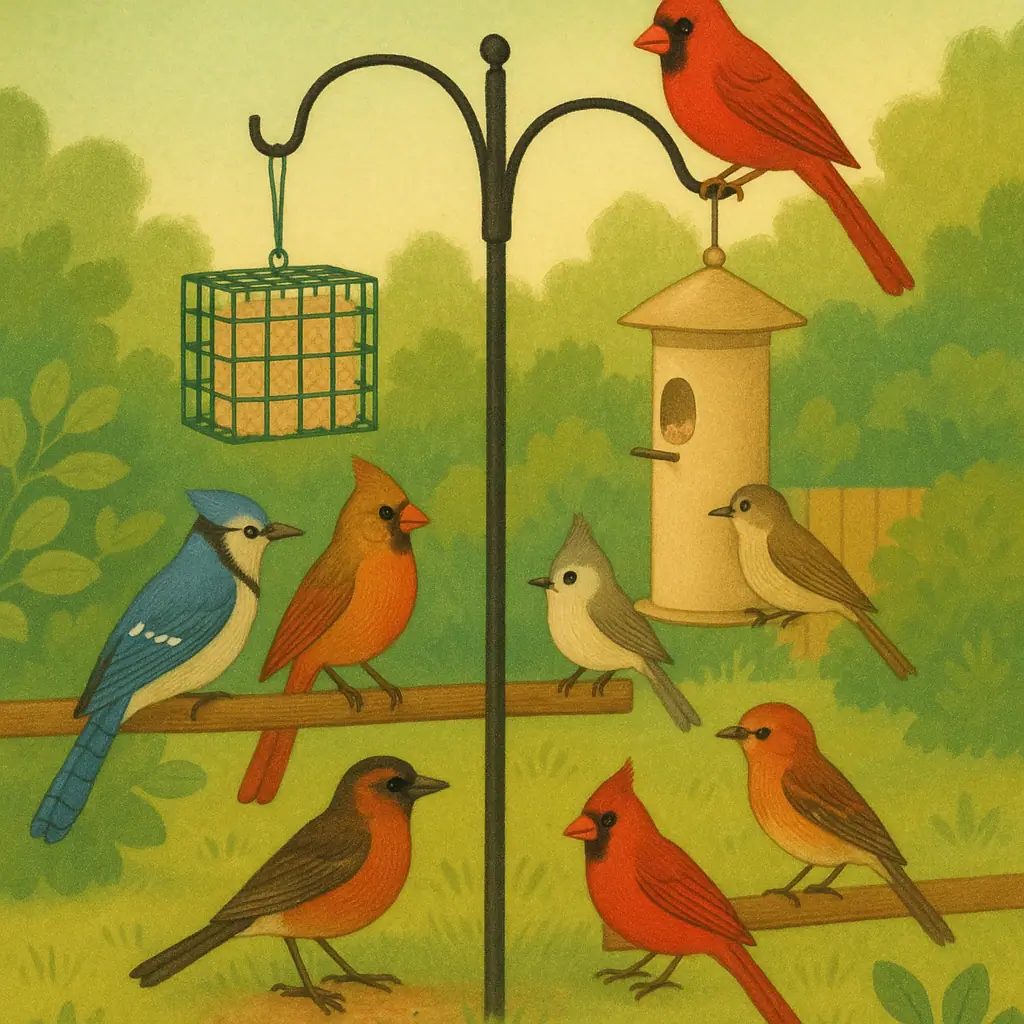
- Safflower seeds: Cardinals love them; starlings generally avoid them.
- Nyjer (thistle) seeds: Goldfinches adore them; most pest birds ignore them.
- Whole peanuts in shell: Woodpeckers and jays prefer these while starlings struggle to handle them.
- Cylindrical feeders with no tray: Starlings need a flat surface to perch comfortably — remove it.
Use Smart Feeder Designs
Cage feeders with ¾-inch openings allow small songbirds through while keeping starlings and large sparrows out. Weight-activated feeders close under the pressure of heavier birds, protecting food for lighter native species. These are widely available and work extremely well in most backyards.
Manage Nesting Boxes Actively
If you have nest boxes, check them weekly during spring. House sparrows build messy nests quickly. Removing house sparrow nests before eggs are laid is entirely legal and prevents them from displacing bluebirds, wrens, or chickadees that arrive later. Pole-mounted baffles and predator guards add an extra layer of protection.
- Entry hole size matters: A 1⅛-inch hole admits chickadees and wrens but blocks house sparrows.
- Distance from feeders: Place nest boxes at least 50 feet from feeders to reduce competition pressure.
- Monitor weekly: Consistent attention makes the biggest difference during the spring nesting season.
⚖️ Pros and Cons of Managing Pest Birds
More native bird diversity
When you reduce competition, you'll see a wider variety of species at your feeders and nest boxes throughout the year.
More cost-effective feeding
Pest birds can consume enormous amounts of food. Selective feeding stretches your seed budget without reducing the experience.
Healthier backyard ecosystem
Native cavity-nesting birds like bluebirds and wrens thrive when nest boxes are protected from invasive species.
Requires consistency
These strategies work over time, not overnight. A week of effort makes less difference than a full season of consistent application.
May involve some trial and error
What works in one yard may need adjustment in another. Bird behavior varies by region and season, so stay flexible.
❓ Frequently Asked Questions
Is it legal to remove house sparrow nests?
Yes, in the United States. House sparrows and European starlings are not protected by the Migratory Bird Treaty Act, so nest removal is legal and commonly recommended by wildlife and conservation organizations.
Will taking down feeders solve the problem?
Temporarily removing feeders for two to three weeks can break an established pattern and discourage persistent flocks. It's one of the fastest short-term solutions, though native birds will also be affected during that period.
Do decoy owls or hawks actually work?
Initially, yes. But most birds learn quickly that a stationary predator poses no real threat. If you use decoys, move them every two to three days to maintain any deterrent effect.
Can I still attract bluebirds if sparrows dominate my yard?
Yes, with effort. Use approved bluebird nest boxes with proper entrance holes mounted on baffled poles, and monitor weekly from March through July. Patience and persistence make a real difference.
Final Thoughts 🌻
Managing pest birds isn't about creating a perfectly curated backyard — it's about giving native species a fair chance. Think of it as gentle stewardship rather than control. Small, consistent choices about what you feed, how your feeders are designed, and how you maintain nest boxes add up to a meaningful difference over a season.
The more balanced your backyard becomes, the more rewarding your birdwatching will be. A yard full of cardinals, chickadees, and bluebirds is worth the patient effort it takes to get there.