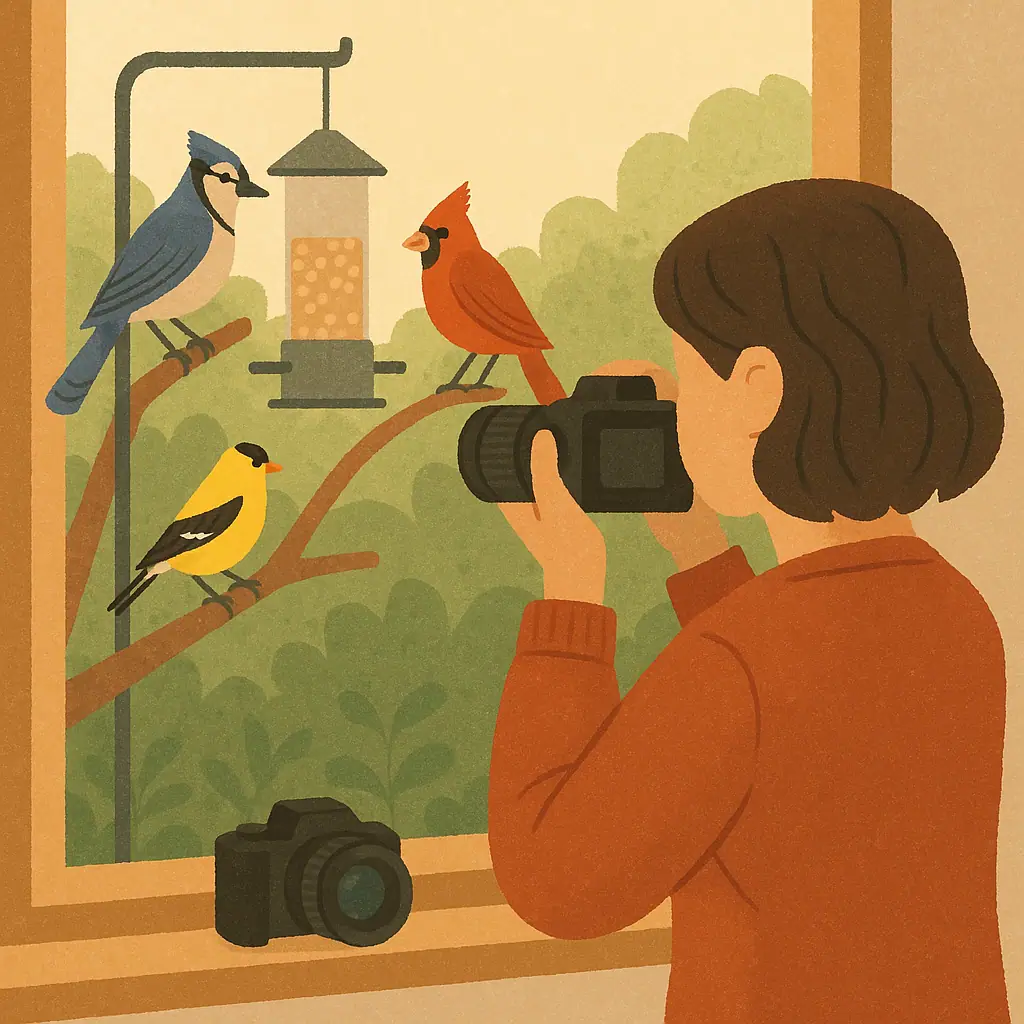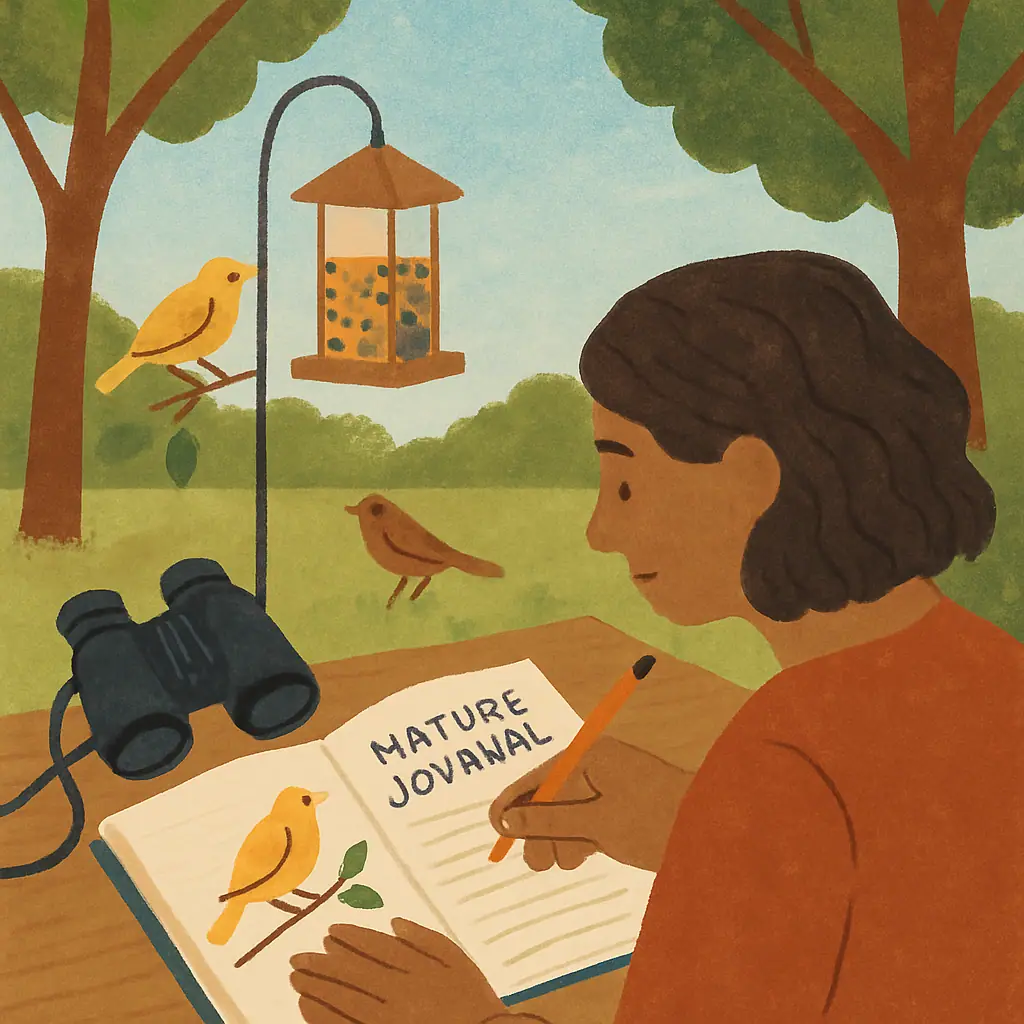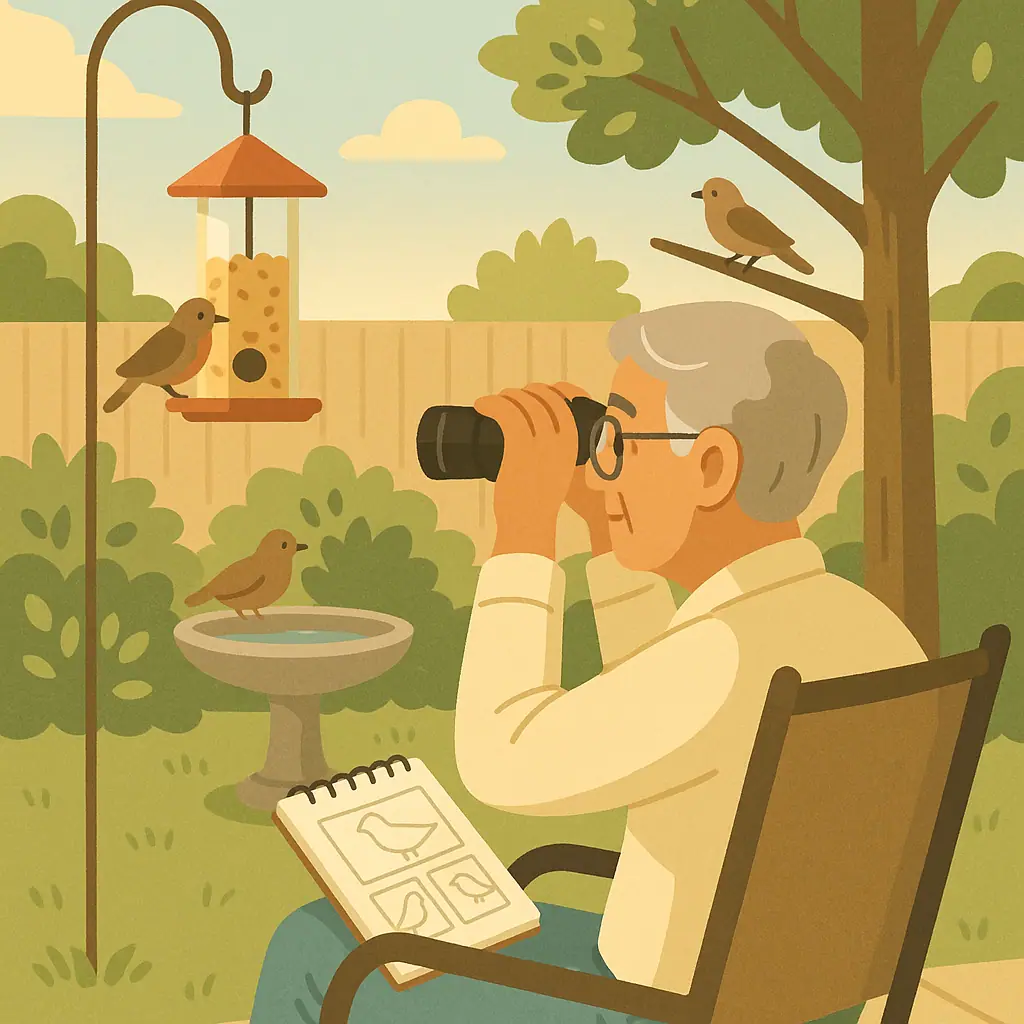
A personal backyard bird map is not a formal science project or a perfect drawing. It is simply your own way of noticing where birds land, feed, hide, sing, and pause through the day. Once you start paying attention to those patterns, your yard begins to feel less random and much easier to understand.
That can be especially helpful if you are still learning the hobby. Instead of trying to identify every bird instantly, you can first learn the places that matter most. Which branch acts like a waiting room before the feeder? Which shrub feels safest after a sudden noise? Which corner becomes lively after rain or just before sunset?
Why a Backyard Bird Map Helps So Much
Many beginners look only at the bird itself and miss the setting around it. A map slows you down in a helpful way. It trains you to notice the fence post a bird always uses before dropping to the seed, the tree limb where alarm calls start, or the quiet path birds take when they leave the bath.
That kind of note-taking fits naturally with BirdPeep's guide to starting a nature journal. A journal helps you remember what happened on a certain day, while a backyard bird map helps you understand where it happened and why that spot may matter.
You stop feeling overwhelmed
Birdwatching gets easier when you break the yard into a few familiar zones. Instead of scanning everything at once, you begin to think in smaller pieces: feeder area, water area, shrub shelter, window edge, tall tree, open lawn, and patio line.
You notice behavior, not just color
A bird that flicks into the same evergreen after every visit is telling you something about comfort and escape cover. If you have already enjoyed BirdPeep's article on reading bird body language, a map gives you a place-based way to connect those signals to real corners of your yard.
Start With a Simple Yard Sketch
You do not need graph paper, measurements, or software. Stand where you usually watch birds and draw only the largest features first. A rectangle for the yard, a square for the patio, a circle for a tree canopy, and a few marks for feeders or baths is plenty.
Keep the sketch practical rather than pretty. The whole point is to create a visual reminder of where birds actually spend time, not to make something frame-worthy.
- Mark the basics: Add fences, shrubs, trees, feeders, the bird bath, windows, patio edges, and any bench or chair where you usually sit.
- Name broad zones: Use plain labels in your own notes such as shady corner, open lawn, or back gate tree.
- Leave empty space: You will want room to add arrows, dots, and quick notes later.
- Use one page per season if you like: Spring, summer, fall, and winter can look surprisingly different.
Choose Five Observation Points Instead of Watching Everywhere
The easiest bird map is built from repeated attention, not constant attention. Pick five spots you can check in a few minutes each day. These become your anchor points.
For example, you might choose the feeder pole, the bird bath rim, a favorite singing branch, the densest shrub, and the window-facing tree. Watching these points regularly makes patterns visible much faster than wandering your eyes across the whole yard.
Look for perches, pathways, and safe cover
Some birds do not land directly at food or water. They pause first. A nearby branch, fence rail, or shepherd's hook may act like a staging area. Mark that on your map, because it often explains why one feeder location works better than another.
Notice time-of-day changes
Your map may reveal that the east side of the yard is busy in the morning, while the shaded patio edge becomes more active in late afternoon. Even a simple dot system, such as circles for morning and triangles for evening in your private notes, can help you remember those rhythms.
Track What Birds Do at Each Spot
Try not to write only species names. Behavior is what turns a sketch into a useful bird map. At each observation point, ask what the bird is doing there.
Is it feeding, bathing, waiting, hiding, singing, chasing another bird, carrying nesting material, or watching from a distance? Over time, those actions show which parts of your yard are used for food, safety, social tension, and rest.
- Feeding points: Mark places where birds eat seed, pick insects from bark, or search under shrubs.
- Bathing and drinking points: Note which edge of the bath birds prefer and whether they use a nearby branch before or after bathing.
- Singing points: A repeated high perch often matters more than beginners realize because it may define a small territory.
- Hiding points: Dense shrubs, brush piles, or evergreen corners often become escape cover after sudden sounds or hawk shadows.
- Travel paths: If birds move in a regular line between tree, feeder, and cover, draw a light arrow in your notes.
Use the Map to Make Windows and Patio Areas Safer
A bird map is useful for safety as well as observation. If you keep seeing birds pause near one reflective window or fly low across a patio door line, that is valuable information. It tells you exactly where a collision risk may be concentrated.
The American Bird Conservancy recommends options such as exterior screens, decals, and other visible treatments to break up reflections on home windows. Their guide to solutions for homes is a solid place to verify current bird-safe window approaches before you change the glass area that shows up on your map.
After you note a risky spot, give yourself a day or two to watch again. If the same trouble area repeats, update the window treatment or shift water and feeder activity farther away from that line of reflection.
Mark Nesting and Shelter Areas Without Disturbing Them
Your map should help you keep a respectful distance from nesting activity, not draw you closer to it. If birds repeatedly vanish into one vine, shrub, or tucked-away branch cluster, mark the area gently and avoid crowding it.
NestWatch advises bird lovers to observe active nests from a distance and avoid approaching when doing so could disturb the adults or young. Their Code of Conduct is a reliable reference when you need current guidance on safe nest observation.
Use binoculars instead of your feet
If you suspect a nest site, the best adjustment is usually to watch from farther away, not to step closer. A map helps because you can remember the location without repeatedly walking into the same patch of cover.
Delay pruning in active corners
When the map shows repeated use of one hedge, shrub, or low tree, postpone trimming until you are sure it is no longer serving as active shelter or nesting cover.
Add Calm Habitat Notes Over Time
A good backyard bird map becomes richer over weeks and seasons. You may start by marking a bath, feeder, and tree. Later, you begin to add soft details such as where afternoon shade settles, where berries ripen, where leaf litter holds insect activity, or where birds gather after rain.
If you enjoy taking reference pictures, BirdPeep's guide to beginner bird photography with a phone can help you capture yard zones or perch areas for your own records. Just keep the photo habit secondary to the birds' comfort.
- Seasonal food: Note when seed heads, berries, or insect-rich corners become active.
- Weather shelter: Mark where birds gather on windy, hot, or rainy days.
- Quiet zones: Notice which corners stay useful when children, pets, or patio activity increase.
- Human habits: Add your own routines too, such as where you refill water or where a screen door opens often.
Pros and Cons of Making a Personal Bird Map
It makes bird behavior easier to understand
Seeing where birds pause, feed, sing, and hide helps beginners interpret daily activity with far less guesswork.
It reveals safety and habitat patterns
A simple map can show collision risks, overused feeders, helpful shade, and shelter spots that deserve protection.
It grows with your skills
You can begin with only a few landmarks and gradually add seasonal notes, species habits, and better observation timing.
It takes patient repetition
The map becomes useful after several short sessions, not after one dramatic afternoon.
It can tempt you to over-monitor nests
If you are not careful, curiosity about one active corner can pull you too close to a sensitive shelter area.
A Simple Backyard Bird Map Checklist
Use this short checklist whenever you want to refresh the map without overthinking it.
- Sketch updated: Trees, shrubs, feeder spots, windows, patio edges, and water sources are all shown clearly enough for your own use.
- Five anchor points chosen: You have a small set of repeat observation spots instead of trying to watch everything at once.
- Behaviors recorded: Feeding, bathing, singing, hiding, and travel routes are marked where they happen.
- Safety notes added: Reflective windows, pet traffic, or crowded feeder areas are marked for future adjustment.
- Shelter respected: Suspected nesting or refuge areas are noted without repeated close approach.
- Seasonal changes noticed: You have room to add weather, migration, and plant changes over time.
When to Ask for Extra Help
If your map shows repeated window strikes, sick birds gathering at one feeder, or nesting activity in a place that seems unsafe, do not guess. Check a trusted bird-safety or wildlife source before acting. It is much better to verify one detail than to solve the wrong problem.
You may also want help if you are trying to identify a tricky species that uses one part of the yard regularly. A local bird club, nature center, or beginner outing can sometimes confirm what your own notes are starting to suggest.
Frequently Asked Questions
Do I need to know bird names before making a backyard bird map?
No. You can begin by mapping behavior and location first. Many beginners find that place-based notes make later identification much easier.
How often should I update the map?
Short sessions a few times a week are enough. A backyard bird map works best when you add small repeat observations rather than trying to finish it in one day.
Should I include nests on the map?
You can mark a nesting area privately if it helps you avoid disturbing it, but do not use the map as a reason to approach the nest more often.
What if my yard is very small?
Small yards work beautifully for this. A patio, one shrub, a single tree, and one feeder can still reveal clear bird routines once you watch them consistently.
Final Thoughts
A personal backyard bird map helps you see your yard the way birds seem to see it: as a set of useful routes, resting places, shelter pockets, and safer openings. That shift alone can make birdwatching calmer and more rewarding.
Start with one page, five observation points, and a little patience. In time, your map will become less about drawing and more about understanding the life already moving quietly around your home.