

Wildlife refuge birdwatching can sound like a bigger step than watching birds from the kitchen window. The name feels official, the map may show several trails, and you may wonder whether you need special gear or expert knowledge before you go.
The good news is that a first refuge visit can be gentle. Many refuges are built for ordinary visitors, not only expert birders. You can start at a visitor center, choose a short boardwalk or auto loop, and spend most of the trip simply noticing water, trees, open fields, and the birds using those places.
Think of a refuge as a quiet extension of your backyard birdwatching habit. You are still watching movement, listening for calls, and giving wildlife space. The setting is larger, but the skill is the same: slow down, look carefully, and let the place teach you.
Why Wildlife Refuge Birdwatching Is Worth Trying
A national or local wildlife refuge gives beginners a helpful mix of structure and surprise. There may be signs, maps, observation areas, restrooms, benches, or staff who can answer basic questions. At the same time, the birds are living their normal lives, so every visit feels a little different.
Audubon highlights several national wildlife refuges worth visiting, with examples that include auto routes, wetlands, mangroves, trails, and rich bird habitat. You do not need to visit a famous destination first. The useful lesson is that refuges often give birdwatchers clear places to look and a slower way to enjoy habitat.
Start With the Easiest Route
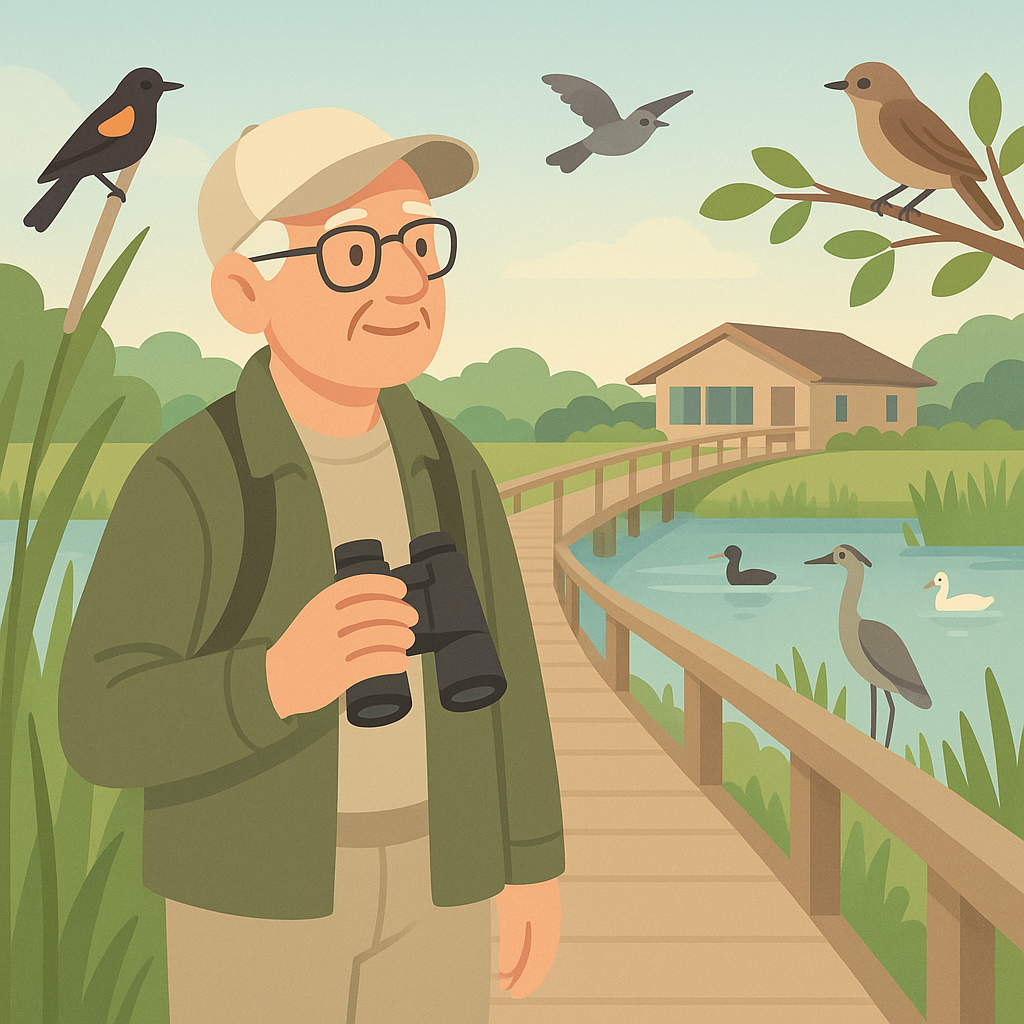
Before you study every trail on the map, look for the simplest option: a visitor center, a short loop, a boardwalk, a viewing platform, or an auto tour. These routes are often designed to help newcomers get oriented without wandering into confusing side paths.
If walking is not comfortable, car-based birding can be a wonderful bridge between backyard watching and larger outdoor spaces. BirdPeep has a practical guide to birdwatching from your car at parks and refuges, and the same calm approach works beautifully on many refuge drives.
Call or check the official page first
Hours, road closures, seasonal trails, entrance fees, and visitor center schedules can change. Check the refuge’s official website before leaving home, especially if you are driving more than a short distance.
Pick one main habitat to watch
A refuge may include marsh, forest, prairie, beach, lake, or river edges. Rather than trying to cover everything, choose one area that sounds comfortable and visible. Water edges and open wetlands are often easier for beginners because birds stand out more clearly.
- Visitor center: Start here if it is open, because maps, recent sightings, restrooms, and staff advice can save energy.
- Auto loop: Good for slower pacing, shade, limited mobility, and watching from a steady seat.
- Boardwalk: Often beginner-friendly because it guides you through habitat without route decisions.
- Observation blind: Helpful when birds are sensitive to movement or when you want a quiet place to sit.
What to Check Before You Leave Home
A little preparation makes the visit feel calm. You do not need a complicated packing system, but you do want to avoid preventable frustrations like closed gates, muddy paths, or no water bottle.
Start with the refuge website or official social page. Look for hours, road conditions, trail notes, restroom availability, and whether pets are allowed. Some refuges protect sensitive habitat and may close certain areas during nesting, migration, hunting seasons, or habitat work.
Good etiquette matters even more beyond the backyard. If you have not reviewed it recently, BirdPeep’s birdwatching etiquette guide for beginners is a useful refresher before visiting shared public habitat.
How to Visit a Wildlife Refuge Step by Step
Use this simple plan for your first outing. It keeps the day manageable while still giving you a real taste of refuge birdwatching.
- Choose one refuge and one route: Pick the easiest official route, not the longest or most famous one.
- Check current details: Confirm hours, closures, road conditions, weather, and restroom access before you leave.
- Pack lightly: Bring water, comfortable shoes, sun protection, any needed medication, binoculars if you use them, and a small notebook.
- Start at the visitor center if possible: Ask what is easy to see today and whether any trails are muddy, closed, or especially busy.
- Move slowly: Drive or walk at a relaxed pace. Stop often and scan before stepping closer.
- Watch edges: Birds often use the border between water and reeds, forest and field, path and shrub, or mudflat and open water.
- Leave room for wildlife: Stay on marked routes, use viewing areas, and let birds choose the distance.
- End before you are tired: A good first trip should make you want to return.
Common First-Visit Mistakes to Avoid
Most beginner mistakes are understandable. Refuges can be exciting, and it is tempting to cover too much ground. A calmer plan usually leads to better sightings and a more enjoyable day.
- Trying to see the whole refuge: One short loop observed well is better than several rushed stops.
- Ignoring seasonal notes: A road, trail, or birding area may be excellent one month and closed or quiet the next.
- Walking straight toward birds: Approach slowly along marked paths, then stop and let binoculars do the work.
- Forgetting comfort basics: Water, shade, sturdy shoes, and insect protection can matter as much as optics.
- Expecting rare birds: Common birds in a new setting are still worth watching. Their behavior often teaches the most.
Pros and Cons of a First Refuge Visit
More habitats in one place
A refuge may offer water, woods, grassland, or mudflats close together, giving beginners more chances to compare bird behavior.
Helpful visitor structure
Maps, signs, visitor centers, auto loops, platforms, and boardwalks can make the first outing less intimidating.
Good practice for slow watching
Refuges reward patience. Sitting quietly near an edge can reveal more than constantly moving.
Conditions can change
Trails, roads, water levels, insects, and bird activity vary by season and weather, so checking ahead matters.
The size can feel overwhelming
A large map may make beginners feel they must do everything. Choosing one easy route solves most of that pressure.
A Simple Wildlife Refuge Checklist
Keep this checklist short enough to use. You can write it on paper or save it on your phone before you go.
- Official page checked: Hours, closures, road notes, and visitor center status reviewed.
- One route chosen: Short loop, boardwalk, observation area, or auto tour selected.
- Comfort packed: Water, medication, hat, layers, sturdy shoes, and insect protection if needed.
- Optics ready: Binoculars cleaned, phone charged, and notebook or checklist packed.
- Wildlife space remembered: Stay on marked paths, keep noise low, and never pressure birds for a closer view.
- Easy ending planned: Decide when to turn back before fatigue makes the outing less enjoyable.
When to Ask for Extra Help
If you are unsure which route is easiest, call the refuge office or visitor center before the trip. Ask plain questions: Is the visitor center open? Are there benches? Is the auto loop open? Which route is best for a first-time birdwatcher?
For a slower, more reflective style of outing, you might also enjoy BirdPeep’s article on the joy of slow birding. A refuge is an ideal place to practice that kind of unhurried attention.
Frequently Asked Questions
What should I check first before wildlife refuge birdwatching?
Check the official refuge page for hours, closures, road or trail conditions, visitor center status, and any seasonal rules. Then choose one easy route.
Do I need expensive binoculars for a first refuge visit?
No. Use the binoculars you already have, borrow a pair if the visitor center offers them, or simply watch larger birds, movement, and habitat patterns.
How long should my first refuge trip be?
One to two relaxed hours is plenty for many beginners. A shorter trip with a comfortable ending is better than trying to cover the whole map.
What if I am not sure which bird I saw?
Write down size, color, behavior, habitat, and location. You can compare notes with a field guide, app, refuge checklist, or local birding group later.
Final Thoughts
Your first wildlife refuge visit does not need to be a grand adventure. It can be a quiet morning with a map, a bench, a pond edge, and a few patient minutes watching birds move through a larger landscape.
Start small, follow official guidance, give wildlife room, and let the refuge become familiar one route at a time. The best first visit is the one that leaves you comfortable, curious, and ready to come back.