
Brown thrasher identification often begins with a little mystery. You may hear a rich song from the edge of the yard, catch a flash of warm brown near the shrubs, and then lose the bird before you can lift your binoculars.
That is part of the charm. Brown Thrashers are not usually the boldest feeder visitors. They often keep to brushy edges, leaf litter, hedges, and low branches, where they can sing beautifully while staying partly hidden.
If you have been practicing with familiar backyard birds, this species is a wonderful next step. It asks you to slow down, watch behavior, and notice shape before expecting a perfect close-up view.
Why Brown Thrasher Identification Feels Tricky
A Brown Thrasher can look obvious in a field guide and surprisingly secretive in a real yard. It is fairly large for a songbird, yet it may move low through cover instead of perching in the open like a robin or cardinal.
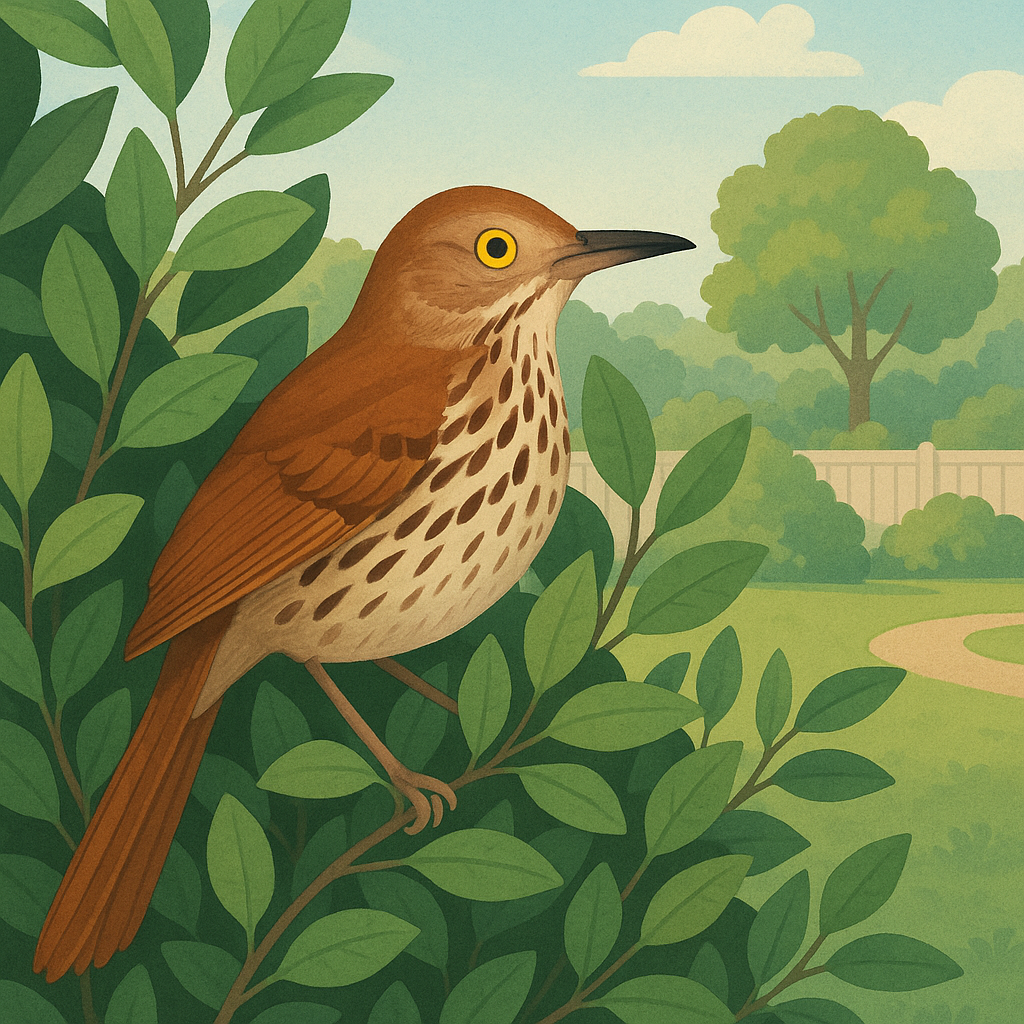
Audubon’s field guide describes Brown Thrashers as rufous-brown above, striped below, with a long tail and yellow eyes. That matches the practical clues most backyard observers can use before they ever see every detail clearly.
You can compare those marks in the Audubon Brown Thrasher field guide. It is a useful outside reference when you want to check a sighting against a trusted species account.
Start With Shape, Tail, and Posture
Color helps, but shape is often the calmer first clue. Brown Thrashers are longer and leaner than many feeder birds, with a long tail that gives them a stretched-out look. They can seem almost oversized compared with sparrows, wrens, and finches.
Look for these beginner-friendly marks before worrying about every tiny detail:
- Long tail: the tail often looks noticeably longer than you expect on a backyard songbird.
- Warm rufous-brown back: the upperparts look rich brown or rusty brown in good light.
- Streaked underparts: the pale chest and belly show strong, dark streaking.
- Yellow eye: when close enough, the bright eye can give the bird an alert expression.
- Slightly curved bill: the bill can look a bit longer and more curved than a robin’s bill.
For comparison practice, it helps to keep other backyard profiles in mind. The Tufted Titmouse guide shows a much smaller, rounder, gray visitor with a crest, while a Brown Thrasher looks longer, warmer brown, and more tied to shrub cover.
Listen for a Repeating, Musical Song
The song is one of the best clues if you cannot see the bird clearly. Brown Thrashers are talented singers in the same broad family as mockingbirds and catbirds. Their phrases can sound varied, bright, and musical.
A helpful beginner shortcut is to listen for repeated phrases. Brown Thrashers often sing a phrase twice before moving to another phrase. A Northern Mockingbird may repeat a phrase more times before switching. You do not need to count perfectly; just notice the pattern.
A quiet listening routine
Step outside in the morning or sit near an open window. If you hear a long, varied song from a shrub line, hedge, or small tree, listen for pairs: two similar phrases, then a new pair, then another. Write down what you notice in plain language rather than trying to spell the sound exactly.
This connects naturally with broader sound practice. If bird songs still feel new, the guide to understanding bird calls and songs can help you build that listening habit without pressure.
Watch the Shrubs, Edges, and Leaf Litter
Brown Thrashers are often birds of edges. Think shrubs, thickets, brushy corners, woodland borders, overgrown fence lines, and places where leaves collect under plants. A perfectly open lawn is less promising than a quiet edge with cover nearby.
They may forage by sweeping or tossing leaf litter aside with their bill. From a distance, this can look like a bird busily working the ground under shrubs rather than standing upright in the open.
Where beginners should look first
Start with the parts of your yard that feel a little wilder. Watch the base of shrubs, the edge of a brush pile, the back fence, or the place where leaves gather under native plants. Give each spot several quiet minutes. A shy bird may not appear the instant you look.
If you enjoy comparing shrub-loving birds, the Carolina Wren guide is a good companion. Wrens are much smaller and often hold the tail cocked upward, while Brown Thrashers look longer-tailed, larger, and more strongly streaked below.
Common Mix-Ups to Avoid
Brown Thrashers can be confused with robins, Wood Thrushes, towhees, or large sparrow-like birds, especially when the sighting is brief. The goal is not to memorize every possible look-alike. It is to use a few steady checks.
Long, stretched shape
The long tail and lean body make the bird look less compact than many common feeder visitors.
Bold streaking below
The pale underside with heavy dark streaks is stronger than the plain orange belly of a robin.
Brushy behavior
A Brown Thrasher often stays near shrubs, leaf litter, and cover instead of feeding confidently in the middle of the lawn.
Brief brown flashes
A quick look at brown color alone is not enough. Check tail length, streaking, bill shape, and where the bird is moving.
Song heard without a view
The song can point you in the right direction, but a visual check is still helpful before you call the identification certain.
A Simple Brown Thrasher Checklist
When you think you may have found one, use a short checklist. This keeps the moment calm and prevents that rushed feeling of trying to name the bird before it disappears.
- Check size first. Is the bird larger and longer than a sparrow or finch?
- Look at the tail. Does it seem long and part of the bird’s main silhouette?
- Look below. Do you see a pale chest or belly with strong dark streaking?
- Notice the place. Is the bird near shrubs, thickets, leaf litter, or a brushy edge?
- Listen if it sings. Do the musical phrases seem to come in repeated pairs?
If three or four of those clues line up, you have a reasonable Brown Thrasher candidate. If only one clue fits, keep the sighting tentative and enjoy the practice.
How to Make Your Yard More Welcoming
You do not need a dramatic habitat project to make your yard friendlier to Brown Thrashers and other cover-loving birds. Gentle, practical changes often matter most.
- Keep some shrub cover: dense shrubs and quiet edges give shy birds places to move safely.
- Leave a little leaf litter where appropriate: under shrubs or in a natural corner, leaves can support insects and foraging behavior.
- Use native plants when possible: native shrubs and berry-producing plants can support more natural bird activity over time.
- Avoid heavy disturbance during nesting season: delay trimming dense shrubs if you suspect active nesting.
- Keep cats away from bird areas: outdoor cats are a serious risk to low-foraging and shrub-nesting birds.
These same ideas fit many backyard birds that prefer shelter. For a broader approach, the article on creating a quiet corner for backyard birds can help you shape one peaceful area instead of changing the whole yard at once.
Frequently Asked Questions
Are Brown Thrashers common backyard birds?
They can appear in yards, especially where there are shrubs, thickets, leaf litter, and quiet edges. They are not always as obvious as feeder regulars, so many people hear or glimpse them before they get a long look.
What is the easiest field mark for Brown Thrasher identification?
The best quick combination is rich brown upperparts, a long tail, pale underparts with heavy dark streaking, and a preference for shrubs or low cover. The yellow eye is helpful when the bird is close enough to see it.
How is a Brown Thrasher different from an American Robin?
A robin usually looks more upright and open-lawn friendly, with a plainer orange breast. A Brown Thrasher looks longer-tailed and more secretive, with strong streaks on a pale chest and belly rather than a solid orange front.
Should I use playback to bring a Brown Thrasher closer?
For casual backyard watching, it is kinder to avoid playback. Listen naturally, keep your distance, and let the bird move on its own schedule, especially during nesting season when birds may already be busy and alert.
Final Thoughts
Brown Thrasher identification rewards patience. This is not always the bird that poses on the nearest feeder. It is often the warm brown singer tucked into the shrubs, the long tail slipping through leaves, or the rich voice coming from a quiet edge.
The next time you hear a varied song or see movement low in the brush, take one calm minute. Look for the long shape, streaked underside, rich brown back, and shrub-loving behavior. That small pause may turn a hidden singer into one of your favorite backyard discoveries.