
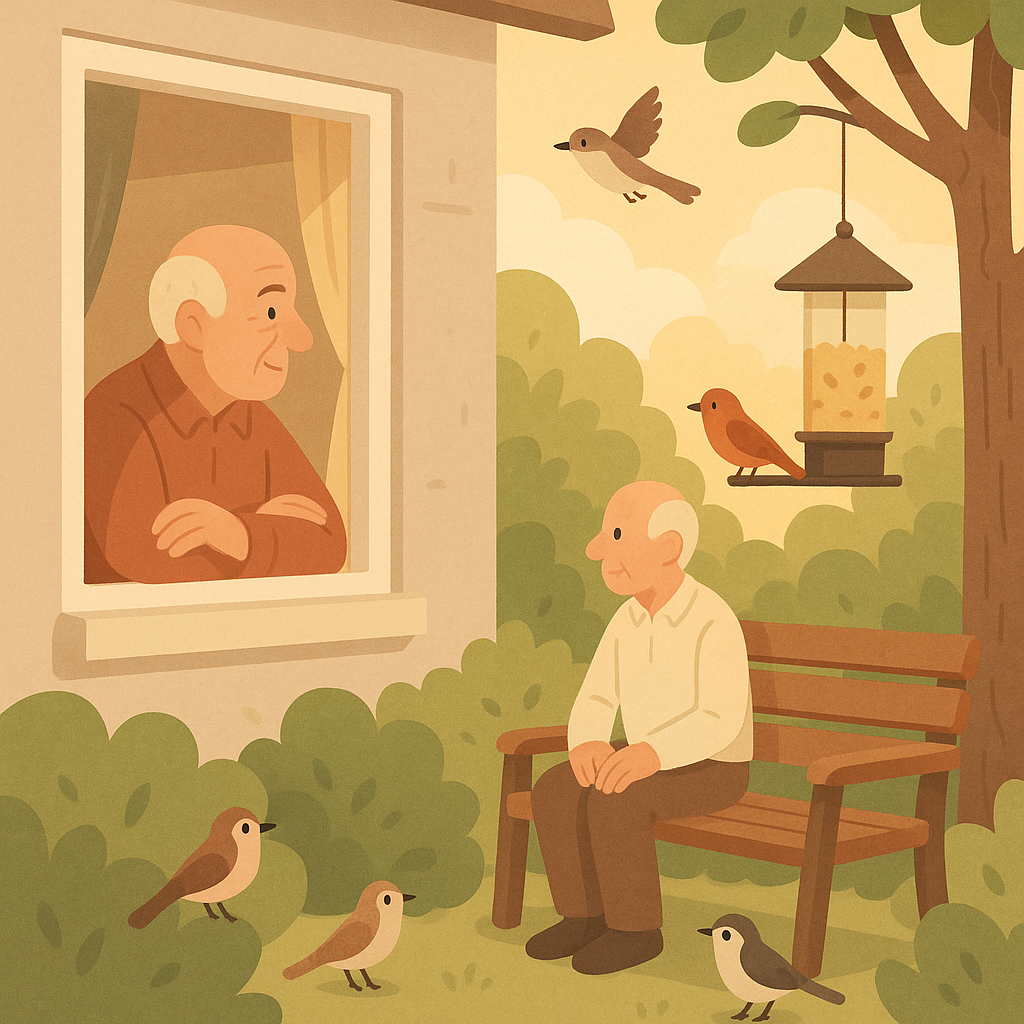
Birdwatching without binoculars is not a lesser version of the hobby. It is often the gentlest place to begin, especially if you are watching from a kitchen window, porch chair, patio, or park bench and simply want to understand what is happening around you.
Binoculars can help with fine details, but many of the best beginner clues are visible before you ever raise a lens: where a bird sits, how it moves, the shape it makes against the sky, and the sounds it repeats. If you have ever noticed a flash of wings near a shrub or heard a familiar song before breakfast, you already have the starting point.
If you are deciding whether to buy optics later, our guide to binoculars for beginners can help. For today, though, you can learn plenty with your eyes, ears, patience, and a comfortable place to sit.
Why Birdwatching Without Binoculars Still Works
The first skill in birdwatching is attention, not equipment. When you watch without magnification, you naturally pay more attention to the whole scene. You notice the tree line, the feeder path, the birdbath, and the quiet places where birds feel safe.
The Cornell Lab of Ornithology is a trusted bird education source, and its bird ID guidance emphasizes broad clues such as size, shape, behavior, and habitat. That is a helpful reminder that you do not need to start with tiny field marks. You can begin with big, observable clues.
Start With Shape, Size, and Movement
Before color becomes clear, shape often gives you a better clue. A robin has a different posture from a dove. A woodpecker clings differently from a finch. A hawk circling overhead feels different from a flock of small songbirds bouncing through a tree.
Compare birds to familiar sizes
You do not need exact measurements. Use simple comparisons. Is the bird smaller than a sparrow, about robin-sized, crow-sized, or larger? This rough size check quickly narrows your choices.
Watch the way it moves
Movement can be surprisingly revealing. Some birds hop, some walk, some cling sideways, and some flick their tails again and again. If you want a deeper practice routine for this skill, the article on how to identify birds by shape before color pairs nicely with binocular-free watching.
- Hopping on the ground: often points toward sparrows, juncos, robins, or towhees depending on size and posture.
- Clinging to bark: suggests a woodpecker, nuthatch, or creeper-style behavior.
- Gliding or circling: may point toward larger birds using air currents.
- Quick dashing flights: can suggest small songbirds moving between cover.
Use Sound as Your Second Pair of Eyes
One pleasure of birdwatching without binoculars is that sound becomes more important. You may not see the singer clearly, but you can learn where the song comes from, whether it repeats, and whether it belongs to a bird that stays hidden.
Start with simple labels instead of perfect names. Is the sound a whistle, trill, chatter, harsh call, or repeated phrase? Does it come from the same tree each morning? Does another bird answer? These observations are useful even before you can identify the species.
Make a simple listening habit
Choose one time of day and listen for three minutes. Morning is often easiest because birds are active and neighborhood noise may be lower. Write down one sound in plain words, even if your note says, “clear whistle from maple tree” or “busy chatter near hedge.”
A small notebook helps these details stick. If you enjoy that approach, BirdPeep has a beginner guide on using a simple birdwatching notebook to improve identification over time.
Let Habitat Give You Clues
Habitat simply means the place where the bird is using the landscape. A bird on open lawn, a bird in dense shrubs, a bird high in a dead tree, and a bird beside water are giving you different clues before you see a single feather detail.
In a backyard, begin by dividing the view into easy zones: ground, shrubs, feeder, water, tree trunk, treetop, fence, and sky. Then notice which birds return to the same zones. Over a week, patterns begin to appear.
- Pick one viewing spot: choose a window, porch chair, patio seat, or bench where you can sit comfortably.
- Scan slowly: look from ground level upward instead of darting your eyes around the whole yard.
- Notice one zone at a time: spend a minute on shrubs, then a minute on the feeder, then a minute on the treetops.
- Record behavior first: write “pecking bark” or “bathing” before worrying about the name.
- Check later: compare your notes with a field guide or trusted bird ID app when you feel ready.
Pros and Cons of Watching Without Gear
Very low pressure
You can begin from a chair, window, or short walk without buying anything or learning equipment settings.
Builds broad observation skills
Watching the whole scene helps you learn movement, habitat, posture, and sound instead of focusing only on markings.
Works well for everyday moments
A few minutes at breakfast or in the evening can become a repeatable habit that fits naturally into daily life.
Small details stay hidden
Fine field marks, leg color, eye rings, and subtle wing patterns can be hard to confirm without magnification.
Distant birds may remain mysteries
Birds across a pond, high in a tree, or far out in a field may only be identifiable to a general group.
A Simple No-Binoculars Checklist
Use this quick checklist when a bird catches your eye. You do not need every answer. One or two good observations are better than a rushed guess.
- Size: Is it sparrow-sized, robin-sized, crow-sized, or larger?
- Shape: Does it look round, slim, long-tailed, crested, heavy-billed, or upright?
- Movement: Does it hop, walk, cling, glide, hover, or flick its tail?
- Sound: Is the voice a whistle, trill, chatter, harsh call, or repeated phrase?
- Habitat: Is it on the ground, in shrubs, on a trunk, near water, at a feeder, or overhead?
- Pattern: Do you notice one bold feature, such as a red patch, wing bar, white tail edge, or dark cap?
Common Mistakes to Avoid
The most common beginner mistake is trying to name the bird too quickly. A quick guess can be fun, but it should not replace careful watching. Give yourself permission to write “small brown bird near hedge” and leave the final name for later.
Another mistake is chasing movement across the yard. If you move too suddenly, the bird may leave and you lose the chance to learn. Stay still, breathe, and watch what the bird chooses to do next.
Frequently Asked Questions
Can I really start birdwatching without binoculars?
Yes. Binoculars help with details, but you can learn movement, sound, size, shape, and habitat without them. Those broad clues are the foundation of bird identification.
What should I watch first?
Start with behavior. Notice whether the bird is feeding, bathing, singing, hopping, clinging, chasing, or hiding. Behavior is often easier to observe than color.
When are binoculars worth buying?
Consider binoculars when you already enjoy watching birds and want to see details more comfortably. There is no rush. A steady interest matters more than buying gear immediately.
How should I keep track of birds I cannot identify?
Write down the date, place, size, behavior, sound, and one memorable feature. Later, compare your notes with a guide or app. Even unnamed sightings help train your attention.
Final Thoughts
Birdwatching without binoculars invites you to slow down and notice the living patterns around you. A bird crossing the lawn, singing from a hidden branch, or bathing after rain can teach you something if you give it a few quiet minutes.
Start with one comfortable viewing spot this week. Watch for shape, movement, sound, and habitat before you worry about a perfect name. The hobby becomes warmer and more rewarding when each small discovery is enough.