
Good park birdwatching tips do not always begin with a trail map or a rare bird alert. Sometimes they begin with a comfortable bench, a little shade, and a view that lets you sit quietly while the park wakes up around you.
If walking a long loop feels tiring, choosing one thoughtful sitting spot can make birding easier and more enjoyable. A good bench gives you time to notice movement, sound, shape, and behavior without rushing from place to place.
Why Park Birdwatching Tips Start With Comfort
Birds often reveal themselves slowly. A chickadee may call before it appears, a heron may step from reeds after several quiet minutes, and sparrows may move only when the path settles down. If your seat is uncomfortable, too sunny, or too exposed to foot traffic, patience becomes harder.
The Cornell Lab of Ornithology describes birds as an inviting doorway into the natural world through science, learning, and community. Their main Cornell Lab of Ornithology site is a helpful place to explore trusted birding resources before or after a park visit.
Look for Edges, Water, and Shelter
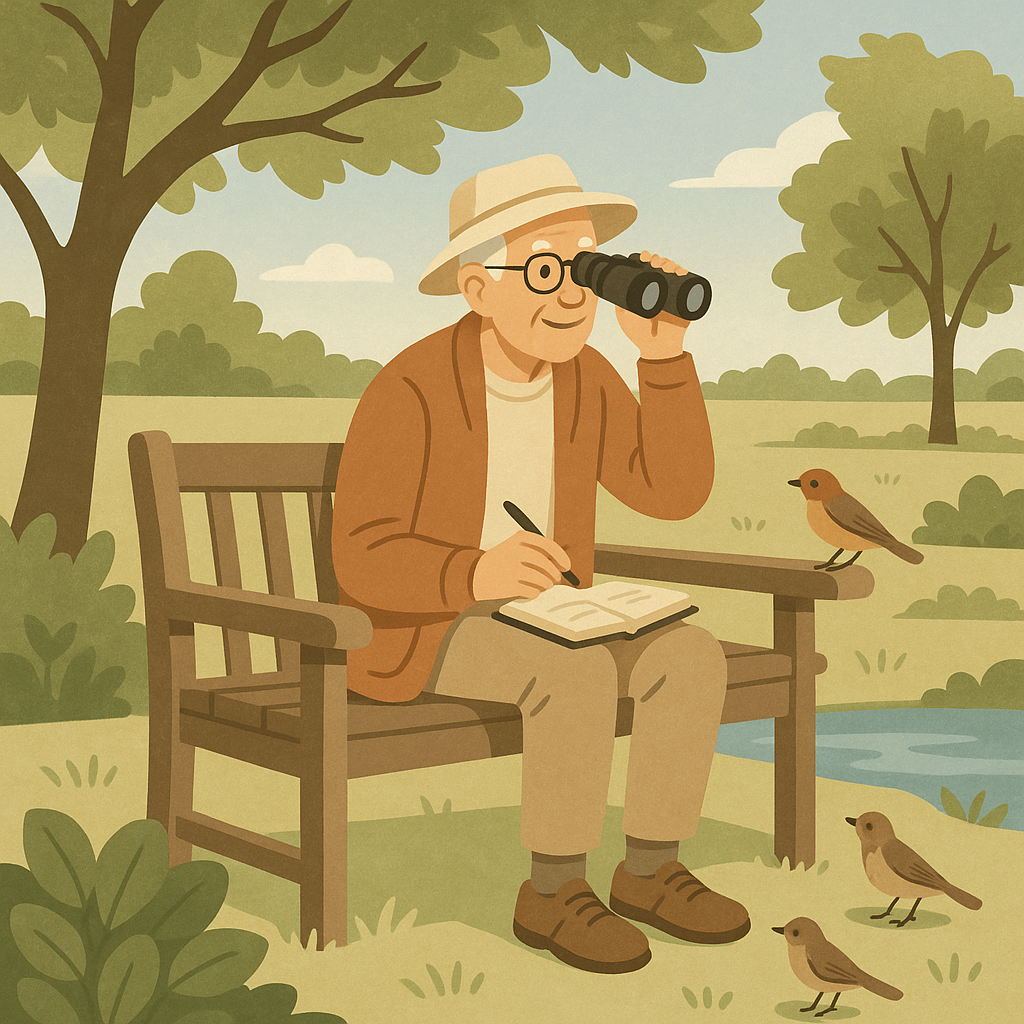
The most productive bench is rarely in the middle of a wide empty lawn. Birds usually give you more to watch near edges: where trees meet grass, shrubs meet a path, reeds meet open water, or a wooded area opens into a clearing.
Water is another helpful clue. A pond, creek, marshy corner, fountain, or damp edge can attract birds for drinking, bathing, feeding, or hunting. You do not need to sit right beside the water. In fact, a bench with a clear side view may be calmer than a crowded overlook.
What makes an edge useful
- Mixed habitat: Trees, shrubs, grass, and water close together give different birds different reasons to visit.
- Perches: Fence posts, bare branches, signs, and dead snags can become lookout points for small birds.
- Cover nearby: Shrubs and low branches help birds feel safer as they move in and out of view.
- Open sightlines: You need enough space to scan without twisting your neck or standing up every minute.
Choose a Bench Your Body Will Like
A birding bench should serve you first. If the seat is too low, the sun is too strong, or the path behind you feels busy, you may leave just when birds begin to appear. Comfort is not a luxury in slow birding; it is part of the method.
If you enjoy gentler outings, BirdPeep’s guide to easy birding trails for seniors can help you think about benches, restrooms, shade, distance from parking, and surfaces before choosing a park.
Comfort checks before you settle in
- Shade: Morning sun can feel pleasant, but a partly shaded bench is kinder on warm days.
- Back support: A bench with a back may be easier for longer sits than a flat picnic table seat.
- Footing: Look for level ground where you can stand up without stepping into mud, gravel, roots, or a slope.
- Restroom distance: Know whether the nearest restroom is practical for your own comfort and health needs.
- Exit path: Choose a place where you can return to the car or visitor center without feeling stranded.
Watch the Human Traffic Too
People are part of park birding. Dog walkers, joggers, children, cyclists, maintenance carts, and picnic groups can all change how birds use a spot. That does not make a bench bad, but it helps to understand the rhythm.
A bench beside a main path may still be useful early in the morning or on a weekday. A quieter side path may be better on weekends. If the first bench feels too busy, give it ten minutes, then calmly move to another one instead of forcing the outing.
How to Handle a Bench Birding Session Step by Step
Once you choose a bench, resist the urge to start scanning wildly. The best park birdwatching tips are often small habits repeated slowly.
- Settle quietly first. Sit down, adjust your bag, sip water, and let nearby birds get used to your stillness.
- Scan close before far. Check the ground, shrubs, and low branches near you before looking across the whole park.
- Listen for direction. Turn gently toward calls, rustles, wingbeats, or tapping sounds.
- Watch movement, not color. A flicking tail, hopping shape, or short flight often catches your eye before markings do.
- Rest your arms. Use binoculars in short moments rather than holding them up constantly.
- Take simple notes. Write down where the bird appeared, what it was doing, and what helped you notice it.
For days when walking is not the goal, you may also like BirdPeep’s guide to birdwatching from your car at parks and refuges. The same idea applies: let a comfortable position become your quiet observation station.
Pros and Cons of Bench Birding
Kind to knees and energy
A good bench lets you enjoy a park visit without needing to walk every trail or stand for long stretches.
Better for slow observation
Sitting still gives birds time to resume normal behavior, which can make identification easier for beginners.
Easy to repeat
Returning to the same bench helps you learn how light, weather, season, and time of day change the birds you see.
One spot has limits
You may miss birds using another part of the park, especially if habitat is spread out across a large area.
Comfort can change quickly
A bench that feels perfect at 8 a.m. may become hot, noisy, windy, or crowded later in the morning.
A Simple Bench Spot Checklist
Use this checklist when you arrive at a park. You do not need every item. Look for the best balance between comfort, safety, and bird activity.
- Can I sit comfortably for 15 to 30 minutes? If not, keep looking.
- Is there shade or gentle light? Avoid harsh sun when heat or glare will shorten the visit.
- Can I see at least two habitat types? Trees plus grass, shrubs plus water, or reeds plus open sky all help.
- Are there perches nearby? Bare branches, fence lines, and signposts can give birds visible stopping places.
- Is the path behind me manageable? Too much traffic can be distracting or uncomfortable.
- Do I know my way back? Keep the return route simple, especially in an unfamiliar park.
- Can I leave birds undisturbed? Sit back from nests, dense shrubs, shorelines, and feeding birds when they seem wary.
Common Mistakes to Avoid
The most common mistake is choosing the prettiest view instead of the most useful birding view. A grand open field may look peaceful, but a quieter bench near shrubs, water, and tree edges may hold more activity.
Another mistake is moving too soon. If the spot is comfortable and safe, give it enough time. A calm ten or fifteen minutes can change a silent corner into a lively one.
Finally, avoid crowding birds for a better look. If a bird freezes, alarm-calls, repeatedly moves away, or stops feeding because of your presence, ease back. Birding is more satisfying when the birds can keep being birds.
Frequently Asked Questions
What should I check first when choosing a birding bench?
Start with comfort and safety. Make sure you can sit, stand, return to your route, and handle sun or wind. Then look for habitat edges, water, shrubs, and open views.
How long should I sit before moving to another spot?
Try 10 to 20 quiet minutes if the bench feels comfortable. Birds often appear after the area settles. If the spot stays too noisy, hot, or empty, move without feeling you failed.
Is it better to face the sun or keep it behind me?
Keeping the sun behind or beside you usually makes birds easier to see and reduces glare. Strong sun in your face can make colors and movement harder to notice.
Can I birdwatch from a bench without binoculars?
Yes. You can still notice size, shape, movement, calls, flight direction, and habitat. Binoculars help with details, but stillness and attention are the real starting tools.
Final Thoughts
Choosing a birding bench spot at a park is a gentle skill. Look for comfort first, then habitat edges, water, shelter, light, and a calm view. The right bench can turn a short park visit into a peaceful window into bird life.
Start with one familiar park and try two or three benches on different mornings. Over time, you will learn which seats bring the best mix of comfort, quiet, and small discoveries.