

A good birding trip packing list is not about carrying every outdoor item you own. It is about leaving home with enough comfort, water, shade, medication, and simple birding tools that you can relax once the first warbler, heron, or sparrow catches your eye.
For many older beginners, a half-day outing is the sweet spot. It is long enough to enjoy a park, refuge, lake trail, or shaded overlook, but short enough that you do not need a heavy pack. The goal is to feel prepared without turning a peaceful morning into a chore.
Why a Birding Trip Packing List Matters
Birding rewards patience, and patience is much easier when your feet are comfortable, your water is close, and your essentials are not buried under things you will never use. A small mistake, such as forgetting sunscreen or leaving medicine in the car, can shorten an outing that might have been lovely.
The National Park Service recommends packing basic trip essentials such as water, sun protection, food, navigation, and first-aid supplies for outdoor visits. Their guide to the Ten Essentials is a useful safety reference, even when you are planning a gentle half-day birding trip instead of a backcountry hike.
Start With the Kind of Outing You Are Taking
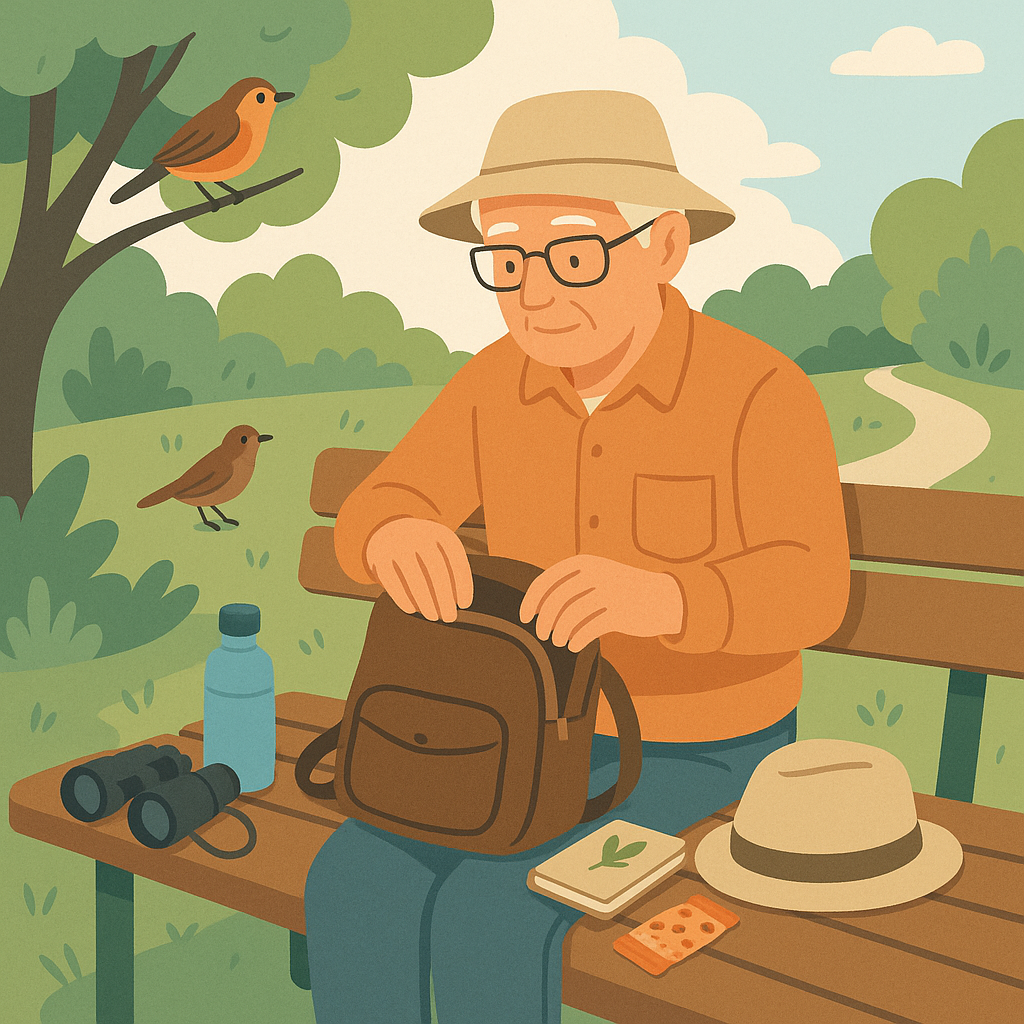
Before you pack, picture the outing. Are you sitting on a bench near a pond, walking a flat refuge loop, joining a local birding group, or driving slowly between observation points? Each version asks for a slightly different bag.
If you are still choosing a destination, BirdPeep’s guide to easy birding trails for seniors can help you think about shade, benches, restrooms, parking distance, and gentle surfaces before you leave home.
Ask three simple questions
- How far will I be from the car? A short boardwalk needs less backup gear than a long loop with no easy exit.
- Where can I sit? Benches, picnic tables, hides, and shaded overlooks make a lighter outing possible.
- What could change? Heat, wind, rain, insects, trail closures, and tired legs all matter more than a perfect species list.
Pack the Comfort Basics First
Comfort items belong at the top of the list because they protect your attention. When you are thirsty, sunburned, hungry, or worried about a forgotten medication, it becomes harder to notice movement in reeds or listen for a call in the trees.
Start with water, a snack, sun protection, weather protection, and any personal health items you may need during the outing. Keep these in the same pocket each time so you do not have to search for them while standing on a trail.
A senior-friendly comfort kit
- Water: Carry more than you expect to drink, especially on warm or windy days.
- Snacks: Choose something steady and easy, such as nuts, crackers, fruit, or a familiar bar.
- Medication: Bring needed doses in a safe container, plus any rescue medication your doctor has told you to keep nearby.
- Sun protection: Pack a brimmed hat, sunglasses, and sunscreen even when the morning feels mild.
- Layer: A light jacket or long-sleeve shirt helps with wind, shade, insects, and changing weather.
- Seat option: If benches are uncertain, consider a lightweight folding stool only if you can carry and use it safely.
Choose Birding Tools That Stay Simple
Birding gear should help you notice birds, not distract you from them. For a half-day outing, most beginners do well with binoculars, a phone, a small notebook, and one simple field reference.
Cornell Lab of Ornithology’s Merlin Bird ID is a helpful field companion because it can support bird identification with photo, sound, and location-based tools. Their page on Merlin Bird ID explains how the app helps birders connect observations with likely species.
That said, a phone app is not a replacement for looking slowly. Put your phone where you can reach it, but let your eyes and ears do the first round of observing.
Keep the optics easy
- Binoculars: Use a comfortable neck strap or harness so they do not swing or pull.
- Lens cloth: A small microfiber cloth helps with fog, dust, and fingerprints.
- Notebook and pencil: A pencil writes better than many pens in damp or chilly weather.
- Phone battery: Start with a charged phone, especially if you use maps, Merlin, eBird, or photos.
Put Safety Items Where You Can Reach Them
Safety items are easy to overpack and easy to forget. For a half-day birding outing, think small and practical: a basic first-aid pouch, emergency contact information, a whistle, tissues, hand sanitizer, and any personal medical details that would matter if someone needed to help you.
If you enjoy accessible birding from the car, you may also like BirdPeep’s guide to birdwatching from your car at parks and refuges. Car birding can keep backup items nearby while still letting you enjoy marshes, fields, and woodland edges.
Pros and Cons of Packing Light
Less strain on shoulders and knees
A lighter bag makes it easier to walk slowly, pause often, and enjoy birds without feeling pulled down by gear.
Faster access to essentials
When your bag is simple, water, snacks, medicine, and binoculars are easier to find at the moment you need them.
More attention for birds
Fewer gadgets and extras can help beginners focus on movement, sound, habitat, and behavior.
Less backup if plans change
A very small kit may be fine near the car but less comfortable if the route becomes longer, hotter, or wetter than expected.
Requires honest planning
Packing light works best when you know the trail length, restroom access, shade, weather, and your own energy level.
A Simple Half-Day Packing Checklist
Use this as a starting point and adjust it for your health, climate, distance, and destination. The best list is the one you can repeat without stress.
- Water bottle: Keep it reachable, not at the bottom of the bag.
- Easy snack: Choose food you already know agrees with you.
- Medication and personal needs: Include scheduled doses, rescue items, and any small comfort item you rely on.
- Hat, sunglasses, and sunscreen: Sun can surprise you on open boardwalks, shorelines, and parking areas.
- Comfortable layer: Bring something light for wind, shade, or cool indoor visitor centers.
- Binoculars: Adjust the strap before you leave home so they rest comfortably.
- Notebook and pencil: Record time, place, weather, bird size, color, sound, and behavior.
- Phone: Charge it, download maps or bird apps if needed, and keep emergency contacts available.
- Small first-aid pouch: Include bandages, blister care, and any items recommended for your personal situation.
- Tissues and hand sanitizer: Useful after railings, benches, restrooms, snacks, or feeder observation areas.
Pack the Bag So It Works in Real Life
A packing list is only useful if the bag is easy to use. Put heavy items close to your back, keep water upright, and store the things you use most often in outer pockets. If you must remove three items to reach your binoculars, the bag is working against you.
Try a short practice outing before a longer morning. Sit in your yard, walk around the block, or visit a familiar park for one hour. Notice what you actually used, what annoyed you, and what stayed untouched. That little test is often more helpful than buying another piece of gear.
Frequently Asked Questions
How much should I carry for a half-day birding outing?
Carry enough for comfort and safety, but avoid packing so much that the bag becomes tiring. Water, snacks, medication, sun protection, a light layer, binoculars, phone, and a small first-aid pouch are a practical base.
Do I need a backpack for birding?
No. A small backpack, crossbody bag, waist pack, or vest can all work. Choose whatever lets you carry water and essentials comfortably without straining your neck, shoulders, or balance.
Should I bring a field guide or just use my phone?
Either can work. A phone app is convenient, but a small field guide or notebook can be calming and does not depend on battery life. Many beginners enjoy using both in a simple way.
What should I leave in the car?
Leave heavier backup items in the car if you will stay close enough to return easily. Extra water, dry socks, a larger first-aid kit, and a spare layer can be useful without weighing down the walk itself.
Final Thoughts
The best birding trip packing list supports a peaceful outing. It keeps you hydrated, shaded, steady, and ready to notice birds without fussing over your bag every few minutes.
Start with one comfortable half-day route, pack the basics, and adjust after you return. Over time, your list will become personal, light, and familiar, just like the places you love to watch birds.