
Birds after rain can make an ordinary backyard feel new again. The same feeder, shrub, lawn edge, and bird bath may suddenly attract different kinds of movement because water changes where birds feel safe, where insects appear, and where small puddles invite bathing or drinking.
For a beginner birdwatcher, this is a lovely time to slow down. You do not need to know every species right away. Start by noticing where birds go after the rain stops, how long they wait before leaving shelter, and whether they search the ground, the shrubs, the feeder, or the bird bath first.
Why Birds After Rain Are Worth Watching
Rain changes a yard in several quiet ways. Leaves drip. Soil softens. Insects may become easier to spot. Puddles form in low places. Birds that stayed hidden during heavy weather may begin moving again once the wind settles and visibility improves.
The Cornell Lab of Ornithology explains that different birds use different shelters during storms, from cavities and roost boxes to protected branches near a trunk. Their guide to what small birds do in a storm is a helpful reminder that birds are often waiting out bad weather before they reappear.
Start With Shelter Before You Look at Food
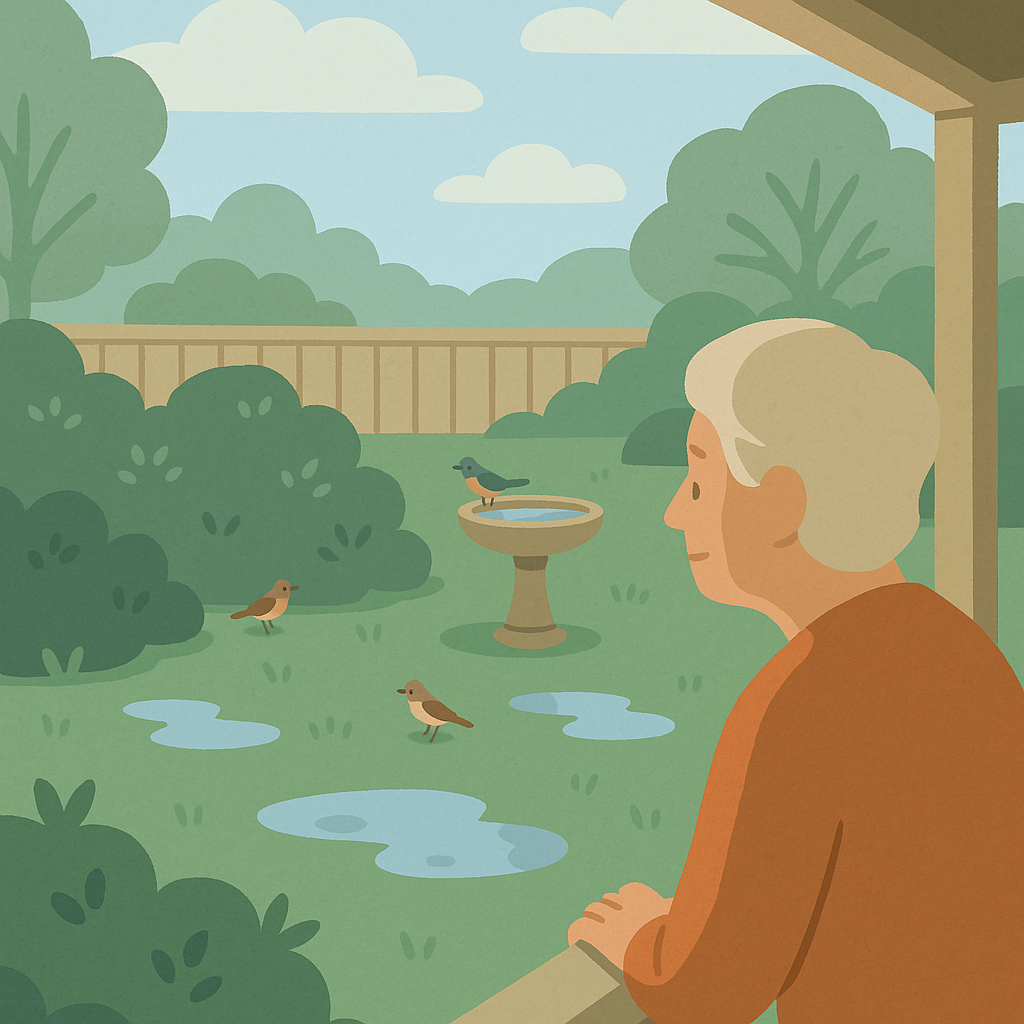
When the rain has just ended, many birds do not immediately fly into the most open part of the yard. They may pause in dense shrubs, evergreen branches, brushy corners, or tree limbs close to the trunk. Shelter gives them a place to shake off water, preen, and check whether the yard feels calm again.
If you have been working on a quiet habitat corner, compare what you see with BirdPeep’s guide to creating a quiet corner for backyard birds. Rain often shows which sheltered spots birds already trust.
What to notice first
- Protected branches: Watch for birds perched close to the trunk or tucked inside dense cover.
- Low shrubs: Small birds may move through leaves before stepping into open lawn or feeder space.
- Fence lines: Edges can become safe travel lanes between wet ground, feeders, and cover.
- Preening pauses: A bird that shakes, fluffs, and smooths feathers may simply be drying and resetting after the storm.
Watch the Ground for Worms, Insects, and Soft Soil
After a rainstorm, robins, grackles, starlings, sparrows, and other familiar visitors may spend more time on the ground. Wet soil can make worms and small invertebrates easier to reach, and rain can move insects from leaves, bark, and mulch into places where birds can find them.
This does not mean every bird in the yard is hunting the same food. Some species probe lawns. Others glean from wet leaves, search leaf litter, or hop along patio edges where insects have been disturbed. A simple notebook can help you remember who used which part of the yard, especially if you also read BirdPeep’s guide to a simple birdwatching notebook.
A calm way to track it
- Write the weather: Note light rain, heavy rain, thunder, wind, or a gentle shower.
- Mark the time: Record whether birds returned right away or waited until the yard quieted.
- Describe the spot: Lawn edge, mulch bed, puddle, feeder, shrub, driveway, or bird bath.
- Record behavior: Hopping, probing, bathing, drinking, preening, chasing, singing, or hiding.
Check Puddles and Bird Baths for Bathing
Rain can turn a shallow dip in a path or patio into a temporary bird bath. Some birds may splash in a puddle even when a regular bird bath is nearby, especially if the puddle feels shallow, open enough to see around, and close to cover.
Still, puddles are not always clean. If water sits near chemicals, car runoff, treated wood, or old debris, it is better not to encourage birds there. A clean, shallow bird bath with fresh water is usually the more reliable option. If your bath looks muddy after a storm, rinse it and refill it before the next round of visitors.
Notice How Feeders Change After Rain
Feeders may become busier after rain, but they can also become messier. Wet seed spoils faster, clumps together, and can encourage mold if it stays damp. A short post-rain feeder check is one of the easiest ways to protect the birds you hope to attract.
Shake tube feeders gently if seed has bridged or clumped. Empty trays that hold wet hulls. If seed smells sour, looks moldy, or has become a paste, discard it rather than topping it off. Birds can find plenty of natural food after rain, so there is no need to rush a feeder back outside before it is clean and dry.
Pros and Cons of Birdwatching Right After Rain
More visible behavior
Birds may preen, bathe, forage on wet ground, or move from shelter in ways that are easy to observe from a window.
Good learning conditions
Rain makes changes in the yard obvious, so beginners can connect weather, cover, food, and bird activity more clearly.
Quiet backyard rhythm
After a storm, neighborhoods often feel calmer for a little while, which can make patient watching more pleasant.
Wet surfaces can be unsafe
Steps, decks, grass, and stones may be slippery, especially for older birdwatchers carrying binoculars or a notebook.
Feeders need extra attention
Rain can soak seed and trays, so a quick cleaning check may matter more than filling everything immediately.
Use a Simple Post-Rain Checklist
A short routine keeps the moment enjoyable instead of turning it into another chore. You can do most of this from a window or covered porch.
- Look first: Watch for five minutes before walking outside, so you do not scatter birds that just returned.
- Check shelter: Notice shrubs, evergreens, brush piles, and low branches that birds use after the storm.
- Scan the ground: Look for robins, sparrows, and other birds working damp soil or leaf litter.
- Refresh water: Rinse muddy bird baths and replace dirty water with clean shallow water.
- Inspect seed: Remove wet, moldy, or clumped seed rather than leaving it for later.
- Stay steady: Avoid slippery steps, wet grass, and rushing outside with binoculars in hand.
Frequently Asked Questions
Do birds like rain?
Birds do not all respond the same way. Many shelter during heavy rain or wind, then become easier to see when the storm passes and they return to feeding, bathing, and preening.
Why do robins appear on lawns after rain?
Wet soil can make worms and other small prey easier to find. Robins are also easy for people to notice because they often forage openly on lawns.
Should I refill feeders right after a storm?
Check them first. If seed is wet, moldy, sour-smelling, or clumped, discard it and clean the feeder before adding fresh seed.
Is it safe to walk around the yard right after rain?
Only if the ground and steps are steady. For many people, the safest and most comfortable option is to watch from a window, porch, or doorway until surfaces dry.
Final Thoughts
Birds after rain can teach you a great deal about your own yard. Watch where birds shelter, where they forage, how they use puddles and bird baths, and which wet spots need a little cleanup before they become problems.
Start with one rainstorm and one comfortable chair. Let the yard settle, keep your notes simple, and enjoy the small discoveries that appear when the weather clears.