
Fall yard cleanup for birds is not about ignoring every chore until spring. It is about choosing which parts of the yard need to be neat, safe, and walkable, and which parts can stay a little wild because birds use them for food, shelter, and quiet cover.
That balance is especially helpful for beginner birdwatchers. A yard can still look cared for while leaving seed heads, leaf mulch, small brush piles, and native plant stems in places where they help wildlife. Think of it as tidying the human paths while leaving a few bird-friendly corners alone.
Why Fall Yard Cleanup for Birds Matters
Many backyard birds depend on more than feeders. In fall and winter, they search through leaves, dried flower heads, shrub edges, and brushy corners for seeds, insects, and protection from weather. A yard that is cleaned down to bare soil may look orderly, but it can remove many of those small natural resources.
The National Audubon Society encourages homeowners to go easy on fall yard work because seed heads, leaf litter, brush piles, and native plants can all support birds through colder months. Their article on bird-friendly fall yard work is a useful outside reference when you want a more habitat-minded cleanup routine.
Start With Safety and Access First
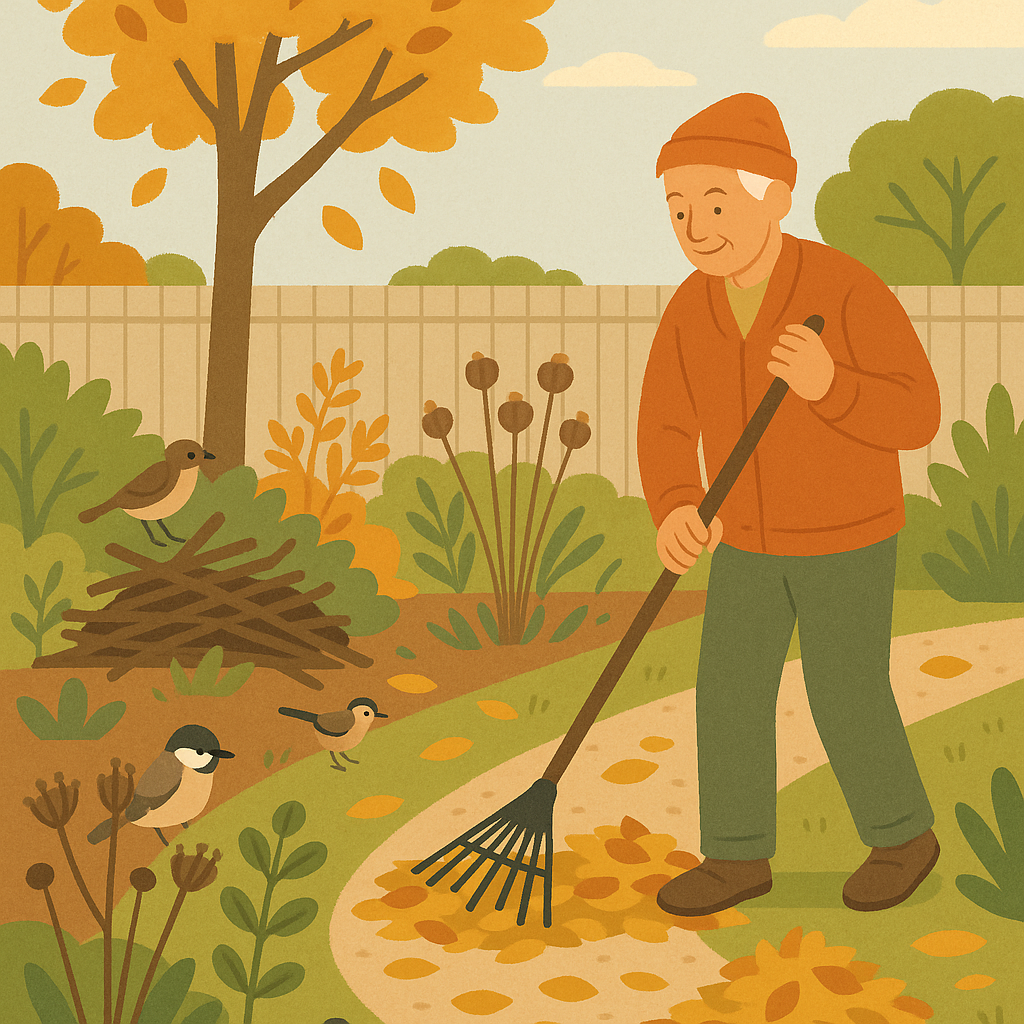
Before deciding what to leave, walk the yard slowly and notice the places that genuinely need attention. Clear steps, patios, ramps, driveways, and narrow garden paths so they are not slippery under wet leaves. Move branches that could trip someone. Keep dryer vents, drains, gutters, and doorways open.
This practical first pass gives you permission to be neat where neatness matters. After that, the rest of the yard can be reviewed with birds in mind instead of treated like one big cleanup job.
What to clear without guilt
- Walking surfaces: Remove slippery leaves from steps, ramps, decks, and main paths.
- Drainage areas: Keep storm drains, gutters, and low spots from clogging with heavy leaf mats.
- Diseased plant debris: Bag or dispose of leaves and stems from plants with obvious disease, rather than spreading the problem.
- Problem branches: Move limbs that lean on fences, block gates, or create a hazard near seating areas.
Leave Some Leaves in the Right Places
Leaves do not have to stay exactly where they fall. The beginner-friendly approach is to move them from high-use areas into garden beds, under shrubs, around trees, or into a quiet leaf pile at the edge of the yard. That keeps the yard usable while still giving birds and insects a richer place to forage.
Cornell Cooperative Extension notes that excessive fall cleanup can affect overwintering animals, pollinators, and water quality, and it recommends placing leaves in appropriate areas rather than sending every bag away. Their guidance on fall cleanup for habitat protection is a helpful reminder that placement matters as much as restraint.
Where leaves usually help most
- Under shrubs: A loose layer can shelter insects that birds may later find.
- Garden beds: Leaves can protect soil and slowly break down into organic matter.
- Back corners: A small leaf pile can support habitat without making the whole yard look forgotten.
- Away from streets: Keep leaves out of roads and storm drains so they do not contribute to drainage and water-quality problems.
Keep Seed Heads Standing for Winter Food
Dried flower heads may look finished to us, but they can still be useful to birds. Coneflowers, black-eyed Susans, asters, grasses, and other seed-bearing plants can attract finches, sparrows, and other seed-eating visitors when natural food is harder to find.
If you already enjoy seasonal watching, BirdPeep’s guide to fall migration and winter preparation pairs naturally with this cleanup routine. Leaving a few seed heads standing gives you another reason to look closely at the yard instead of packing every sign of summer away.
You can still trim plants that flop across walkways or look diseased. The key is to avoid cutting every perennial bed flat just because the calendar changed.
Build a Small Brush Pile Without Making a Mess
A brush pile can sound untidy, but it does not need to look like storm debris. Choose a back corner, fence line, or shrub edge where it will not block mowing, walking, or neighborhood sightlines. Lay thicker branches at the bottom, then add smaller twigs and stems on top.
This kind of pile can give birds a quick place to duck into when wind, cold, or predators make open ground feel risky. It also gives you a useful destination for small branches that would otherwise be hauled away.
Prune Carefully Around Shelter and Nesting Spots
Fall is often a reasonable time to remove dead, damaged, or hazardous branches, but avoid turning every shrub into a bare outline. Dense shrub edges, evergreen cover, and tangled stems can be valuable hiding places for small birds during colder weather.
If a branch is unsafe, prune it. If a shrub simply looks a little shaggy, ask whether birds may benefit from the cover. For a wider view of seasonal timing, BirdPeep’s seasonal birdwatching calendar can help you connect yard chores with what birds are doing through the year.
Use a Simple Cleanup Checklist
A checklist keeps the job calm. Instead of trying to decide everything at once, move through the yard in sections and choose one action for each spot: clear, move, leave, or trim lightly.
- Clear: Steps, ramps, doorways, drains, patios, and any place where wet leaves become slippery.
- Move: Leaves from lawns and paths into beds, shrub edges, compost, or a quiet leaf pile.
- Leave: Healthy seed heads, native plant stems, some leaf litter under shrubs, and sheltered corners.
- Trim lightly: Branches that block access, rub structures, or create obvious safety issues.
- Skip chemicals: Avoid routine lawn chemicals when a simple mulch, compost, or leaf management approach will do.
- Watch afterward: Notice which birds visit seed heads, brush edges, and leaf-covered areas over the next few weeks.
Pros and Cons of a Bird-Friendly Fall Cleanup
Supports natural food
Seed heads, leaf litter, and plant stems can hold seeds and insects that birds search for during colder months.
Reduces unnecessary work
You can focus effort on paths, safety, and diseased debris instead of stripping every bed bare.
Makes watching more interesting
A textured yard gives you more places to observe birds foraging, hiding, and moving through cover.
Needs thoughtful placement
Leaves and branches should stay out of walkways, drains, roads, and places where they create hazards.
May need neighborhood compromise
Some yards, HOAs, or shared spaces require a tidier look, so habitat areas may need to be smaller and more intentional.
Frequently Asked Questions
Should I rake all my leaves if I want to help birds?
No. Clear leaves from slippery paths, drains, and turf areas where they cause trouble, then move some leaves into beds, under shrubs, or a quiet corner where they can support insects and foraging birds.
Is it okay to leave dead flower stems standing?
Yes, when the plants are healthy and not blocking access. Dried seed heads and stems can provide food, structure, and small shelter through fall and winter.
Will a brush pile attract birds?
It can. A small brush pile in a quiet corner may give birds cover from wind, weather, and predators, especially when it is near shrubs or other habitat.
How do I keep the yard from looking neglected?
Keep edges, paths, and front-facing areas tidy, then leave habitat in intentional zones. A neat path beside a wilder garden bed often looks cared for rather than abandoned.
Final Thoughts
Fall yard cleanup for birds works best when it feels practical for you and useful for the wildlife around you. Clear the places that need to be safe. Remove diseased or hazardous debris. Then let a few leaves, seed heads, stems, and branches remain where they can quietly help.
Start with one small habitat corner this year. Watch it through winter, notice who visits, and adjust next fall with the calm confidence that comes from seeing your own yard more closely.