
Learning bird stress signs is one of the kindest skills a beginner can build. It helps you enjoy the little dramas of the yard without accidentally turning a quiet visit into a nervous one. A bird does not need to be tame, close, or still for the moment to be special.
The goal is simple: watch for comfort, notice alarm, and give the bird more space when its behavior asks for it. Most backyard watching becomes easier when you slow down and let the bird set the distance.
Why Bird Stress Signs Matter
Birds spend much of their day balancing food, safety, shelter, and energy. When a person, pet, camera, or feeder setup changes that balance, the bird may pause, call, freeze, or move away. These signs are not failures on your part. They are useful information.
The American Birding Association’s Code of Birding Ethics, shared by the Cornell Lab’s Land Trust Bird Conservation Initiative, reminds birders to avoid stressing birds or exposing them to danger. That is a practical standard for backyard birdwatching too: enjoy the view, but choose restraint when a bird seems uneasy.
Start With Calm Observation
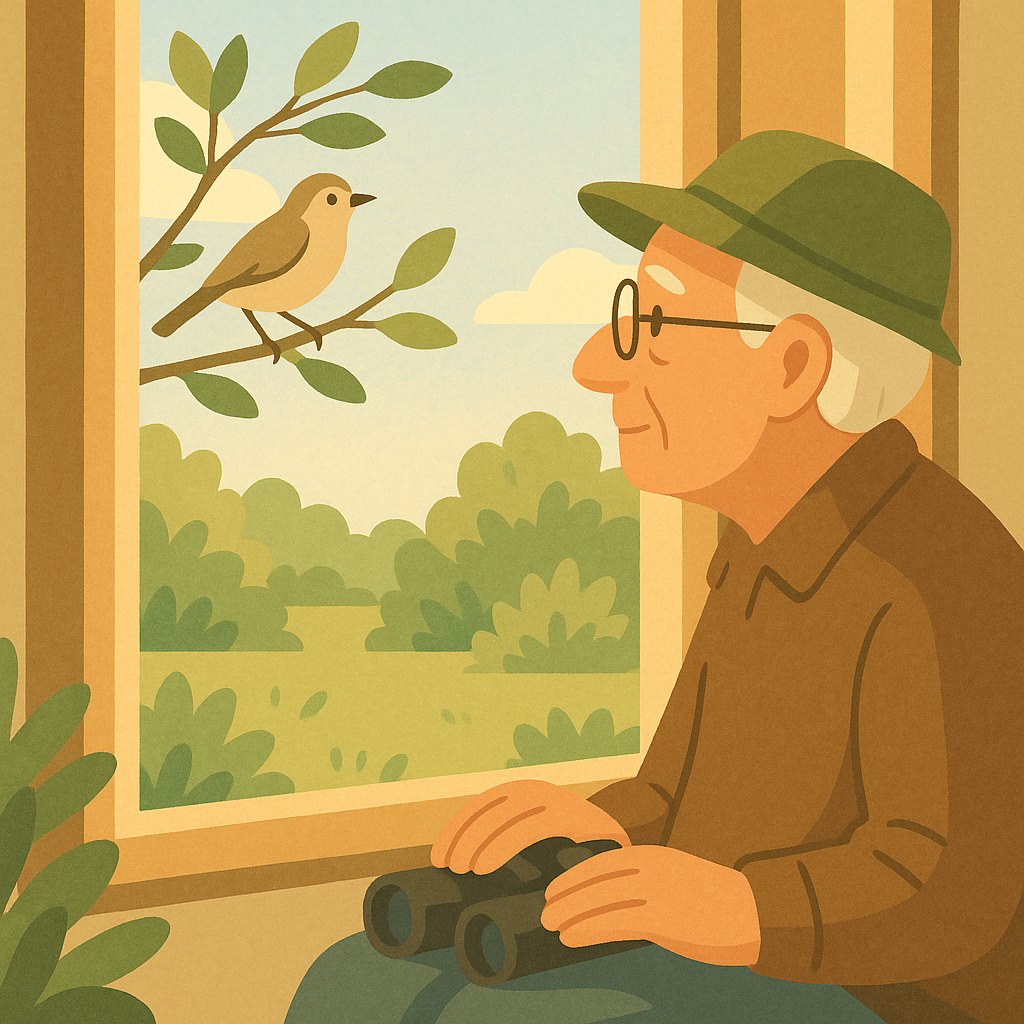
Before deciding whether a bird is comfortable or alarmed, watch for a full minute without moving closer. One quick wing flick or head turn can mean many things. A pattern tells you more than a single gesture.
If sounds are part of what you notice, BirdPeep’s beginner guide to bird calls and songs can help you separate relaxed vocalizing from sharper warning notes. Listen first, then connect the sound with body language and location.
A comfortable bird often keeps doing what it was already doing. It may feed, preen, bathe, hop naturally from branch to branch, or look around without seeming locked on you. You are part of the background, not the center of its attention.
Comfortable Signs to Notice
- Steady feeding: the bird continues picking seed, insects, berries, or suet without repeated pauses.
- Normal preening: it smooths feathers in a loose, unhurried way.
- Easy movement: hops, short flights, and turns look natural rather than frantic.
- Soft scanning: it looks around, but not only at you.
- Group calm: nearby birds continue normal activity too.
What to Check First for Alarm
Alarm usually shows up as a change. Ask yourself what the bird was doing before you arrived or moved. Did it stop eating? Did it go silent? Did nearby birds suddenly scatter? Did one bird begin calling from a fence, shrub, or roofline while staring toward one place?
For readers who watch from a porch, patio, or window, small setup choices can make observation gentler. BirdPeep’s article on backyard birdwatching with limited mobility includes calm viewing ideas that also reduce the need to approach birds closely.
Alarmed Signs to Respect
- Freezing: the bird becomes very still, often with a tight posture and focused gaze.
- Sharp repeated calls: short, urgent notes may signal concern, especially if other birds react.
- Tail flicking or wing flicking: repeated nervous movements can mean the bird is unsettled.
- Leaning away: the body points as if ready to leave, even before it flies.
- Repeated retreat: the bird moves farther away each time you shift position.
- Distraction near a nest: adults may call, swoop, or move conspicuously if you are too close to young or a nest area.
How to Handle an Alarmed Bird Step by Step
When you think a bird may be alarmed, the best response is quiet and boring. You do not need to fix the bird. You need to remove pressure.
- Stop moving closer: freeze your own movement first so the bird has a moment to reassess.
- Lower your profile: sit down, turn slightly sideways, or step behind a window rather than standing over the area.
- Look away briefly: direct staring can feel intense to wildlife, especially at close range.
- Back up slowly: if the bird remains tense, add distance in small, calm steps.
- Stop sound playback: avoid playing calls to pull a bird closer, especially near nesting or feeding areas.
- Move pets indoors: cats and dogs can keep birds on alert even when the pet seems calm.
- Leave nest areas alone: if alarm happens near shrubs, boxes, gutters, or dense vines, give that spot extra space.
Simple notes help you learn these patterns without guessing. If you keep a journal, BirdPeep’s guide to using a birdwatching notebook can turn small observations into better judgment over time.
Common Beginner Mistakes to Avoid
Most mistakes come from enthusiasm. A new bird appears, and the natural urge is to step closer, take one more photo, or play a sound to confirm the identification. The kinder habit is to ask, is the bird still acting naturally?
- Do not chase a better look: if a bird keeps moving away, accept that answer.
- Do not linger near nests: nesting birds deserve extra distance and a short viewing time.
- Do not treat every call as panic: birds call for many reasons, so look for repeated urgency and body tension.
- Do not crowd feeders: watch from a chair, window, or fixed spot instead of walking up while birds feed.
- Do not force a photo: a blurry respectful photo is better than a sharp picture made by pressure.
Pros and Cons of Reading Bird Body Language
It makes birdwatching more ethical
You learn to enjoy birds without pushing them away from food, water, shelter, or young.
It improves identification
Behavior, posture, and repeated movement often reveal more than color, especially at a distance.
It builds confidence slowly
You begin to trust patterns you have seen many times instead of reacting to one quick motion.
Signs can be subtle
A single movement can be normal stretching, weather response, or mild concern, so context matters.
Some birds are naturally nervous
Species, season, nearby predators, and habitat can all change how close a bird will tolerate people.
A Simple Backyard Checklist
Use this short checklist any time you are watching a bird from the yard, porch, or window.
- Was the bird already relaxed? Compare current behavior with what it was doing before you moved.
- Is it still feeding or preening? Continuing normal activity is usually a good sign.
- Are calls sharp and repeated? Treat repeated urgent notes as a reason to pause.
- Is the bird watching only me? A fixed stare and tight posture can mean you are too close.
- Did it move away more than once? Respect repeated retreat and add space.
- Could there be a nest nearby? Be extra careful around dense shrubs, birdhouses, and repeated adult visits.
When to Get Extra Help
If a bird appears injured, trapped, or unable to fly, do not guess or handle it casually. Look for a licensed wildlife rehabilitator or local wildlife agency guidance in your area. If the bird is simply alert and mobile, distance and quiet are usually the safest first choices.
When you are identifying an unfamiliar bird, behavior can support your guess, but shape matters too. BirdPeep’s guide to identifying birds by shape before color is a useful companion because it keeps you observing without needing to get closer.
Frequently Asked Questions
What should I check first when reading bird stress signs?
Start with change. If the bird suddenly stops normal activity, freezes, calls sharply, or moves away after you shift position, give it more space.
How often should I review my observations?
A few notes after each watching session are enough. Over time, repeated patterns will teach you which birds are relaxed and which situations create alarm.
What should I do if I am not sure?
Choose the gentler option: stop approaching, lower your movement, and give the bird distance. You can verify the behavior later with trusted birding resources.
Can I undo a mistake if I startled a bird?
You cannot undo the startle, but you can stop the pressure quickly. Back away, stay quiet, and let the bird return to normal activity on its own schedule.
Final Thoughts
Comfortable birds usually continue their ordinary lives. Alarmed birds ask for space through stillness, sharp calls, repeated retreat, or tense posture. Once you begin noticing those differences, backyard birdwatching becomes calmer for you and safer for them.
On your next quiet morning, pick one bird and watch without trying to move closer. Notice what relaxed behavior looks like first. That simple habit will make every later sighting more respectful and more rewarding.