
Picture this: you’re standing at your front door, binoculars in hand, ready for your very first intentional birdwatching walk. But then the questions start flooding in—should I bring a notebook? What about snacks? Do I need that expensive camera? Will my regular sneakers work, or do I need hiking boots?
Take a deep breath. I’ve been exactly where you are, and I promise you don’t need to pack like you’re heading into the wilderness. Your first birdwatching walk should feel exciting, not overwhelming. Think of it like preparing for a pleasant stroll through your neighborhood, just with a bit more purpose and a few specific tools to enhance the experience.
The golden rule: pack light, but pack smart. After fifteen years of birdwatching walks, I’ve learned that the best gear is the gear you’ll actually use—and carry comfortably for an hour or two.
The Absolute Essentials (Your Core Four)
Before we dive into the nice-to-haves, let’s cover what you truly cannot do without. These four items are like the foundation of a house—everything else is just making things more comfortable and convenient.
Binoculars: Your Bird-Watching Superpower
You technically could bird-watch without binoculars, but it would be like trying to read a book with the print too small to see comfortably. Any binoculars are better than no binoculars, even if they’re the ones sitting in your junk drawer from that baseball game five years ago.
- Ideal specs: 8×32 or 8×42 for beginners (the first number is magnification, the second is lens diameter)
- Weight matters: Anything over 2 pounds will feel heavy after 30 minutes
- Budget option: Used binoculars from garage sales often work perfectly fine
- Test them first: Make sure both eyes see clearly and the adjustment feels smooth
Field Guide or Smartphone App
You’ll want some way to identify the birds you see—otherwise, you’ll be telling stories about “that pretty red bird” for years without knowing it was a Northern Cardinal. Choose based on what feels more comfortable to you.
Comfort and Safety Items (Don’t Overlook These)
Bird-watching is supposed to be relaxing and enjoyable, not a test of endurance. These comfort items can make the difference between a pleasant hour and a miserable experience that puts you off birding forever.
Weather-Appropriate Clothing
Birds are most active in the early morning when it’s often cooler than you expect. Dress in layers you can add or remove, and always bring one more layer than you think you’ll need.
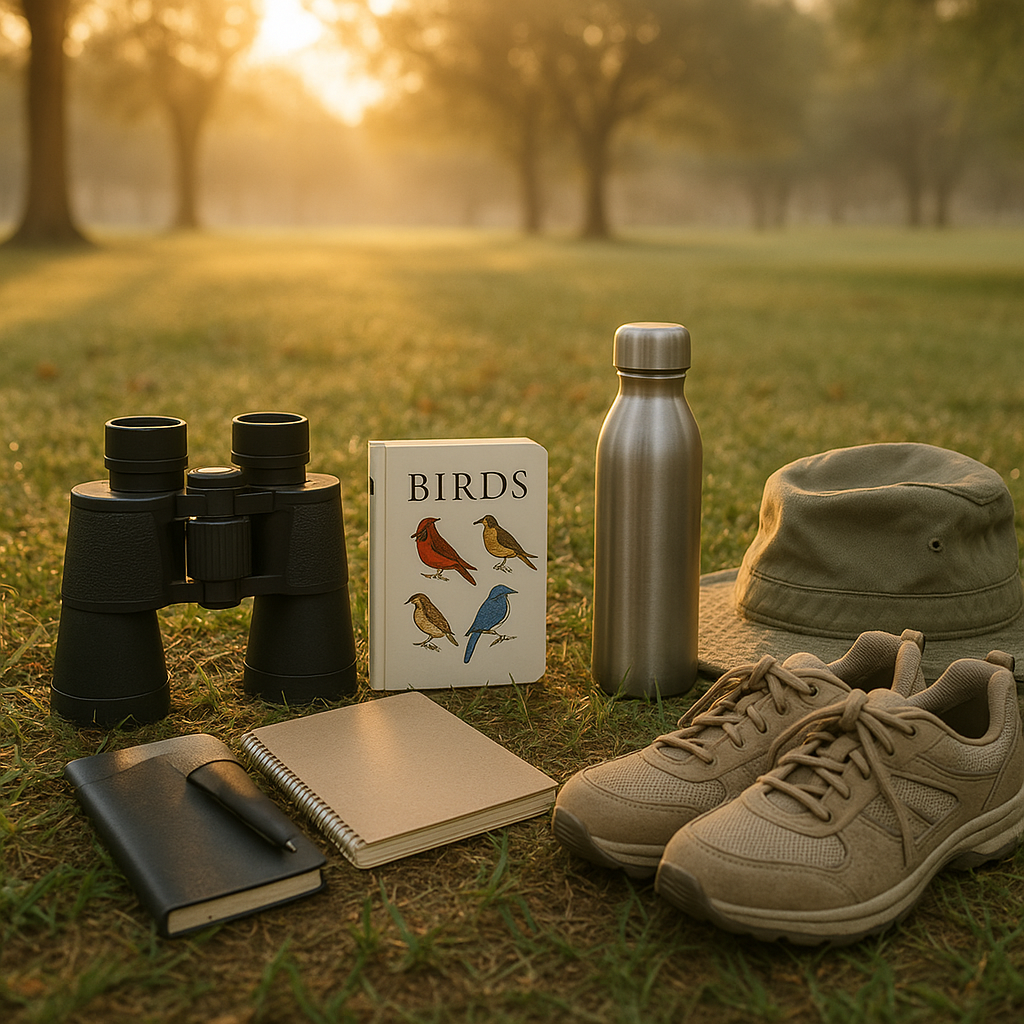
- Comfortable walking shoes: You don’t need hiking boots for most neighborhood birding
- Hat with a brim: Protects your eyes and helps you see birds against bright skies
- Light jacket or sweater: Even summer mornings can be surprisingly cool
- Long pants in tall grass areas: Protection from scratches and insects
Sun and Bug Protection
Nothing ruins a pleasant bird walk like sunburn or mosquito bites that itch for days. A little preparation goes a long way toward comfort.
Nice-to-Have Items (Enhance Your Experience)
These items aren’t essential for your first walk, but they can significantly enhance your comfort and enjoyment. Think of them as upgrades you can add as you discover what type of bird-watcher you want to become.
Documentation Tools
- Small notebook and pencil: For jotting down birds you’ve seen or sketching interesting behaviors
- Smartphone camera: Perfect for documenting unusual birds or behaviors to look up later
- eBird app: Free way to track your sightings and contribute to citizen science
Comfort Enhancers
- Water bottle: Stay hydrated, especially on longer walks
- Small snack: Energy bar or trail mix for longer outings
- Folding chair or cushion: For those perfect bird-watching spots where you want to sit and observe
- Neck strap for binoculars: Distributes weight more evenly than the standard thin strap
What NOT to Bring (Common Beginner Mistakes)
Sometimes what you leave behind is just as important as what you pack. I’ve seen too many enthusiastic new birders burden themselves with gear that actually makes their first walk less enjoyable.
Heavy or Expensive Equipment
Save the expensive telephoto camera lens and tripod for when you know you love birding. For now, stick with your smartphone camera—it’s perfectly adequate for documenting your finds and won’t tire you out.
🏆 Minimalist Approach — Binoculars + smartphone
Everything you truly need fits in your pockets. Perfect for testing whether you enjoy birding before investing in more gear.
📝 Enthusiast Approach — Add field guide + notebook
For those who love learning and documenting their experiences. Adds educational value without too much extra weight.
⭐ Complete Comfort — Add water, snacks, folding chair
For longer walks or when you find a perfect spot to sit and observe. Maximum comfort for extended enjoyment.
Packing Your Gear: Smart Organization Tips
How you carry your gear matters almost as much as what you bring. The goal is to have everything accessible without feeling like a pack mule.
Pocket Distribution Strategy
- Front pocket: Phone (for app and camera)
- Back pocket: Field guide (if using a pocket guide)
- Side cargo pocket: Small notebook and pencil
- Around neck: Binoculars with comfortable strap
Small Backpack vs Pockets
For walks longer than an hour, a small daypack can be more comfortable than stuffed pockets. Look for one with side mesh pockets for water bottles and easy access to frequently used items.
Seasonal Considerations
Your packing list will vary slightly depending on when you’re heading out. Each season brings different birds and different comfort needs.
Bug Spray
Essential for comfort during peak mosquito and tick season.
Sunscreen
Easy to forget but crucial for longer walks in open areas.
Wide-brimmed Hat
Protects from sun and helps with glare when spotting birds.
Warm Layers
Birds are active in cold weather, but you need to stay warm to enjoy it.
Hand Warmers
Cold fingers make binocular adjustment difficult and uncomfortable.
Thermos of Hot Drink
Extends your comfort time outdoors on chilly mornings.
Pre-Walk Checklist (The Night Before)
A little preparation the evening before can make your morning walk flow much more smoothly, especially when you’re excited and want to get out early to catch the dawn chorus.
- Check weather forecast: Adjust clothing and timing accordingly
- Charge devices: Phone, camera, or any apps you plan to use
- Plan your route: Know where you’re going so you can focus on birds, not navigation
- Set out clothes: One less decision in the early morning
- Pack snacks and water: Especially important for longer walks
Frequently Asked Questions
Do I really need expensive binoculars for my first walk?
Absolutely not! Any binoculars are better than none. Start with what you have or can borrow. You can always upgrade later if you fall in love with birding.
Should I bring my big camera with the telephoto lens?
Save the heavy camera gear for later walks. Your smartphone camera is perfect for documenting birds and behaviors to look up later, and it won’t weigh you down.
What’s the maximum I should pack for a one-hour walk?
Keep it simple: binoculars, phone or field guide, water, and appropriate clothing. If your gear weighs more than 3-4 pounds total, you’re probably overpacking.
Is it okay to go birdwatching alone on my first walk?
Absolutely! Solo birding can be very peaceful and meditative. Just let someone know where you’re going and when you expect to return, especially in unfamiliar areas.
Final Thoughts: Less Gear, More Discovery
Remember, people have been watching and enjoying birds for thousands of years with nothing more than their eyes and patience. Everything on this checklist is just there to make your experience more comfortable and help you see birds more clearly.
Your first birdwatching walk isn’t about having the perfect gear—it’s about stepping outside, slowing down, and opening your awareness to the incredible world of birds that surrounds us every day. The best equipment is the equipment that doesn’t get in the way of that sense of wonder and discovery.
Start simple, stay comfortable, and let the birds surprise you. You might discover that this peaceful hobby becomes one of your favorite ways to connect with nature and find moments of calm in a busy world.