A birding checklist for beginners should feel like a friendly memory aid, not a test you have to pass. If you have ever watched a bird at the feeder and thought, "I wish I remembered when I saw that one last," you already understand the value of a simple checklist.
The trick is to keep it small. A good checklist helps you notice patterns, remember favorite visitors, and enjoy steady progress without turning a peaceful hobby into paperwork.
Why a Birding Checklist for Beginners Helps
Birdwatching is full of small moments that are easy to forget: the first robin after winter, a chickadee returning every morning, or a hawk circling after lunch. A checklist gives those moments a place to land.
It also keeps you from feeling as if every bird must be identified perfectly. Even noting "small brown bird near the hedge" can be useful if you add shape, behavior, or sound. Over time, those small clues become familiar.
If you are still gathering basic supplies, this gentle first birdwatching walk checklist can help you prepare without overpacking. Once you are watching regularly, your personal checklist becomes less about gear and more about what you actually saw.
Start With Four Simple Details
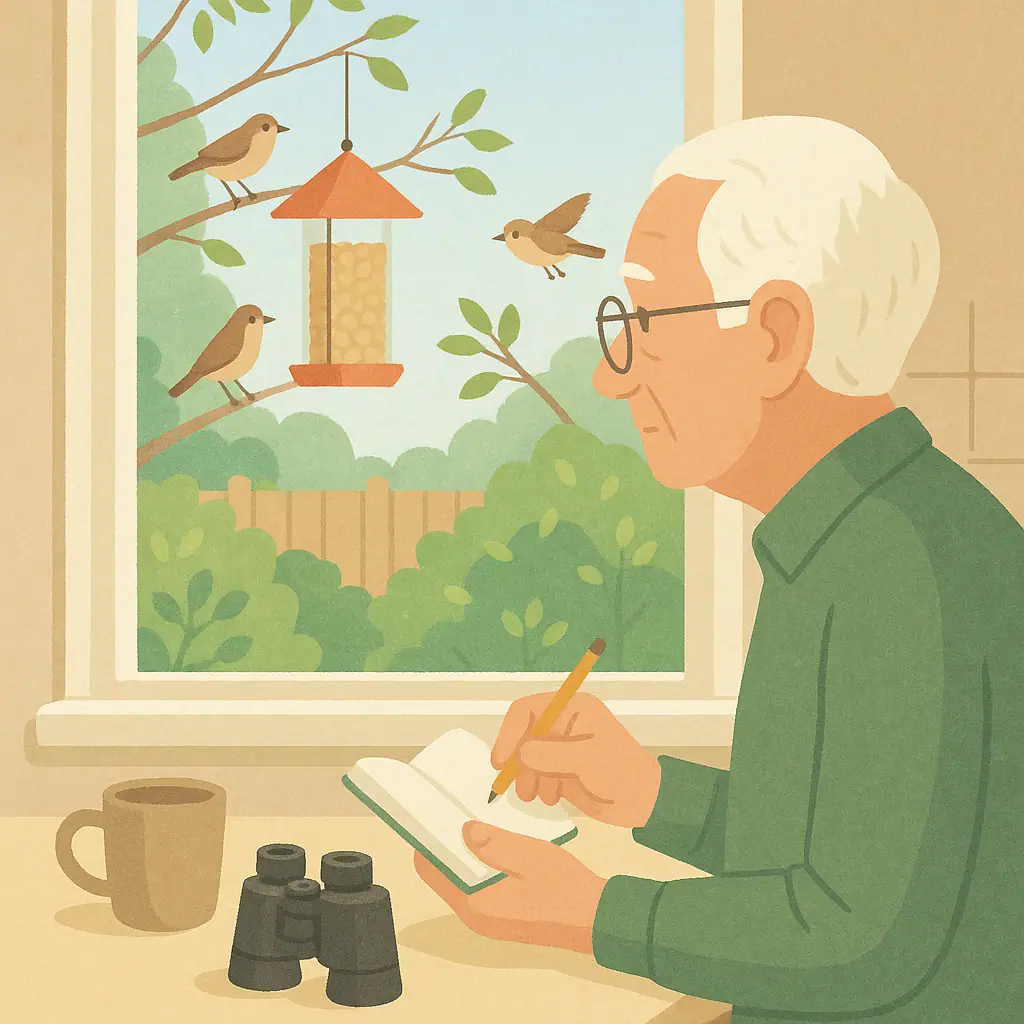
The easiest birding checklist for beginners uses four lines. You can keep them in a notebook, on an index card, or in a phone note if that is more comfortable.
- Date: Write the day, not the exact minute, unless the time mattered.
- Place: Use plain words such as kitchen window, back porch, garden bench, or neighborhood pond.
- Bird or best guess: Name the bird if you know it, or describe it if you do not.
- One useful clue: Add behavior, size, sound, color patch, food choice, or who it was with.
The Cornell Lab's eBird guidance emphasizes that useful checklists include where and when you birded, along with what you could identify. Their complete checklist guidance is more detailed than most backyard beginners need, but it confirms the same basic idea: location, date, and honest observation matter.
You do not need to submit every casual backyard note to a database. For many beginners, the real win is simply remembering what happened and noticing when it happens again.
Keep the Checklist Short Enough to Repeat
A checklist only helps if you will actually use it. If it takes ten minutes to fill out after a five-minute bird visit, it is too much.
Try this rhythm for one week: watch for a few minutes, write one short entry, and stop. Do not rewrite it neatly. Do not research every unknown bird right away. Let the checklist stay light.
- Watch first: Give yourself a quiet minute before reaching for a notebook.
- Record one sighting: Choose the bird or moment you most want to remember.
- Add one clue: Pick the detail that would help you recognize it again.
- Review later: Look back once a week, not after every entry.
If you want a companion habit that stays just as relaxed, BirdPeep's guide to creating your first bird life list explains how to celebrate new species without turning the hobby into a scoreboard.
What to Write When You Are Not Sure
Uncertainty is normal in birdwatching. Beginners often see a bird for three seconds, from the wrong angle, in odd light. A checklist should give you permission to write what you know instead of forcing a guess.
Useful uncertain entries sound like this:
- Small gray bird: moved headfirst down the tree trunk.
- Large dark bird: glided in circles, no flapping for a long stretch.
- Brown bird at feeder: thick beak, stayed with two similar birds.
- Clear whistle: heard from shrubs before sunrise, bird not seen.
These notes may feel humble, but they are often better than a confident wrong name. Shape, behavior, and sound are the clues that make later identification easier.
Pros and Cons of Keeping It Very Simple
Easy to keep doing
A short checklist takes only a minute, so it fits naturally after coffee, lunch, or a quiet porch break.
Less pressure to be perfect
You can record clues and questions without feeling that every bird needs a final name right away.
Better memory over time
Repeating the same few details helps you notice seasonal patterns, favorite perches, and regular visitors.
Fewer details for rare sightings
A very short note may not capture every field mark if something unusual appears.
Needs occasional review
If you never look back, you may miss the patterns your notes were quietly collecting.
A Calm Weekly Review
Choose one day a week to glance over your notes. Five minutes is plenty. Look for repeat visitors, changes in time of day, or questions you want to answer later.
You might notice that cardinals came before breakfast, sparrows gathered after seed was scattered, or woodpeckers appeared more often when the yard was quiet. Those patterns make ordinary watching feel richer.
If limited movement makes longer outings difficult, a simple checklist pairs nicely with backyard birdwatching with limited mobility. A steady viewing spot can still produce a surprisingly interesting record.
When to Add More Detail
Once the four-line version feels easy, add only one new detail at a time. Weather, approximate time, food source, or bird behavior can be helpful. Add the detail because it answers a question you actually care about, not because a checklist template told you to.
- Add weather if you wonder whether rain, wind, or heat changes who visits.
- Add time of day if you want to know when your yard is most active.
- Add behavior if you are learning identification through movement.
- Add food or plant if you want to improve your bird-friendly setup.
For days when you do not have binoculars nearby, you can still record movement, calls, size, and setting. This guide to birdwatching without binoculars is a useful reminder that careful noticing matters more than equipment.
Frequently Asked Questions
What should a beginner put on a birding checklist?
Start with date, place, bird name or description, and one clue you noticed. That gives you enough information to remember the sighting without making the checklist feel like homework.
Should I write down birds I cannot identify?
Yes. Write a plain description, such as size, shape, color patch, sound, or behavior. Honest uncertain notes are part of learning and may help you identify the bird later.
How often should I review my checklist?
Once a week is enough for most backyard beginners. A short review helps you notice patterns without making the hobby feel like an assignment.
Do I need a birding app to keep a checklist?
No. A paper notebook, calendar margin, or simple phone note works fine. Apps can be useful later, but the best checklist is the one you will actually keep using.
Final Thoughts
A birding checklist for beginners should make your watching feel calmer, not busier. Keep it short, write what you truly noticed, and let your notes grow only when they are helping you enjoy the birds more.
The next time a familiar visitor lands near your window, write one small entry. Date, place, bird, clue. That is enough to begin building a gentle record of the life moving through your yard.