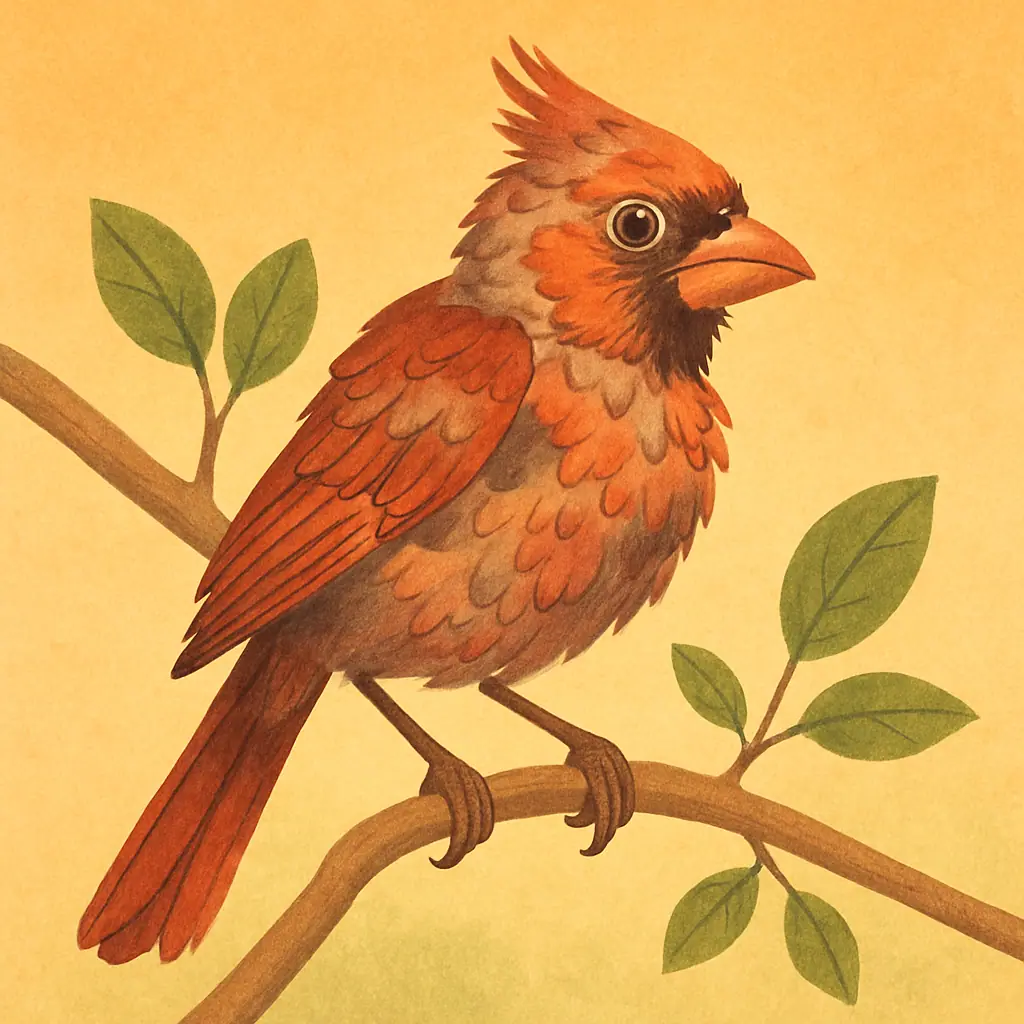
Every summer, birdwatchers start noticing something a little alarming at their feeders. The Northern Cardinal that wore a flawless crimson coat all spring suddenly looks patchy and moth-eaten. The American Robin you've admired all season shows up with a bald spot on its head. Your favorite Blue Jay seems to have lost half its crest. What happened?
Relax — your birds are perfectly fine. They're doing something every bird on the planet must do: they're molting. And once you understand this remarkable process, those scruffy summer visitors become fascinating rather than concerning.
🪶 What Is Molt?
Molt is the process by which birds shed their old, worn feathers and grow fresh new ones. It's completely normal, essential for survival, and happens on a regular cycle throughout a bird's life. Feathers are made of keratin — the same protein as your fingernails — and they don't regenerate like skin. Once a feather is damaged or worn out, the only way to replace it is to shed it entirely and grow a new one from scratch.
For most North American backyard birds, the major molt happens in late summer and early fall, right after breeding season ends. The timing is strategic: breeding is over, the weather is still warm, and food is abundant — providing the energy and protein birds need to build a full set of new feathers before winter arrives.
- Feathers wear down from sunlight exposure, friction against branches, and parasite damage.
- Flight performance degrades as feathers become frayed — making replacement a survival necessity.
- Insulation weakens in worn feathers, making fresh plumage critical before cold weather arrives.
🔬 How the Process Works
Molt is not random feather loss — it's a precisely controlled biological process governed by hormones and triggered by changes in daylight (photoperiod). Here's what's actually happening when your cardinal looks like it had a rough week.
The Shedding Sequence
Birds don't shed all their feathers at once — that would leave them flightless and dangerously vulnerable to predators. Instead, molt follows a symmetrical, sequential pattern. Wing feathers are dropped in a specific order (usually starting from the innermost primary feather and moving outward), always symmetrically, so both wings remain balanced for flight. Body feathers follow a similar gradual sequence.
Because feathers are dropped and replaced in stages, a molting bird always retains enough feathers to fly. The trade-off is that flight is temporarily less efficient, and the bird may look patchy, bald in spots, or generally unkempt.
Why Heads Look Bald
Head feathers are small, numerous, and often molted simultaneously — which is why bald-headed cardinals and robins look so startling. These birds haven't developed a condition; they've simply shed all their tiny head feathers at once. Within a couple of weeks, the new feathers grow back and the bird looks immaculate again.
Blood Feathers
When a new feather first emerges from its follicle, it's encased in a protective sheath and supplied with blood — it's actually called a blood feather or pin feather. If you look closely at a bird's feathers in late summer, you may notice some that appear darker, more cylindrical, or slightly waxy at the base. Those are actively growing new feathers. Once fully grown, the blood supply recedes and the sheath breaks away, revealing the mature feather.
Types of Molt You'll See in Your Backyard
Different molts happen at different times of year, and they serve distinct purposes:
- Post-breeding (basic) molt — summer/fall: The major annual molt. Replaces all or most feathers with fresh ones for winter. Produces the subdued "basic plumage."
- Pre-breeding (alternate) molt — late winter/spring: A partial molt that replaces body feathers with the vibrant "breeding plumage" for the mating season.
- Post-juvenile molt: Young birds replace their first, soft juvenile feathers with more durable adult plumage, often in their first fall.
Restores flight efficiency
Fresh, fully interlocked feathers provide optimal aerodynamics for escape from predators and efficient daily travel.
Improves winter insulation
New feathers trap warm air more effectively than worn ones — critical for small birds surviving winter nights.
Enables seasonal camouflage
Molt allows birds to shift between bright breeding colors and more concealed winter plumage as needed.
Energetically demanding
Growing a full set of new feathers requires significant protein and calories — roughly 25% more food intake during active molt periods.
Temporarily reduces flight ability
As flight feathers are replaced, birds are slightly less agile — making them more cautious and less likely to venture far from cover.
How Long Does Molt Take?
Molt duration varies dramatically by species. Small songbirds typically complete their post-breeding molt in 6 to 8 weeks. Mid-sized birds like robins and jays may take 8 to 12 weeks. Larger birds take considerably longer — hawks and eagles can take a year or more to replace all their flight feathers, doing it gradually to maintain flight ability throughout.
So if you see a scruffy cardinal in July and then a crisp, perfect one in September, you've watched an entire molt cycle from start to finish without realizing it.
Frequently Asked Questions
I see a bald-headed robin at my feeder. Is it sick?
Almost certainly not — this is the most common molt alarm call birdwatchers make. Bald head spots in robins and cardinals in summer are almost always normal post-breeding molt. If the bird is eating, flying normally, and behaving alertly, it's fine. A genuinely sick bird sits fluffed on the ground, can't fly, and appears lethargic.
Can I help birds during molt by feeding them?
Yes, and it genuinely matters. Protein-rich foods — mealworms, suet, and peanuts — provide the building blocks birds need to grow healthy new feathers. Keeping feeders well-stocked in July through September actively supports the molt process.
Why do birds seem to disappear from my feeders in summer?
Summer quietude at feeders is normal for two reasons: molting birds become more secretive and stay close to cover, and abundant natural food (insects and berries) means your feeders are simply less necessary. Activity typically picks up again in September as molt completes and natural food sources diminish.
Do all birds lose feathers the same way?
No — molt strategies vary considerably across species and even between individuals. Ducks undergo a rapid complete molt that leaves them temporarily flightless for a few weeks. Most songbirds molt gradually to maintain flight ability throughout. This diversity reflects the different survival pressures each species faces.
🌿 Final Thoughts
The scruffy, patchy birds of summer are some of the most interesting birds to observe — if you know what you're seeing. Molt is a window into the biological machinery that keeps birds alive, season after season, year after year. Every new feather is a small act of renewal, fueled partly by the food in your feeder and partly by the remarkable efficiency of avian biology.
Next time you spot a bald-headed cardinal at your feeder, instead of worrying, try thinking: There goes nature, quietly doing its work. Take a note of the date in your journal. Then check back in a month and see the transformation complete.