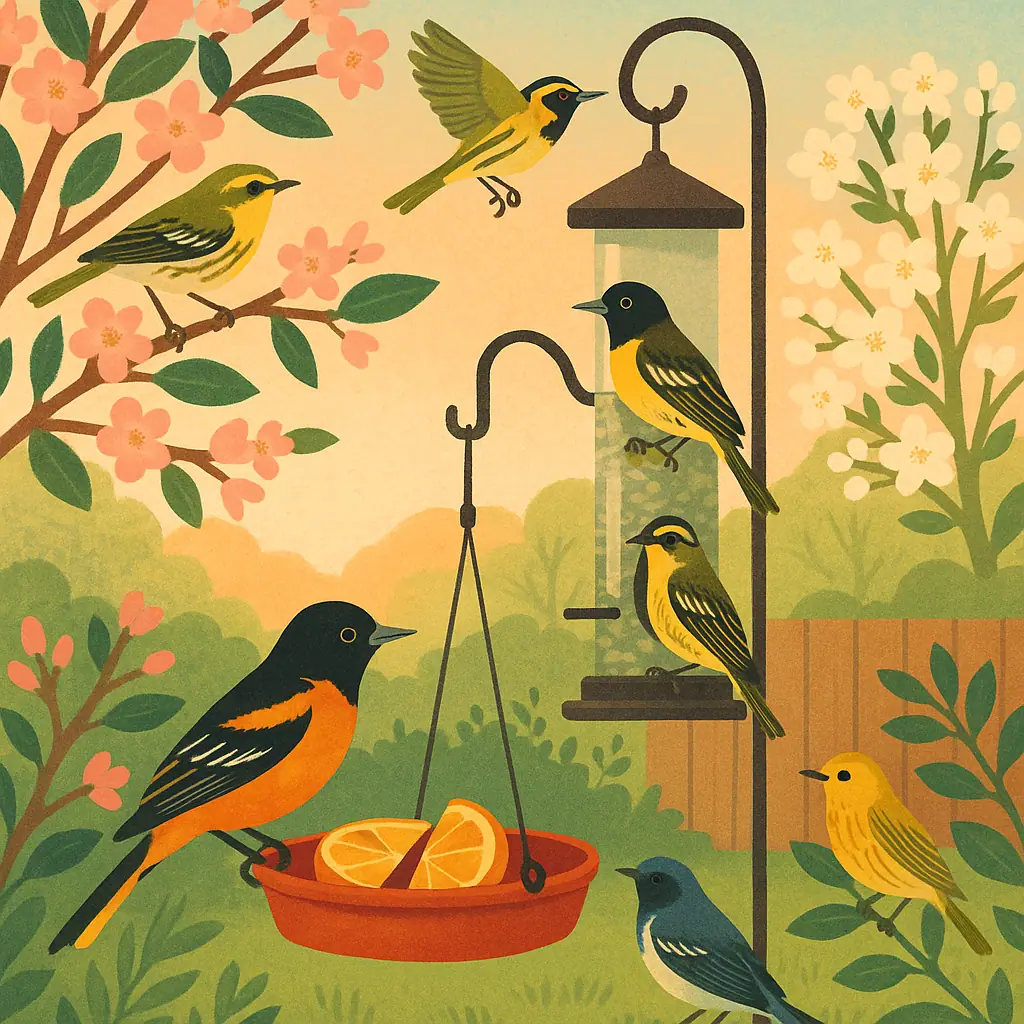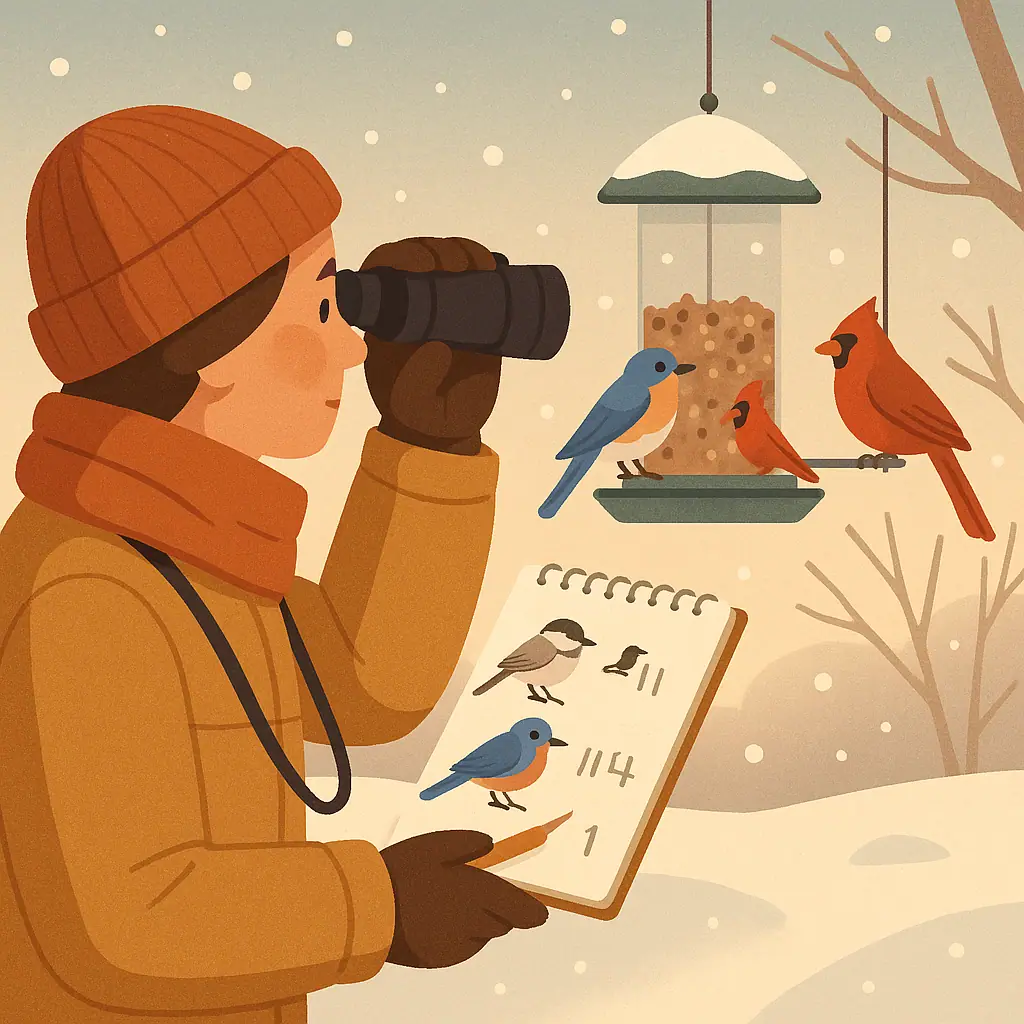
Imagine spending 15 quiet minutes watching the birds at your feeder on a February morning — and knowing that simple act is contributing to a global scientific database that helps protect birds around the world. That's exactly what the Great Backyard Bird Count makes possible, and it's one of the most welcoming entry points into the world of citizen science for birdwatchers of any experience level.
Whether you've been watching birds for decades or you just hung your first feeder last month, the Great Backyard Bird Count (GBBC) was designed for you. It asks nothing more than what you're probably already doing: paying attention to the birds around you.
What Is the Great Backyard Bird Count? 🔬
The Great Backyard Bird Count is a free annual citizen science event held each February. Over four days, participants from across the United States — and more than 100 countries worldwide — count the birds they see in any outdoor location and submit their observations online. The data creates a real-time snapshot of bird populations that scientists couldn't collect any other way.
The event was launched in 1998 by the Cornell Lab of Ornithology and the National Audubon Society, and is now co-hosted by Birds Canada. In its first year, a few thousand participants took part. Today, hundreds of thousands of people from every corner of the globe contribute data during the four-day count period each February.
🌍 Why Your Backyard Count Actually Matters
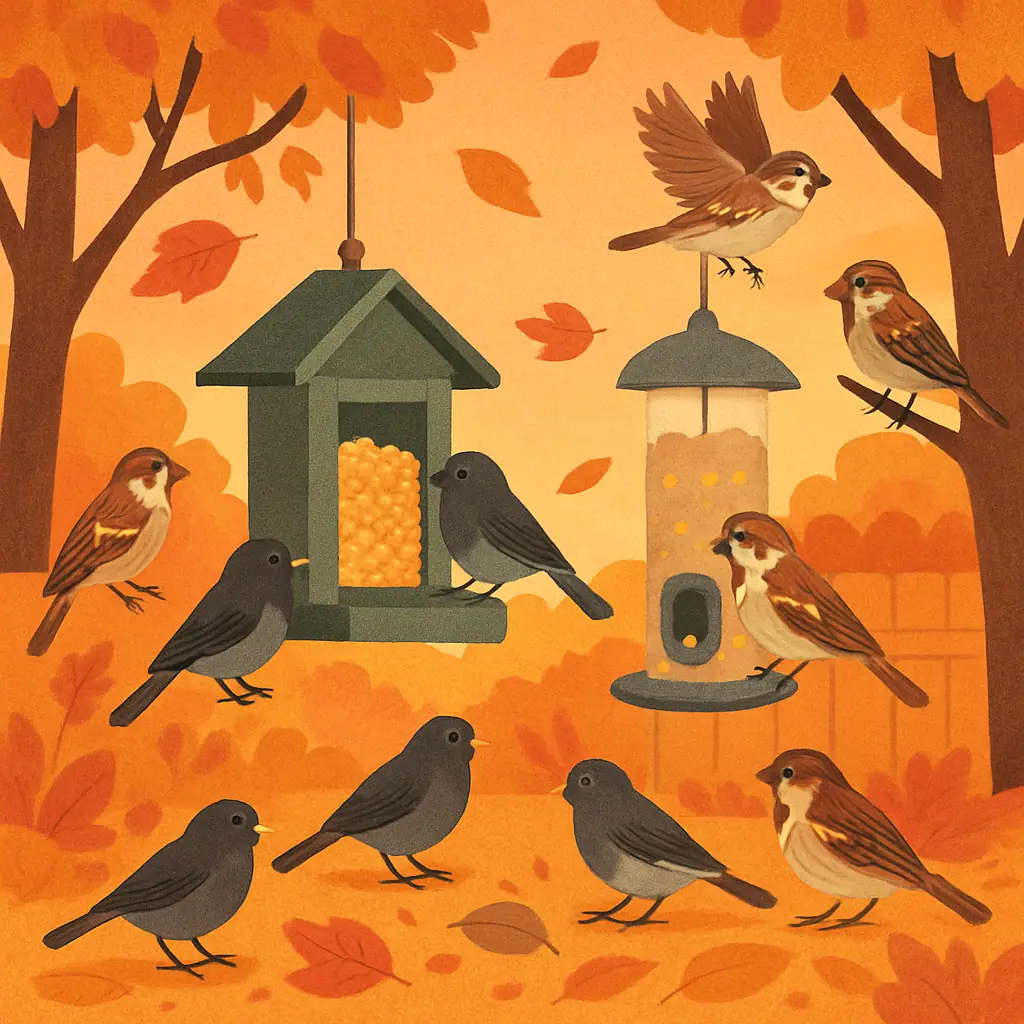
It can feel hard to believe that watching House Sparrows at your feeder contributes meaningful scientific data. But the scale of collective participation is what makes the GBBC so powerful.
Bird populations change constantly — responding to habitat loss, climate shifts, disease outbreaks, and weather patterns. Professional ornithologists simply cannot be everywhere at once. But citizen scientists can. When hundreds of thousands of people simultaneously count birds across an entire continent, scientists get a picture of bird populations that no research team could replicate on its own.
- Tracking population trends: Year-over-year GBBC data reveals which species are increasing, declining, or shifting their geographic range.
- Monitoring irruptive species: The GBBC captures the movement of northern finches and other irruptive birds that appear unpredictably in winter.
- Climate change indicators: Birding data shows how species ranges are moving northward as winters warm — observable patterns that inform conservation policy.
- Disease detection: Sudden declines in a species' reported numbers can alert researchers to disease outbreaks before they become crises.
How to Participate (Step by Step) 📋
The GBBC is genuinely simple to join. Here's exactly what to do:
Step 1: Choose Your Location
You can count birds anywhere — your backyard, a neighborhood park, an apartment balcony, a cemetery, or anywhere you can safely and comfortably observe birds. You don't need to go anywhere special. The point is to observe wherever you are.
Step 2: Count for At Least 15 Minutes
Spend at least 15 minutes watching birds on one or more of the four count days. The key rule: count the highest number of each species you see at one time — not the total number of individual birds over the entire session. This prevents double-counting the same bird that flew away and came back.
Step 3: Record What You See
Write down each species you see or hear, along with the highest count. Don't worry if you can't identify everything — listing "unknown sparrow" is better than skipping it entirely. Partial data is still valuable data.
Step 4: Submit Your Count
There are three easy ways to submit your observations:
- Merlin Bird ID App: The free app from Cornell Lab is ideal for beginners. It helps you identify birds on the spot and submits your count automatically when you're signed in.
- eBird App or Website: If you already use eBird for your regular sightings, any checklist submitted during the four-day count period automatically contributes to the GBBC.
- BirdCount.org: The official GBBC website where you can enter data directly online — no app needed.
Tips for Making Your Count Count 🎯
A few simple habits will help you submit more accurate data and get more out of your GBBC experience:
- Set up your feeder the week before: Birds learn feeder locations by habit. If you start filling your feeder 5-7 days before the count weekend, you'll have a reliable crowd of regulars waiting.
- Count in the morning: Bird activity peaks in the first 1-2 hours after sunrise. Counting during this window gives you the highest species variety.
- Note behavior, not just species: Writing "3 cardinals — 2 males, 1 female, feeding together" gives researchers more context than just "3 cardinals."
- Count on multiple days: You can submit separate counts on each of the four days. Multiple submissions from the same location capture different birds that were present at different times.
- Invite a friend or grandchild: The GBBC is a wonderful shared experience. Having a second set of eyes improves accuracy, and introducing a young person to citizen science is a gift that can last a lifetime.
Pros and Cons of Joining the GBBC
Zero cost, zero expertise required
The GBBC is completely free and welcomes participants of every skill level, from first-time birdwatchers to lifelong birders.
Real scientific impact
Your observations become part of a dataset used in peer-reviewed research and conservation policy decisions. This is genuine science, not just a hobby.
Community connection
Knowing that hundreds of thousands of people are watching birds at the same time creates a remarkable sense of shared purpose and community.
February weather can be challenging
The count happens in the heart of winter. Window-counting from indoors is completely valid and counts just as much as outdoor observation.
Identification uncertainty is normal
New birders may struggle to name every bird they see. That's okay — submit what you know confidently, and use the experience to learn.
Frequently Asked Questions About the GBBC
Do I have to count every single bird I see, or just species?
Both. You record each species and the highest number of individuals of that species you saw at one time during your counting session. So if 5 goldfinches were at your feeder at once, then 3 left and 4 new ones arrived, you report 5 — not 9.
What if I can't identify a bird I see?
Submit it anyway. Use Merlin to help with identification, or describe it as "unknown sparrow" or "unknown woodpecker." The Cornell Lab and Audubon actually encourage reporting unidentified birds — the data still shows that bird activity occurred at your location.
Can I count birds I hear but don't see?
Yes. In eBird and on BirdCount.org, you can submit birds detected by ear. Auditory identification is a valid and widely used method in ornithological surveys. If you recognize a cardinal's chip call or a chickadee's song, those count.
Does my data really matter if I only see common birds like House Sparrows and Pigeons?
Absolutely. Even abundant, common species are tracked in the GBBC database. Population trends in common birds are important indicators of overall ecosystem health. And your location data — even if it shows only common species — helps researchers map the full geographic distribution of birds during the February count period.
Final Thoughts ✨
There's something profoundly satisfying about knowing that your quiet morning with binoculars and a notepad is contributing to a global effort to understand and protect birds. The Great Backyard Bird Count is one of those rare activities where the pleasure of doing it and the value of doing it point in exactly the same direction.
You don't need to be an expert. You don't need expensive gear. You just need to show up, pay attention, and take 15 minutes to count the birds that are already sharing your world.