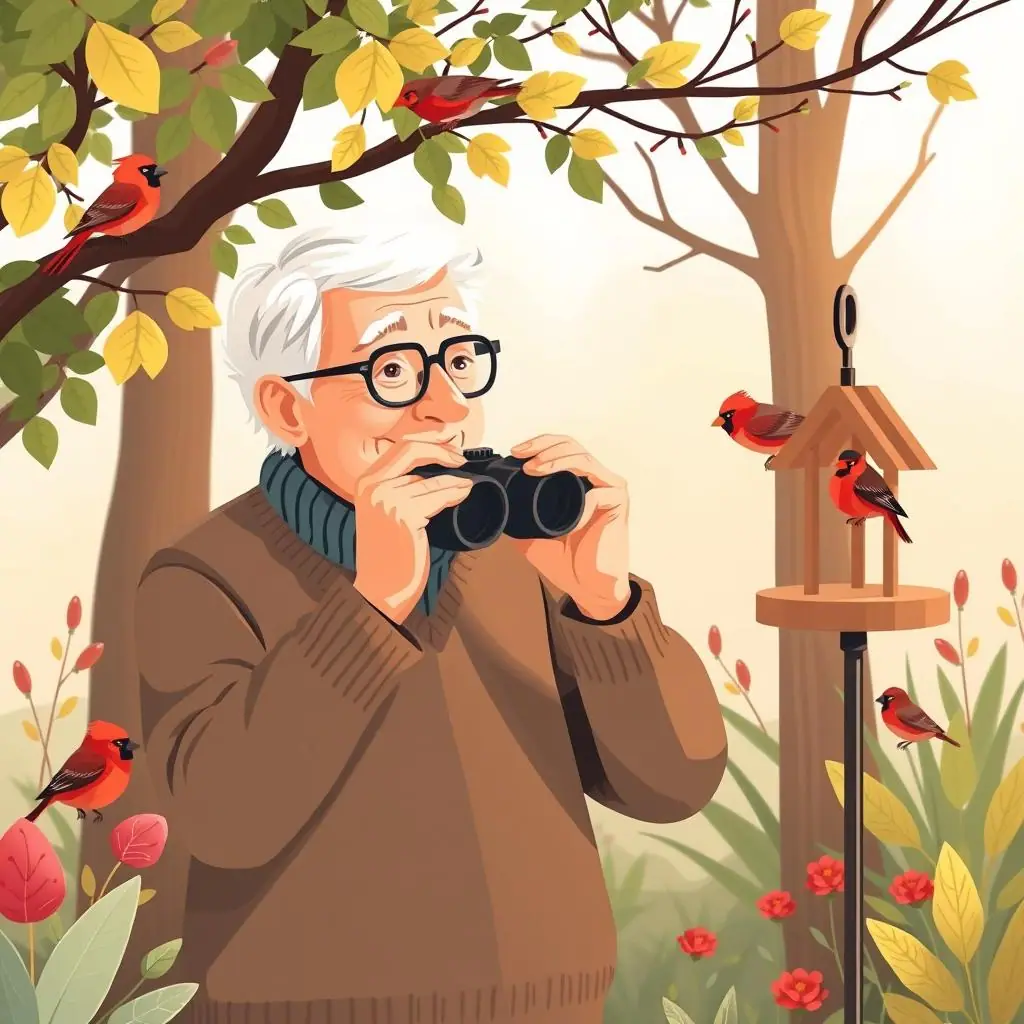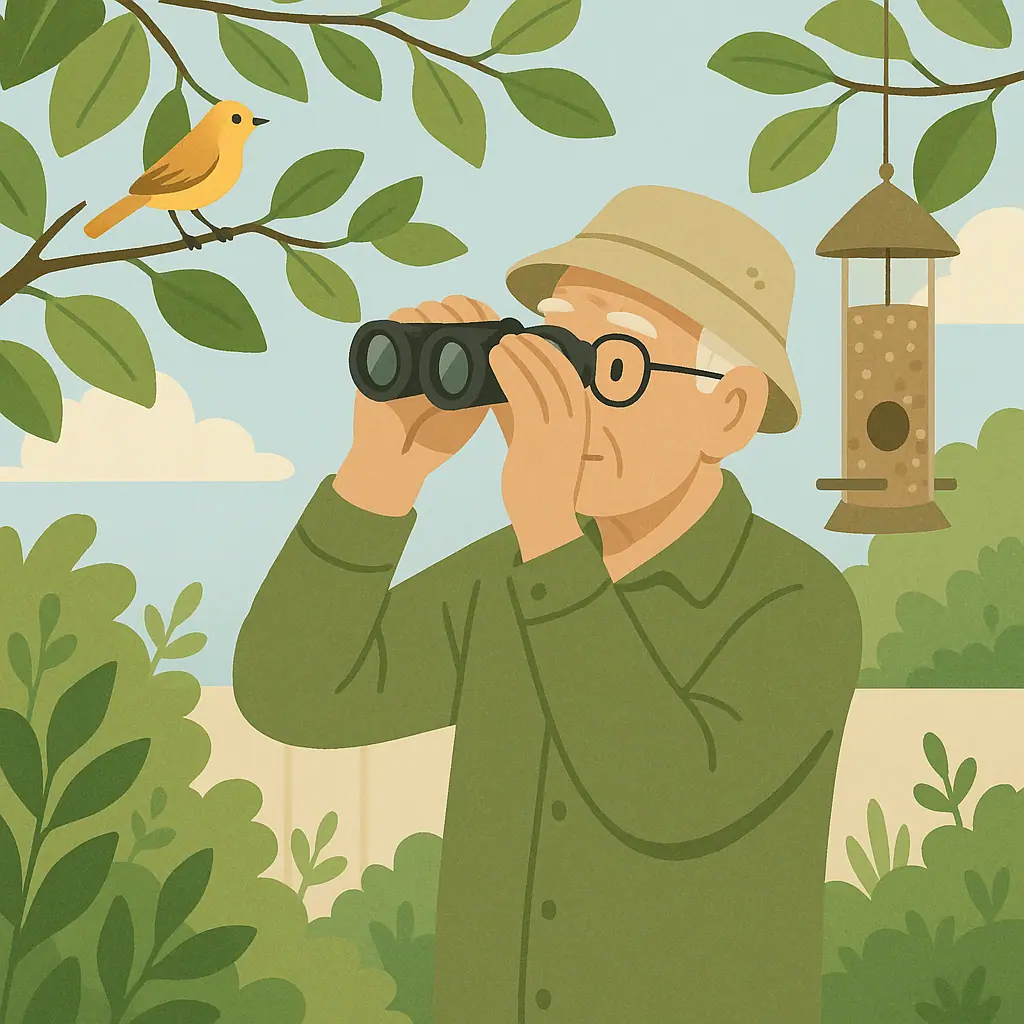
Following one bird through a tangle of leaves can feel impossible when you are new to binoculars. You finally spot the bird, raise the binoculars, and then everything turns into branches, bright sky, and movement. A second later the bird is gone, and the whole moment feels more frustrating than peaceful.
The good news is that this is a skill problem, not a talent problem. Most beginners improve when they stop rushing and use a simple eyes-first routine. Instead of chasing the bird with the binoculars, you first keep the bird in view with your naked eyes, notice one or two landmarks around it, and then lift the binoculars into the same line of sight.
Why Birds Seem to Vanish So Fast in Branches
Backyard birds rarely move in a straight line for long. They hop behind leaves, slip to the far side of a branch, and change height quickly. That makes it easy to lose them if your binoculars are still searching for the bird instead of confirming a location you already found.
The Cornell Lab explains that binoculars are helpful for getting a closer look, but they are not the best tool for first spotting a bird. In its guide to using binoculars for birdwatching, Cornell recommends finding the bird with your naked eyes first and then raising the binoculars without taking your eyes off the bird. That one habit solves a surprising number of beginner problems.
Movement is more important than detail at first
When a bird is weaving through branches, do not start by hunting for eye rings or wing bars. First track movement, direction, and the last open perch you saw. Details come after you settle the bird in view.
Branches confuse the eye, not just the binoculars
Often the problem is not magnification. It is that every branch begins to look equally important. A quick mental note such as left fork, top third, or just above the feeder line gives your eyes something solid to return to.
Use Your Naked Eyes Before You Lift the Binoculars
The easiest way to follow birds with binoculars is to delay the binoculars by a second or two. Watch the bird with your eyes first. Notice where it lands, how high it is, and what shape of branch or leaf cluster surrounds it. Only then bring the binoculars up.
If you are still getting comfortable with optics, BirdPeep's article on beginner binoculars can help you understand why a wider, easier view usually feels friendlier than too much magnification.
- Find the bird first: Keep both eyes open and watch the bird without rushing.
- Notice one landmark: Pick a fork, broken twig, open patch, berry cluster, or fence line behind the tree.
- Lift the binoculars smoothly: Bring them to your face while your gaze stays on that same spot.
- Focus only after the bird is roughly there: Small focus changes work better than sweeping the whole tree.
Anchor the Bird to a Landmark, Not Just a Branch
Branches can look identical when you are excited. Landmarks are more stable. A landmark may be the trunk, a thick fork, a pale dead twig, a berry spray, a hanging feeder, or even a patch of open sky framed by leaves. The bird may move, but that landmark usually stays useful for a few extra seconds.
Audubon offers a helpful tree-finding tip in its advice on locating a bird in a tree: start low, identify the correct trunk, and then trace upward toward the fork or branch area where the bird appeared. That same idea works even when you are birding alone, because it gives your eyes a reliable path back into the canopy.
Think in layers
Try describing the bird's place in simple layers: correct tree, middle or upper section, then left or right side, then one special marker. The more quietly specific you are, the less likely you are to get lost.
Use the bird's last open perch
If the bird ducks behind leaves, do not instantly swing away. Hold on the last branch where it was fully visible. Many backyard birds pop back into view near that same spot within a moment or two.
Move the Binoculars Less Than You Think
Beginners often lose birds because they move the binoculars too much after the bird disappears. A small twitch from the bird becomes a giant sweep from the watcher. Suddenly the entire tree is gone and the view is full of sky.
Instead, make tiny corrections. If the bird slips behind a leaf cluster, pause. Wait for a flick of the tail, a shake of the branch, or the next hop to a nearby open perch. This calm approach fits nicely with BirdPeep's guide to what you can notice without binoculars, because the same patient observation habits still matter even when optics are in your hands.
Practice Following One Bird in Short Backyard Sessions
You do not need a rare warbler to practice this skill. Common yard birds are better teachers because they return often. Chickadees, titmice, wrens, sparrows, and finches all give you repeat chances to track a bird for a few seconds at a time.
Choose one tree, one shrub edge, or one feeder lane. Watch only that area for five or ten minutes. Practice finding a bird with your eyes, lifting the binoculars, and holding the last known location when it moves behind cover.
- Pick a familiar spot: A feeder-side tree or patio shrub is easier than a huge forest edge.
- Follow one bird only: Ignore the urge to switch targets when several birds arrive.
- Stop after a few minutes: Short practice keeps the skill pleasant instead of tiring.
- Repeat tomorrow: Small daily sessions teach your eyes faster than one long, frustrated outing.
Notice Behavior That Predicts the Next Move
Birds often give small clues before they move. A bird may crouch slightly, turn its head, flick its tail, or lean toward the next opening. Even when you cannot predict the exact perch, you can often predict the general direction.
This becomes easier if you already enjoy BirdPeep's article on reading bird body language. Following a bird through branches is not only about optics. It is also about noticing what the bird is about to do before it does it.
- Tail flick or body lean: often means another hop is coming.
- Repeated foraging on one side of the branch: suggests the bird may keep moving along the same route.
- Brief pause and upright posture: may mean a better open look is about to happen.
- Quick dive into cover: often ends with the bird reappearing nearby rather than far away.
Pros and Cons of This Eyes-First Tracking Method
It makes short sightings feel more manageable
Using your eyes first and lifting the binoculars second reduces the frantic searching that causes many beginners to lose the bird instantly.
It works well in ordinary backyards
You do not need rare birds or special equipment to practice. Familiar feeder birds offer plenty of repeat opportunities.
It builds confidence without pressure
Landmarks, short sessions, and tiny corrections help the skill grow naturally instead of making birdwatching feel technical.
It takes repetition before it feels natural
The method is simple, but your hands and eyes still need practice before they work together smoothly.
Dense foliage can still win sometimes
Even with good habits, some birds will vanish behind leaves and stay hidden. That is part of the hobby, not a personal failure.
A Simple Checklist for Following Birds in Branches
Use this routine whenever a bird keeps slipping out of view.
- Eyes first: Find the bird without binoculars before you lift them.
- Choose one landmark: Lock on to a fork, trunk line, berry cluster, or open patch.
- Lift smoothly: Bring binoculars up without changing your line of sight.
- Make tiny corrections: Avoid sweeping the whole tree when the bird moves.
- Hold the last known spot: Wait for the bird to reappear near the same perch area.
- Reset calmly: If you lose it, lower the binoculars, re-find the bird, and begin again.
When to Ask for More Help
If following birds still feels confusing after a week or two of short practice, do not assume you are doing everything wrong. Sometimes the binoculars need a fit or focus adjustment, and sometimes a friend or local bird walk can show the technique in thirty seconds better than an article can.
You can also practice on larger, slower birds first. A robin on a lawn edge or a dove moving through open branches is often a kinder teacher than a tiny restless songbird at the top of a leafy tree.
Frequently Asked Questions
Should I keep both eyes open when I first spot the bird?
Yes. Keeping both eyes open while you find the bird with your naked eyes gives you a wider view and makes it easier to lift the binoculars into the right place.
What if the bird disappears the moment I raise the binoculars?
Lower them, re-find the bird with your eyes, and try again more slowly. Most beginners improve when they stop rushing that one motion.
Are small backyard birds the hardest ones to follow?
Often yes, especially in dense leaves. That is why it helps to practice on common birds in familiar spots where you will get more than one chance.
Is it normal to lose the bird even after I do everything right?
Absolutely. Some birds stay hidden for long stretches. Success in birdwatching often means relocating the bird calmly, not keeping it in view every second.
Final Thoughts
Learning to follow one bird through branches is mostly a matter of slowing down. Find the bird with your eyes, attach it to one landmark, lift the binoculars gently, and trust small corrections instead of big swings.
With a little practice, those quick leafy sightings begin to feel less chaotic and much more enjoyable. You may still lose the bird now and then, but you will also start finding it again faster, which is the real sign that the skill is growing.