There's nothing quite like watching a pair of bluebirds investigate a nesting box in your backyard for the first time. The way they peek in and out, examining every corner before making their decision, is pure magic. But before you can enjoy these moments, you face an important choice: should you build your own bird house or buy one ready-made?
Both options have their merits, and the right choice depends on your budget, available time, woodworking skills, and what species you're hoping to attract. I've tried both approaches over the years, and I've learned that success comes from understanding what birds actually need, not just what looks pretty to human eyes.
What makes a bird house successful:
- Proper dimensions: Each species has specific size requirements for cavity space and entrance holes
- Drainage and ventilation: Prevents waterlogging and overheating in summer
- Easy monitoring: Access panels for cleaning and health checks
- Appropriate materials: Untreated wood that breathes and insulates naturally
- Secure mounting: Protection from predators and weather
🔨 Building Your Own Bird Houses
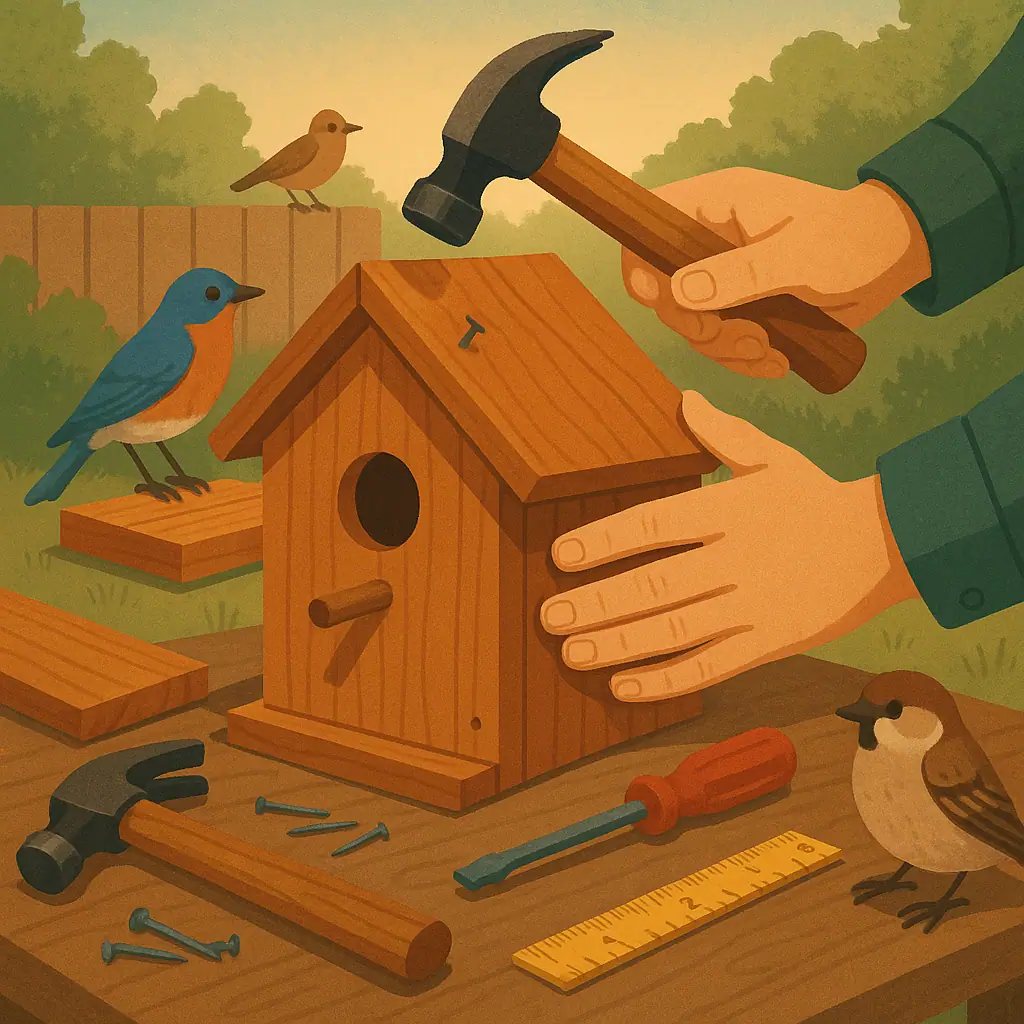
There's something deeply satisfying about creating a home with your own hands, especially when it's designed to welcome birds into your backyard. Building your own nesting boxes allows you to customize every detail for the specific species you want to attract.
When my neighbor Robert decided to build bluebird houses for his retired hobby, he spent an entire weekend in his garage with cedar boards and his father's old woodworking tools. "It reminded me why I loved working with my hands," he told me later, watching a pair of bluebirds successfully raise their first brood in one of his handmade houses.
DIY Advantages:
- Cost savings: Build multiple houses for the price of one commercial option
- Custom sizing: Perfect dimensions for your target bird species
- Personal satisfaction: The joy of creating something functional with your own hands
- Material control: Choose exactly the wood type, thickness, and hardware
- Repair knowledge: Easy maintenance since you understand the construction
- Family project: Wonderful activity to share with children or grandchildren
What You'll Need to Get Started:
Building a basic bird house requires surprisingly few tools and materials. You don't need a full woodworking shop — just some basic equipment and a clear plan.
Essential Tools:
- Saw: Hand saw or circular saw for cutting boards
- Drill: With bits for entrance holes and pilot holes
- Screwdriver: For assembly (screws hold better than nails)
- Measuring tools: Ruler, square, pencil for marking cuts
- Sandpaper: Smoothing rough edges
💰 Cost Breakdown for DIY:
One cedar board (1" x 8" x 6') costs about $12-15 and makes one medium-sized bird house. Add screws, hinges for cleaning panels, and entrance hole saw bits, and you're looking at $18-25 per house for materials.
🏪 Buying Ready-Made Bird Houses
Sometimes the best choice is letting someone else handle the construction while you focus on placement and bird watching. Quality commercial bird houses are designed by people who understand bird biology, often resulting in features that novice builders might overlook.
My friend Margaret bought her first bluebird house from a local Audubon chapter fundraiser. "I wanted to start attracting birds immediately," she explained, "and I knew the house was designed by people who'd been successful with bluebirds for years." That first house has hosted four successful broods over two seasons.
Commercial Advantages:
- Immediate use: Install and start attracting birds the same day
- Proven designs: Tested dimensions and features that work
- Professional materials: Often use specialized woods or recycled plastics
- Weather resistance: Better sealing and protective finishes
- No tool investment: Perfect if you don't own woodworking equipment
- Supporting conservation: Many bird houses sold by Audubon chapters or wildlife organizations
What to Look for in Store-Bought Houses:
Not all commercial bird houses are created equal. Some are designed more for human decoration than bird habitation. Here's how to spot the good ones:
🏆 Essential Features to Demand:
- Proper entrance hole: 1.25" for bluebirds, 1.125" for wrens, 2.5" for flickers
- Floor drainage: Small holes in the bottom to prevent water accumulation
- Ventilation gaps: Near the top of the sides for air circulation
- Easy cleaning access: Hinged roof or removable front panel
- Overhang roof: Protects entrance from rain and predators
- Mounting hardware included: Brackets, screws, or pole attachment systems
Price Ranges and Quality Levels:
Budget Options ($15-30):
Basic cedar or pine construction with essential features. Perfect for beginners testing whether birds will use houses in their yard.
Mid-Range ($30-60):
Better materials, improved weather sealing, often include mounting hardware. Good long-term investment for serious bird enthusiasts.
Premium ($60-150):
Specialized designs for specific species, recycled plastic that lasts decades, or artistic designs that blend function with backyard aesthetics.
🐦 Species-Specific Considerations
Different birds have dramatically different housing needs. What works perfectly for a wren family will be completely wrong for wood ducks. Before you build or buy, decide which species you're most hoping to attract.
Popular Backyard Cavity Nesters:
⭐ Bluebirds — The Gateway Drug
Entrance hole: 1.5", floor: 4" x 4", height: 8". Mount 4-6 feet high in open areas. Bluebird houses are perfect starter projects because the birds are forgiving and the dimensions are manageable.
🔍 House Wrens — Tiny But Mighty
Entrance hole: 1.125", floor: 4" x 4", height: 6-8". Mount 4-10 feet high near shrubs. Wrens are less picky about house construction but very specific about location.
🐿️ Chickadees — Forest Friends
Entrance hole: 1.125", floor: 4" x 4", height: 8". Mount 4-15 feet high in wooded areas. They prefer houses packed with wood shavings for nesting material.
🎨 Purple Martins — Apartment Living
Entrance hole: 2.5", multiple compartments, mount 10-20 feet high. These are advanced projects requiring significant investment in time and equipment.
Regional Considerations:
- Hot climates: Lighter colored houses, extra ventilation, deeper roof overhangs
- Wet regions: Better drainage, moisture-resistant wood treatments
- Windy areas: Stronger mounting systems, entrance holes facing away from prevailing winds
- Predator pressure: Deeper houses, pole mounting with baffles
📊 Side-by-Side Comparison
Cost Effective
Build multiple houses for the cost of one commercial option.
Customizable
Perfect dimensions and features for your target species.
Personal Satisfaction
Joy of creating something functional with your own hands.
Immediate Use
Install and start attracting birds the same day.
Proven Design
Tested features and dimensions that work reliably.
No Tools Required
Perfect if you don't own woodworking equipment.
🚀 Getting Started: Your First Bird House
Whether you build or buy, success starts with understanding your local bird population and site selection. I always recommend starting with one house, learning from the experience, then expanding your nesting box program.
The Beginner-Friendly Approach:
- Start simple: Choose bluebird or wren dimensions — they're forgiving species
- Test your location: One house helps you understand traffic patterns and predator issues
- Learn by watching: Observe which birds show interest in your first house
- Iterate and improve: Use lessons from house #1 to improve house #2
Essential Mounting and Placement Tips:
- Height matters: Most cavity nesters prefer 4-6 feet above ground
- Entrance direction: Face away from prevailing wind and afternoon sun
- Predator protection: Use pole mounting with baffles rather than tree mounting
- Spacing: Multiple houses should be at least 25 yards apart for territorial species
- Habitat match: Bluebirds like open areas, wrens prefer edges near shrubs
Frequently Asked Questions
How much woodworking experience do I need to build a bird house?
Very little! If you can measure accurately and cut straight lines, you can build a functional bird house. Start with a simple design using pre-cut boards from the hardware store to minimize cutting. Most beginners can complete their first house in 2-3 hours.
What's the biggest mistake people make with store-bought bird houses?
Choosing decorative houses over functional ones. Avoid houses with perches (attract predators), bright colors (deter birds), or multiple entrance holes (creates competition problems). Look for natural wood colors and simple, clean designs.
Do I need to clean bird houses between seasons?
Yes! Old nesting material can harbor parasites and diseases. Clean houses in fall after birds migrate, or in early spring before breeding season. This is much easier if you built or bought houses with removable panels for access.
How long do homemade bird houses last compared to commercial ones?
Well-built cedar houses can last 10-15 years with basic maintenance. Commercial houses range from 3-5 years (budget models) to 20+ years (premium recycled plastic). The key is regular cleaning and occasional wood treatment.
Making Your Decision
The truth is, there's no wrong choice between building and buying — only what works best for your situation. Some of my most successful birdwatching friends have beautiful handmade houses, others swear by commercial designs, and many (like me) have a mix of both.
Consider starting with one purchased house to get birds visiting your yard immediately, then building your next one as a winter project. This gives you the best of both worlds: quick success and the satisfaction of craftsmanship.
What matters most isn't whether you built or bought your bird houses — it's that they're properly sized, well-maintained, and thoughtfully placed. The birds don't care about the construction story; they just want a safe, dry place to raise their families.
Your backyard birds are waiting for you to provide them with the perfect nesting site. Whether you pick up your tools or your wallet first, you're taking an important step toward creating a true bird sanctuary in your own backyard.