
Choosing your first pair of binoculars for birdwatching can feel like navigating a maze of technical specifications and price ranges. The good news is that you don’t need to spend a fortune to enjoy crisp, clear views of your feathered neighbors.
Think of binoculars as a bridge between your eyes and the natural world—they bring distant birds close enough to see the intricate patterns on their feathers, the spark in their eyes, and the graceful details of their movements. For beginners, the key is finding that sweet spot where quality meets affordability.
This guide will walk you through everything you need to know to choose the best binoculars for birdwatching as a beginner, focusing on excellent options under $100 that won’t compromise your bird watching experience.
Understanding Binocular Numbers: 8×42 Explained
Every pair of binoculars displays two numbers, like 8×42 or 10×50, and understanding these is your first step to smart shopping. These aren’t just random specifications—they directly impact your birdwatching experience.
The first number (8x) represents magnification power. This means the bird appears 8 times larger than it would to your naked eye. For beginners, 8x magnification hits the perfect balance between bringing birds closer and maintaining a steady, comfortable view.
The second number (42) indicates the diameter of the objective lenses in millimeters. Larger lenses gather more light, creating brighter, clearer images—especially important during early morning and late evening when birds are most active.
Why 8×42 Is Perfect for New Birders
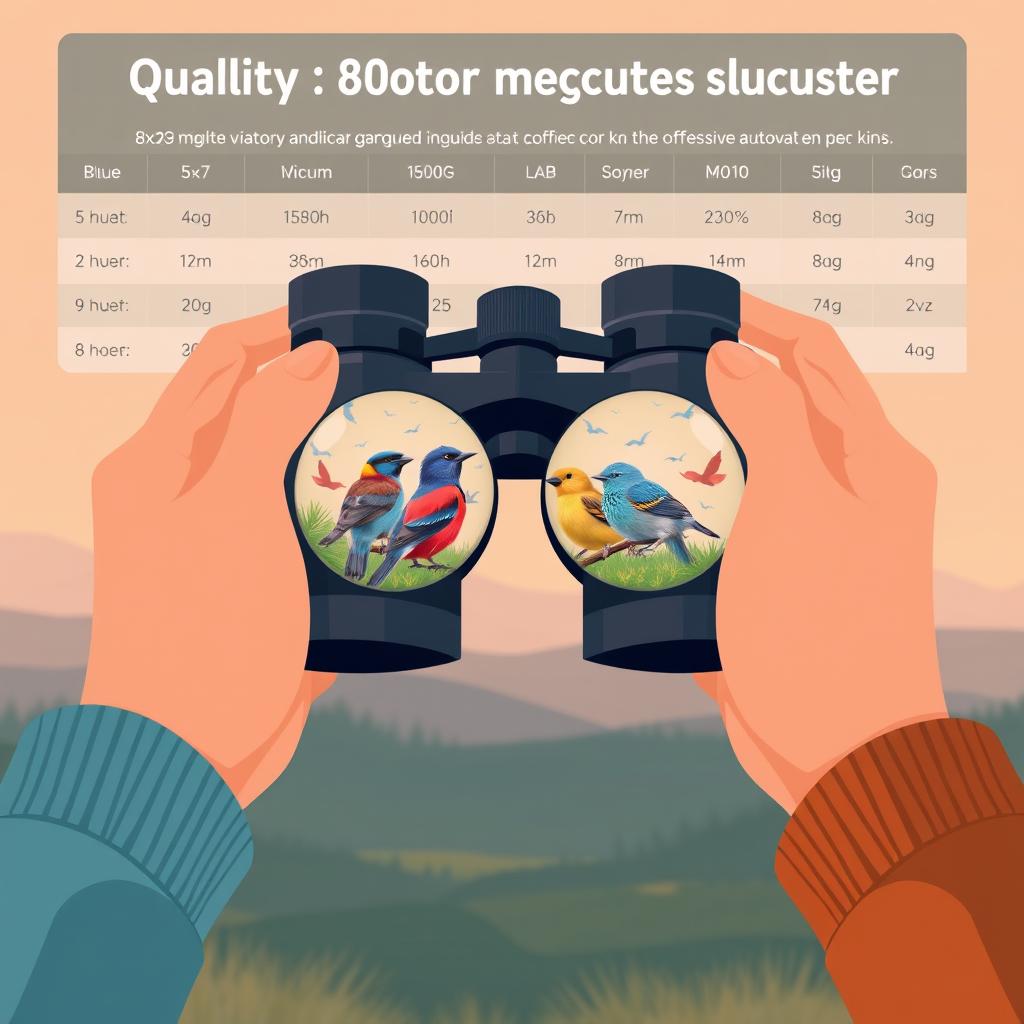
After decades of experience helping new birders, one configuration stands out: 8×42 binoculars. This combination offers several beginner-friendly advantages that make your early birdwatching experiences more enjoyable and less frustrating.
The 8x magnification provides enough power to see bird details clearly while remaining easy to hold steady. Higher magnifications like 10x or 12x amplify every small hand movement, making it harder to track moving birds—a common source of frustration for newcomers.
Essential Features for Beginner Birdwatchers
Comfortable Eye Relief
Eye relief is the distance between your eye and the eyepiece while still seeing the full field of view. If you wear glasses, look for at least 15mm of eye relief to see comfortably without removing your eyewear.
Adjustable Diopter
This feature compensates for slight differences in vision between your eyes. Most binoculars have a diopter adjustment on the right eyepiece—essential for sharp, comfortable viewing.
Close Focus Distance
Good birding binoculars should focus on objects as close as 6-8 feet. This lets you observe birds that land nearby without switching to different equipment.
Top Budget-Friendly Recommendations Under $100
After testing dozens of models and consulting with birdwatching instructors, these binoculars consistently deliver exceptional value for beginners:
🏆 Celestron Nature DX 8×42 ($89-99)
Outstanding optical quality with fully multi-coated lenses and comfortable ergonomics. Best overall choice for most beginners.
⭐ Nikon Prostaff 3S 8×42 ($79-89)
Reliable Nikon optics with waterproof construction and excellent build quality. Great for those prioritizing brand reliability.
🎯 Vortex Crossfire HD 8×42 ($99)
Premium lens coatings and Vortex’s unlimited lifetime warranty. Slightly above budget but worth the stretch if possible.
💡 Opticron Oregon 4 PC 8×42 ($75-85)
European optics at an American price point. Excellent glass quality and surprisingly lightweight design.
What to Avoid in Budget Binoculars
Not all budget binoculars are created equal. Here are red flags that signal you should keep shopping:
- Zoom binoculars: Marketing gimmicks that sacrifice optical quality. Fixed magnification always performs better in this price range.
- Very high magnification (12x+): Too difficult to hold steady for beginners, leading to frustration and eye strain.
- Unusually heavy models: Anything over 30 ounces becomes uncomfortable during longer birding sessions.
- No brand recognition: Stick with known optical companies. Your eyes deserve better than no-name imports.
- Ruby-coated lenses: The red coating reduces light transmission. Clear, multi-coated lenses perform better.
Testing Binoculars Before You Buy
If possible, try before you buy. Many outdoor retailers, camera shops, and birding stores offer hands-on testing. Here’s what to check during your test:
Comfort Test (5 minutes minimum)
Hold the binoculars to your eyes for at least five minutes. Do they feel balanced? Are your arms getting tired? Can you adjust them comfortably to your face?
Focus Test
Practice focusing on objects at different distances. The focus wheel should move smoothly without being too loose or too stiff. Quick, precise focusing is crucial when birds are moving.
Clarity Test
Look at detailed objects like tree bark, building textures, or license plates. The image should be sharp from center to edge without significant distortion.
Caring for Your First Binoculars
Proper care extends the life of your binoculars and maintains their performance. These simple habits protect your investment:
- Use the lens caps: Always replace both objective and eyepiece caps when not in use.
- Clean lenses gently: Use a soft brush or compressed air first, then a microfiber cloth in circular motions.
- Store properly: Keep them in the included case or a padded bag to prevent knocks and scratches.
- Avoid extreme temperatures: Don’t leave them in hot cars or expose them to sudden temperature changes.
Pros and Cons of Budget Binoculars
Affordable entry point
Under $100 models let you start birdwatching without major financial commitment.
Learn your preferences
Discover what features matter most to you before investing in premium models.
Good enough for years
Quality budget binoculars can serve beginners for many years of enjoyable birdwatching.
Lower light performance
Budget models struggle more in dawn/dusk conditions when birds are most active.
Edge distortion
Images may blur or distort toward the edges of the field of view.
Build quality variations
Quality control may be less consistent than premium brands.
Frequently Asked Questions
Should I buy binoculars online or in person?
In person is ideal for testing comfort and optical quality. However, online purchases often offer better prices and selection. If buying online, choose retailers with generous return policies.
Is it worth spending more than $100 for my first pair?
Not necessarily. Excellent binoculars under $100 can serve you for years. It’s better to start birding now with good budget binoculars than to delay while saving for premium models.
What’s the difference between roof prism and porro prism binoculars?
Roof prism binoculars are more compact and durable, while porro prism models often provide better optical quality at the same price. For beginners, either design works well—focus on comfort and optical performance instead.
How do I know if the binoculars are properly adjusted for my eyes?
Start by adjusting the interpupillary distance (width between eyepieces) until you see a single, circular image. Then use the diopter adjustment to fine-tune focus for any differences between your eyes.
Making Your Purchase Decision
The perfect pair of beginner binoculars balances optical quality, comfort, and price. Don’t get paralyzed by perfect—any of the recommended models will dramatically enhance your birdwatching experience compared to the naked eye.
Remember that your first binoculars are a stepping stone, not a lifetime commitment. They should inspire you to spend more time outdoors, help you identify more birds, and most importantly, increase your enjoyment of this peaceful hobby.
Start with a quality 8×42 model from a reputable brand, take care of them properly, and let them guide you into the wonderful world of backyard birding. You might be surprised how much joy and discovery awaits, all for less than the cost of a nice dinner out.