
Cedar waxwing identification begins with a quiet kind of surprise. You may not notice one bird first. Instead, you may see a small flock arrive together, settle into a fruiting tree, and move through the branches like polite guests at a berry table.
These birds look smooth, almost polished, with soft brown and gray tones, a gentle crest, and a neat black mask. For beginners, the best approach is not to memorize every detail at once. Start with shape, flock behavior, and berry feeding, then add color clues as the bird gives you a better view.
Why Cedar Waxwing Identification Matters
Cedar waxwings are easy to overlook because they often travel in flocks and may stay high in trees. Once you learn their calm, silky look and fruit-loving habits, they become one of the most rewarding backyard birds to recognize.
The Cornell Lab’s All About Birds guide describes key cedar waxwing field marks, habitat, and berry-feeding behavior on its Cedar Waxwing identification page. Use a source like this when you want to confirm a sighting after you have watched patiently.
Start With the Silky Shape
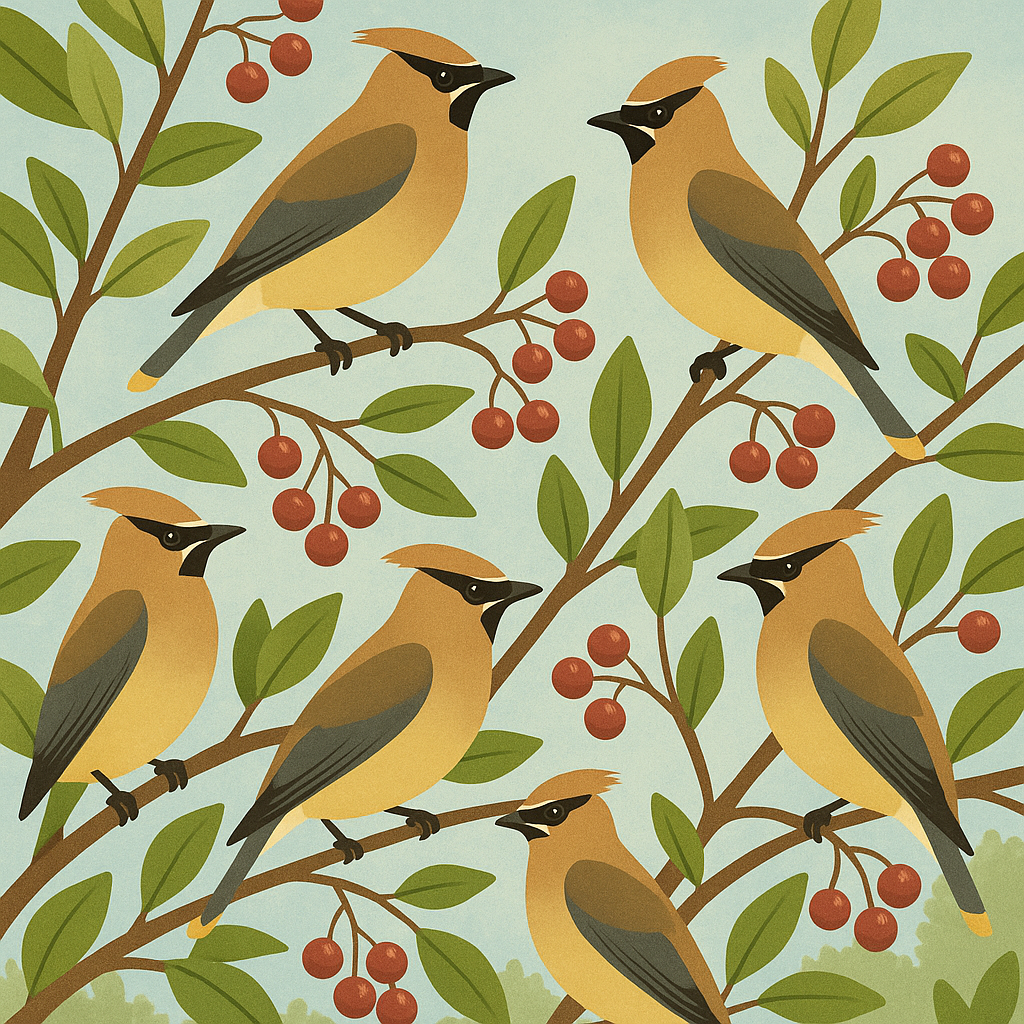
A cedar waxwing has a smooth, elegant outline. It is smaller than a robin but plumper than many tiny feeder birds, with a rounded body, a short crest, and a squared tail. The bird often looks tidy, as if every feather has been brushed into place.
This shape-first habit helps on cloudy days when colors look muted. If you have already practiced comparing familiar birds, BirdPeep’s guide to the Tufted Titmouse is a useful reminder that a crest, posture, and body shape can all help before color becomes obvious.
First Shape Clues to Notice
- Crest: a soft swept-back point on the head, not a tall spiky crown.
- Body: smooth and slightly plump, with a polished look from head to tail.
- Tail: fairly square at the end, often showing a yellow tip in adults.
- Posture: calm and upright when perched, then quick and coordinated when the flock moves.
Look for the Mask, Crest, and Tail Tip
The black mask is one of the friendliest clues for beginners. It runs through the eye and gives the cedar waxwing a neat, dressed-up appearance. Around it, the head and breast are warm tan to brown, fading toward a softer yellow belly.
Adults often show a yellow band at the tail tip. Some also show small red waxy-looking tips on the wing feathers, though those can be hard to see without a very close view. Do not worry if you miss that detail. The mask, crest, silky body, and flock behavior usually matter more for a calm first identification.
Color Checks for Beginners
- Face: black mask with a clean, tidy look around the eye.
- Head and chest: soft brown or tan, not bright red, blue, or heavily streaked.
- Belly: gentle yellow tones, often subtle rather than bold.
- Tail: yellow tip on many adults, easiest to notice when the bird turns or flies.
Watch the Flock Before Naming One Bird
Cedar waxwings are social birds. A single waxwing can appear, but beginners often find them in small groups or larger flocks. They may perch quietly together, then shift through a tree in a loose wave as berries are eaten.
This flock habit separates them from many backyard visitors that come one at a time to a feeder. BirdPeep’s profile of the Carolina Wren shows a very different style: secretive, loud, and often tucked into cover. Comparing habits like that makes cedar waxwings easier to remember.
When you see several sleek birds feeding in the same fruiting tree, pause and watch the group pattern. Do they arrive together? Do they pass through quickly? Do they perch side by side before moving on? Those little flock clues can be just as useful as a field mark.
Understand the Berry-Loving Behavior
Cedar waxwings are strongly connected to fruit. They may visit serviceberry, dogwood, juniper, winterberry, crabapple, or other fruiting trees and shrubs depending on what grows nearby. In some seasons, a yard with the right berries may suddenly feel like the most popular place on the block.
They can swallow small fruits whole, so you may see quick picking motions rather than the slow seed cracking of a finch. They also move around as food supplies change. A flock may visit your yard for a day or two, then disappear when the berries are gone.
Know Where to Look in a Backyard
Cedar waxwings are not classic seed-feeder regulars. You are more likely to notice them in fruiting trees, tall shrubs, woodland edges, parks, orchards, and neighborhood plantings. They may also fly out from perches to catch insects, especially in warmer months.
For a beginner-friendly search, stand where you can see the upper branches of berry trees without walking directly under the flock. Keep your movement slow. Waxwings often tolerate quiet watching, but a sudden approach can send the whole group off at once.
- Scan fruiting trees first: especially when berries are ripe or crabapples remain on branches.
- Listen for thin calls: waxwings make high, delicate sounds that can be easy to miss.
- Watch the sky edge: flocks may fly in a direct, coordinated way between feeding spots.
- Check parks and edges: a nearby path with shrubs can be more productive than a bare lawn.
- Be patient with timing: waxwings follow food, so their visits may be irregular.
Pros and Cons of Watching for Cedar Waxwings
They teach pattern watching
Cedar waxwings help beginners notice flock movement, fruiting trees, posture, and group behavior instead of relying only on color.
They reward quiet observation
A calm window or patio view may reveal feeding, calling, and coordinated movement without needing expensive gear.
They encourage habitat awareness
Watching waxwings naturally leads you to notice berry shrubs, native plants, water, and seasonal food sources.
They can be unpredictable
A flock may visit when fruit is available and then move on quickly, so beginners should not feel discouraged by gaps.
Fine details are hard to see
The red wing tips and subtle color shifts may require close views, good light, or binoculars to confirm comfortably.
A Simple Cedar Waxwing Checklist
Use this checklist when you see a smooth, crested bird in a fruiting tree. You do not need every clue, but several together can point strongly toward cedar waxwing.
- Shape: smooth body, short crest, and squared tail.
- Face: neat black mask through the eye.
- Color: soft brown, gray, and yellow rather than bold streaks.
- Tail: yellow tip if the light and angle allow you to see it.
- Behavior: feeding on berries or small fruit, often with others nearby.
- Movement: flock arrives, feeds, and leaves in a coordinated way.
When to Get Extra Help
If the bird is far away, backlit, or partly hidden by leaves, write down what you can see before reaching for a final name. Note the date, tree type if you know it, flock size, color pattern, and behavior. A quick photo can help even if it is not pretty.
Use a trusted field guide, birding app, or local birding group when you are unsure. The honest note “sleek crested flock eating berries” is better than a rushed guess, and it gives you something useful to compare later.
Frequently Asked Questions
What is the easiest cedar waxwing identification clue?
Look for a sleek, crested bird with a black mask, soft brown-gray coloring, and flock behavior around fruiting trees or shrubs.
Do cedar waxwings come to regular seed feeders?
Usually not as regular seed feeder birds. They are more closely tied to berries, small fruits, and seasonal insects.
Why did a whole flock appear and then disappear?
That is normal. Cedar waxwings move with food supplies, especially fruit, so a yard may be busy one day and quiet the next.
Do I need binoculars to identify cedar waxwings?
Binoculars help with the mask, crest, and tail tip, but you can still notice flock movement, fruit feeding, and overall shape with the naked eye.
Final Thoughts
Cedar waxwing identification is less about chasing one perfect view and more about noticing a graceful pattern: sleek birds, soft colors, fruiting trees, and calm flock movement. Once you know that pattern, a passing group becomes much easier to recognize.
Start with one small habit this week. Check the fruiting trees and shrubs near your window, porch, or favorite park path. If a flock arrives, stay still, watch gently, and let the berries tell part of the story.