

An easy clean bird bath can turn a quiet backyard into a little morning gathering place. One robin stops for a sip, a chickadee splashes like it has discovered a private spa, and suddenly the yard feels more alive than it did a minute ago.
For many older bird lovers, the real question is not whether birds need water. It is whether the bath will be safe for birds and reasonable to maintain. A heavy concrete basin may look charming in a garden center, but if it is too deep, too slippery, or too hard to scrub, it can quickly become more burden than joy.
The good news is that the best choice is usually simple: shallow water, a basin you can lift or drain easily, a surface you can scrub without strain, and a location that lets birds escape quickly while letting you watch comfortably from a window or chair.
What Makes an Easy Clean Bird Bath?
An easy clean bird bath is not the fanciest one on the shelf. It is the one you can empty, rinse, scrub, refill, and enjoy without wrestling with weight, awkward angles, or rough surfaces. Audubon recommends shallow water for backyard birds, and several bird-care guides point to roughly one to two inches as a comfortable maximum depth for most small visitors.
Think of the bath like a shallow doorstep puddle rather than a swimming pool. Birds want to step in, drink, splash, and leave quickly. They do not need a deep bowl, and many small birds feel less confident when the sides are steep or the bottom is slick.
The beginner-friendly checklist
- Shallow basin: Aim for about 1 to 2 inches of water, with stones added if the bowl is deeper.
- Easy surface: Smooth plastic, resin, glazed ceramic, or metal is usually easier to scrub than rough concrete.
- Manageable weight: Choose something you can safely lift, tilt, or drain without straining your back.
- Stable footing: A wide base, low stand, or ground-level dish helps prevent tipping.
- Simple shape: Wide, open bowls are easier to clean than ornate basins with grooves and tiny decorative pockets.
Why Cleaning Matters for Backyard Birds
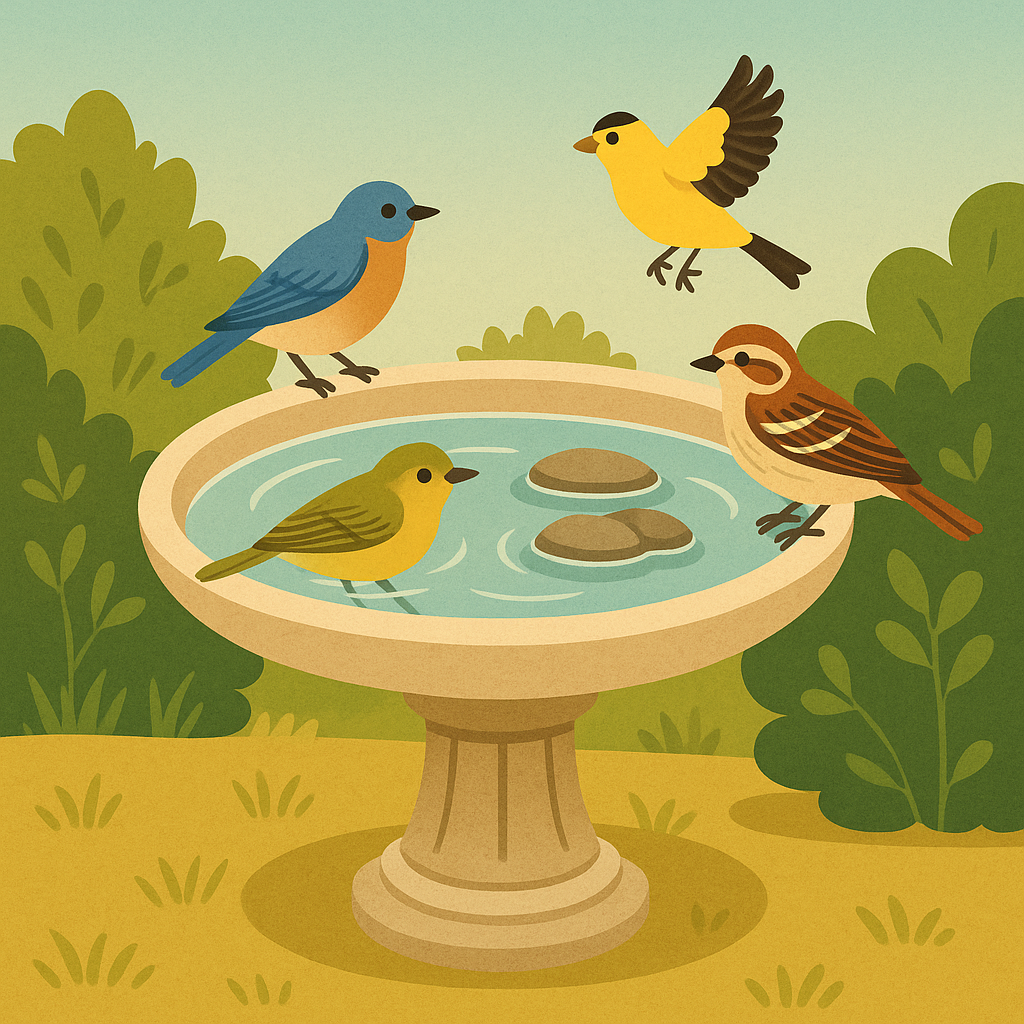
Fresh water helps birds drink, bathe, cool themselves, and keep feathers in good condition. Clean feathers insulate better and support easier flight. A reliable water source can also attract birds that may ignore seed feeders, including robins, waxwings, thrushes, and warblers during migration.
But water gets dirty quickly outdoors. Leaves fall in, birds bathe and leave droppings, algae grows in warm weather, and mosquitoes are attracted to standing water. Audubon warns that neglected bird baths can do more harm than good because dirty water may spread disease.
A senior-friendly cleaning rhythm
The easiest routine is short and frequent. Instead of waiting until the basin turns green and heavy with grime, pour out old water every day or two, rinse the surface, and refill. A deeper scrub can happen weekly, or more often in hot weather or heavy use. Sacramento Audubon suggests a simple vinegar-and-water cleaning approach and careful rinsing rather than harsh household cleaners.
Choosing the Best Material and Shape
Material matters because cleaning is partly about texture. Rough concrete can be beautiful and long-lasting, but it may be heavy and harder to scrub because algae and dirt settle into small pores. If you already have one and love it, keep using it carefully. If you are buying new, consider whether your hands, knees, and back will enjoy the job in July as much as your eyes enjoy the look in April.
Hard plastic and resin basins are often practical for seniors because they are lighter, affordable, and easy to rinse. Glazed ceramic can be lovely and smooth, though it may become heavy depending on size. Metal can work well if it has safe edges, stays stable, and does not become uncomfortably hot in full sun.
- Best for easy lifting: A shallow plastic, resin, or lightweight metal basin.
- Best for simple scrubbing: A smooth bowl with no deep grooves, ridges, or carved decorations.
- Best for bird confidence: A gently sloped basin with a few flat stones for perching and depth judgment.
- Best for safety: A stable base that will not wobble when a larger robin or dove lands on the rim.
Placement That Helps Birds and Helps You
The right location makes cleaning easier and birdwatching more enjoyable. Place the bath where you can reach it with a small bucket, watering can, or hose. If every refill requires dragging equipment across the yard, the routine will feel harder than it needs to be.
Birds also appreciate nearby cover. Shrubs, small trees, or evergreens give them a quick escape route if a predator appears. At the same time, avoid placing the bath so close to dense hiding spots that outdoor cats can ambush bathing birds. A clear view, nearby shelter, and easy human access make a kind middle ground.
Partial shade is often helpful. It slows evaporation, keeps water cooler, and may reduce algae growth compared with all-day sun. If you watch from indoors, choose a line of sight from a kitchen window, sunroom, porch chair, or favorite reading spot.
Pros and Cons of Common Bird Bath Styles
Lightweight bowls are easier to clean
Plastic, resin, and some metal basins can usually be lifted, tipped, and scrubbed with less effort than concrete.
Shallow designs feel safer for birds
Small songbirds are more confident when they can judge the depth and stand securely while bathing.
Simple shapes reduce grime
Smooth, open basins have fewer corners where algae, seed hulls, leaves, and droppings can collect.
Very light baths can tip
A basin that is too flimsy may blow over or wobble, so add a stable base or a heavy flat stone if needed.
Decorative concrete can be demanding
Heavy, textured baths may require more scrubbing and may be harder to move for seniors with joint or back concerns.
A Low-Effort Cleaning Setup
Before choosing a bath, picture the whole cleaning path. Where will you dump old water? Where is the nearest hose or faucet? Do you need a long-handled brush? Can you refill with a lightweight watering can instead of carrying a full bucket?
Keep a small bird bath kit nearby: a dedicated scrub brush, lightweight gloves, a small container for diluted vinegar cleaning, and a towel or mat if you need to set the basin down. Do not use the same brush for kitchen dishes. Bird baths are outdoor wildlife equipment, and keeping tools separate is cleaner for everyone.
If bending is difficult, a waist-high pedestal may be easier to reach than a ground dish. If lifting is difficult, a ground-level saucer that can be tipped with one hand or rinsed with a hose may be better. The best design is the one that fits your body as well as your garden.
Frequently Asked Questions
How deep should a bird bath be?
For most backyard songbirds, keep water shallow, around 1 to 2 inches at most. If your basin is deeper, add flat stones so birds can stand securely.
What bird bath material is easiest for seniors to clean?
Smooth plastic, resin, lightweight metal, or glazed ceramic is usually easier than rough concrete. The best choice is stable but not too heavy to empty safely.
How often should I change bird bath water?
Change water every day or two in warm weather, and sooner if it looks dirty. Frequent quick rinses make deep cleaning much easier.
Can I use household cleaners in a bird bath?
Avoid harsh cleaners. Use a dedicated brush, rinse well, and consider a mild vinegar-and-water scrub when needed so no residue remains for birds.
Final Thoughts
A good bird bath should bring more peace than chores. When it is shallow, stable, smooth, and easy to reach, it becomes a small daily kindness for the birds and a gentle invitation for you to pause and watch.
Start simple. A clean saucer with fresh water, a few flat stones, nearby cover, and a comfortable viewing spot can be better than the heaviest garden ornament. The birds will not judge the price tag. They will notice the water.