
Tufted titmouse identification becomes much easier once you know what to watch for: a neat gray crest, bright dark eyes, pale belly, peachy sides, and a voice that seems much larger than the bird itself. If one visits your feeder, it may appear for only a moment, grab a seed, and hurry off to a nearby branch like a tiny neighbor with an important errand.
This little gray visitor is common in many eastern U.S. backyards, parks, orchards, and wooded neighborhoods. Cornell Lab describes the Tufted Titmouse as a frequent feeder visitor in eastern forests and backyards, while Audubon notes its clear whistled song and habit of carrying sunflower seeds away one at a time. For a beginner, those everyday clues are often more helpful than trying to memorize every feather mark.
What Is a Tufted Titmouse?
The Tufted Titmouse is a small songbird in the same family as chickadees. Its scientific name is Baeolophus bicolor, and it is often seen year-round rather than only during migration. Cornell lists it as a low-concern species, which means beginners have a good chance of seeing one regularly in the right habitat.
Think of it as a soft gray bird with a cardinal-like crest, a round little body, and a surprisingly bold attitude. It is not flashy like a male cardinal or bright like a goldfinch. Its charm is quieter: a raised crest, a curious face, and quick movements through trees and feeders.
Quick beginner snapshot
- Size: Larger than a chickadee but still smaller than many robins.
- Shape: Stocky body, large head, short stout bill, and pointed crest.
- Color: Silvery gray above, white below, with peach or rusty coloring along the sides.
- Voice: A clear, repeated whistle often described as “peter-peter-peter.”
Tufted Titmouse Identification: Shape, Crest, and Color
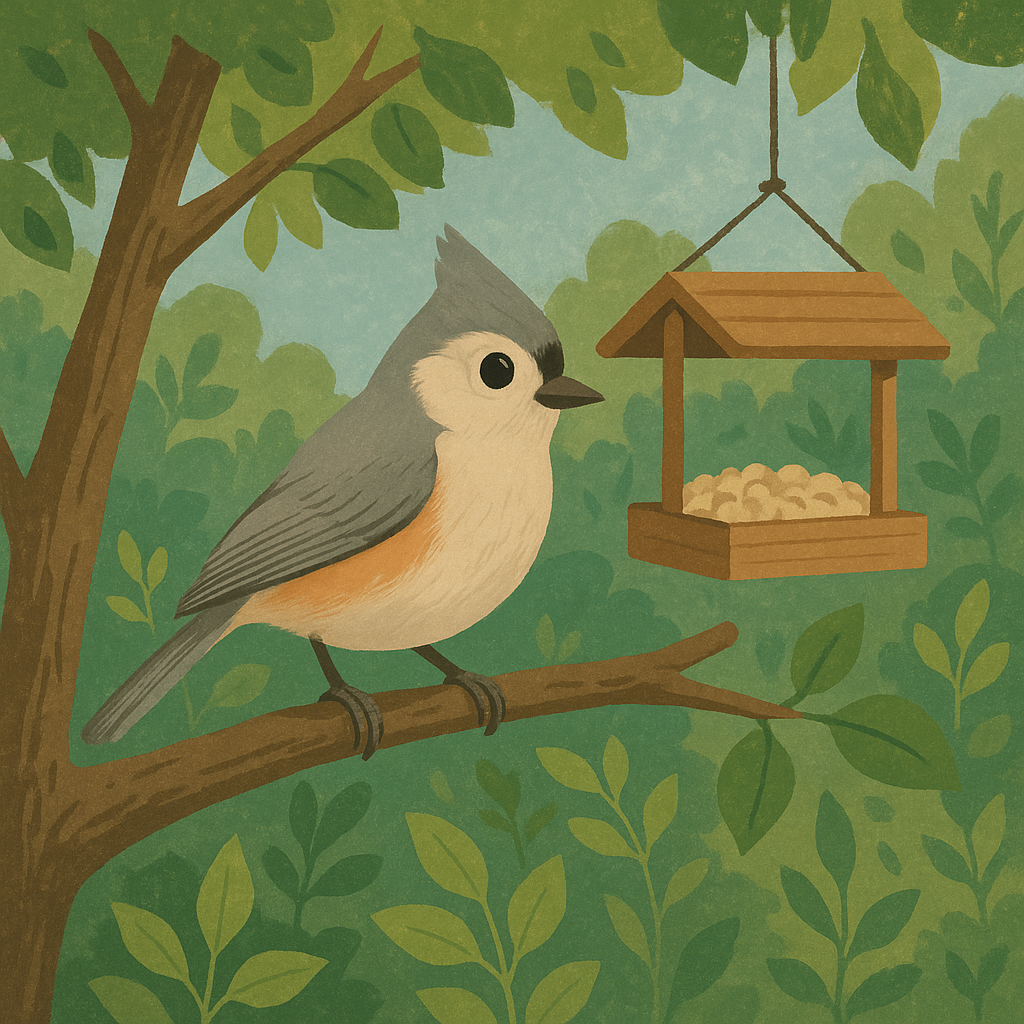
Start with shape before color. Tufted Titmice often look large among small feeder birds because their heads are full, their necks look thick, and their bodies are rounded. Cornell highlights the pointed crest and stout bill as useful silhouette clues, especially when light is poor.
The crest is the giveaway many beginners notice first. It rises from the top of the head like a tiny gray peak. The face is pale, the eye looks large and dark, and a small black patch above the bill can make the bird look a bit snub-nosed. The back is soft gray, the underside is white, and the flanks may show a gentle peach wash.
What to compare it with
A chickadee is smaller and wears a stronger black cap and bib. A cardinal has a crest too, but it is larger, heavier-billed, and much more colorful. A Tufted Titmouse sits somewhere between those impressions: crested like a miniature cardinal, active like a chickadee, and dressed mostly in calm gray and white.
Listen for the Peter-Peter Song
Many people hear a Tufted Titmouse before they see one. Its song is a loud, clear whistle that often sounds like repeated “peter-peter-peter” notes. Audubon describes the song as a whistled series of several repeated notes, and it can carry surprisingly far through a quiet yard.
Calls are different from songs. Around feeders or in small mixed flocks, titmice may give sharper notes, scolds, or chattering sounds. If you are sitting by a window with morning coffee, try listening first. A familiar voice can guide your eyes to the right branch before the bird appears.
Behavior at Feeders and in Trees
Tufted Titmice are active but often a bit more deliberate than chickadees. They move through branches, hang from twig tips, and inspect bark or leaves for insects. At feeders, they often take one seed, fly to cover, hold it with their feet, and hammer it open with the bill.
Cornell notes that Tufted Titmice like sunflower seeds, suet, peanuts, and other seeds, especially in winter. They may also store food during colder months, hiding seeds close to the feeder and retrieving them later. That grab-and-go routine is one reason they seem so busy and purposeful.
- Watch the one-seed habit: Titmice often carry food away instead of eating calmly on the feeder.
- Look near cover: They feel safer when shrubs or trees are close to a feeding station.
- Notice mixed flocks: They may travel with chickadees, nuthatches, and woodpeckers.
- Check high branches: They often forage in deciduous trees, not only at feeders.
Where Tufted Titmice Live
In much of the eastern United States, the Tufted Titmouse is a year-round resident. Cornell and Audubon both associate it with deciduous woods, parks, orchards, suburbs, and backyards with mature trees. If your neighborhood has tall shade trees and some natural cover, you may already be in good titmouse country.
They are cavity nesters, which means they use holes in trees or nest boxes rather than building open nests on branches. Cornell notes that they cannot usually excavate their own cavities, so natural tree holes and old woodpecker holes matter. Leaving safe dead branches or snags where appropriate can support cavity-nesting birds, but only do this where it will not create a hazard.
Pros and Cons of Learning This Bird First
Strong shape clues
The crest, large head, and stout bill make this bird easier to separate from many plain gray or brown birds.
Often visits feeders
Beginners can practice identification from a comfortable window, porch, or patio instead of needing a long walk.
Memorable voice
The clear repeated whistle gives you an extra clue when the bird is hidden among leaves.
Quick feeder visits
It may grab a seed and leave before you have time to study every detail.
Range matters
Birdwatchers outside its normal eastern range may need to compare with other titmouse species or chickadees.
How to Welcome Tufted Titmice Gently
You do not need a complicated setup. A clean feeder with black oil sunflower seeds, a nearby shrub or tree, and fresh water can make your yard more inviting. Suet and peanuts may also attract them, especially when insects are scarce.
Habitat matters as much as food. Native trees and shrubs support the insects that titmice feed to their young, while natural cavities and nest boxes can help during breeding season. Keep feeders clean, avoid pesticides where possible, and let some leaf litter remain in quiet garden edges if it is safe and practical.
Frequently Asked Questions
Is a Tufted Titmouse the same as a chickadee?
No. They are related, but a Tufted Titmouse is usually larger, has a pointed gray crest, and lacks the chickadee’s bold black cap and bib.
What food attracts Tufted Titmice?
They commonly visit feeders for sunflower seeds, peanuts, suet, and other seeds. They also eat many insects, especially during warmer months.
Do Tufted Titmice migrate?
They are generally year-round residents across much of their range. Young birds may disperse, but most backyard sightings are not part of a long migration.
What is the easiest identification clue?
Look for the combination of a gray crest, large dark eye, pale face, white underside, peachy sides, and a clear repeated whistle.
Final Thoughts
The Tufted Titmouse is a wonderful bird for beginners because it rewards gentle attention. At first it may seem like just a small gray shape at the feeder. Then you notice the crest. Then the large eye. Then the one-seed dash to a branch. Before long, its voice and personality feel as familiar as a friendly knock at the window.
Take your time with this little bird. Watch how it moves, listen for its whistle, and enjoy the quiet satisfaction of recognizing one more backyard neighbor.