
You’ve been watching the same pair of cardinals visit your feeder every morning, and something about the way they move has started to feel almost readable. The puffed feathers. The quick head turn. The sudden flash of wings. If you’ve noticed those moments and wondered what they mean, congratulations — you’ve already started learning bird body language.
Wild birds communicate constantly, mostly through posture, feathers, and movement. Once you know what to look for, your backyard becomes a live stage of behavior you’d never noticed before — rich with meaning and endlessly fascinating.
Why Learning Bird Body Language Changes Everything 🐦
Understanding bird signals doesn’t just make birdwatching more interesting. It makes you a better, more attentive observer. You’ll start anticipating when a bird is about to fly. You’ll recognize which visitor is dominant at the feeder. You’ll notice a stressed or ill bird before it disappears entirely.
This kind of attention is what separates casual watchers from people who truly connect with birds. And it’s learnable at any experience level — no special equipment needed, just patience and a willingness to look closely.
What Birds Tell You With Their Feathers ✨
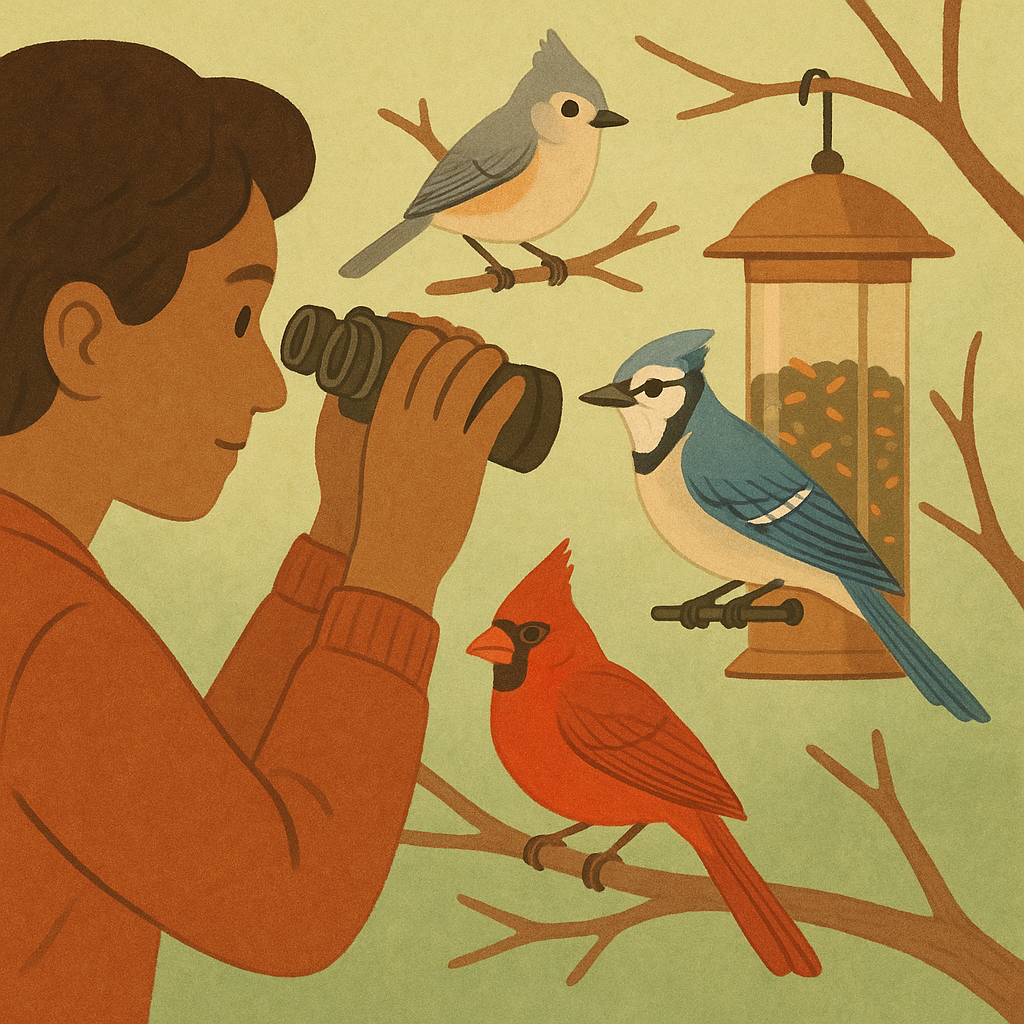
Feathers are one of the most expressive tools a bird has. Even subtle changes in how feathers are held tell a clear story about what a bird is feeling:
Puffed-Up Feathers
When a bird fluffs its feathers — rounding itself into a soft, round shape — it’s usually doing one of two things. In cool weather, it’s trapping warm air to stay comfortable, much like pulling on a sweater. But if a bird is puffed on a warm day and seems lethargic or uninterested in food, it may not be well. Healthy birds fluff briefly; persistent fluffing combined with inactivity is worth noting and monitoring.
Sleek, Tightly Held Feathers
A bird with feathers pressed flat against its body is often alert and anxious — sensing a potential threat like a hawk overhead or a cat nearby. If you see a bird suddenly “freeze” and press itself thin against a branch, look around carefully for what spooked it. You’ll often spot the predator within seconds.
Crest Position
For crested birds like the Northern Cardinal or Tufted Titmouse, the crest angle is a clear mood indicator. A raised crest often signals excitement, alertness, or mild territorial tension. A flat, relaxed crest suggests comfort and calm. If two cardinals face off at your feeder and both crests are raised high, watch for a brief territorial exchange.
Movement and Posture Signals to Watch For 👁️
Beyond feather position, the way a bird holds and moves its body reveals a great deal about its state of mind and intentions:
Tail Bobbing
Many species habitually bob their tails up and down — American Robins and Eastern Phoebes are classic examples. This rhythmic bobbing is normal, relaxed behavior. A rapid, agitated tail pump or sudden fanning of the tail feathers, however, often signals tension or a mild threat display meant to appear more imposing to rivals.
Wing Spreading and Drooping
A bird that spreads its wings slightly while perched on the ground may be sunbathing — warming its body and possibly dealing with feather parasites in the sunlight. This is completely normal. Wing droop in a perching bird, where wings hang loosely below the body instead of folding neatly, can signal illness or exhaustion, especially in young birds.
Head Tilting
Birds tilt their heads to focus one eye on a specific target — food on the ground, a sound in the branches, or you standing by the window. It’s a focused attention signal, not confusion. American Robins do this beautifully when listening for earthworms just below the soil surface.
- Alarm posture: Upright stance, neck stretched tall, head scanning rapidly — the bird has detected something concerning. Stay very still and look for the source.
- Submissive posture: Crouching low, wings slightly drooped, head down — often seen in juvenile birds begging for food from their parents in late summer.
- Aggressive display: Bird leans forward, fluffs back feathers, may open its beak slightly — a clear “back off” message to rivals competing at the feeder.
- Contentment: Relaxed preening, soft vocalizations, easy posture — a bird engaged in preening is comfortable enough to be momentarily vulnerable, which is genuinely a good sign for your yard habitat.
Vocalizations as Part of Body Language 🎵
Sound and movement work together as a unified communication system. A sharp “chip” or “chink” alarm call from a hidden bird usually signals danger. A soft, complex song on a calm spring morning means a male is establishing territory and feeling secure in his environment. Understanding that songs and calls serve very different purposes helps you read each moment in your yard more accurately.
One of the most reliable patterns to learn: when all the small birds at your feeder suddenly go completely silent and scatter at the same moment, look up immediately. A hawk is almost certainly passing nearby. Birds detect aerial threats before we ever see them — their collective silence is one of the clearest signals in all of backyard nature watching.
Pros and Cons of Studying Bird Behavior
Deepens your connection to birds
You move from simply spotting birds to genuinely understanding them — a much richer experience.
No extra gear required
Your eyes, ears, and patient attention are the only tools you need to read bird body language.
Practical for bird health
Recognizing normal behavior helps you quickly notice when a bird at your feeder may need help.
Takes time to develop fluency
Reading bird behavior confidently comes with months of patient, regular observation rather than overnight.
Context matters enormously
The same behavior can mean different things depending on species, season, time of day, and social situation.
Frequently Asked Questions ❓
How do I know if a bird at my feeder is sick?
Watch for persistent fluffing on a warm day, difficulty flying, extreme lethargy, or a bird that allows unusually close approach without fleeing. Healthy birds are alert, reactive, and move purposefully.
What does it mean when a bird seems to stare directly at me?
Birds use one eye at a time for focused observation. If a bird is angling its head and appearing to study you, it’s assessing whether you’re a threat. Stay still and it will usually return to normal behavior within a minute or two.
Why do some birds aggressively chase others away from feeders?
Feeder dominance is a natural part of bird social hierarchy. Larger species typically dominate, but even within species, individuals establish pecking orders. It’s completely normal behavior — not aggression to intervene in or worry about.
Is it okay to approach wild birds to observe behavior more closely?
Maintain a comfortable distance that doesn’t change the bird’s behavior at all. If it begins alerting or moving away from you, you’re too close. Good binoculars bridge the gap without causing any disturbance.
Final Thoughts 🌿
Birds are not random. Every puffed feather, tilted head, and quick wing spread has a meaning shaped by millions of years of evolution. Learning to read those signals is one of the quietest, most satisfying joys in all of birdwatching.
Start with one species at your feeder. Watch it for a week with genuine curiosity. Notice the patterns in how it moves, how it holds its feathers, how it responds to other birds. You’ll be surprised how quickly their language starts to feel familiar — and how rich even a simple morning at the feeder becomes once you understand what you’re seeing.