
Every time you watch birds in your backyard, you’re sitting on something valuable — not just a pleasant morning ritual, but data that researchers across the world genuinely need. The eBird app, created by the Cornell Lab of Ornithology, turns ordinary birdwatching into a contribution to one of the largest biodiversity science projects on earth.
In 2024 alone, birders submitted 268 million eBird reports. Over 122,000 new users joined the platform. Merlin, its companion app, added 7.5 million new users. What started as a tool for serious ornithologists is now used by backyard birders of every skill level, from first-timers with a single feeder to retirees who’ve been keeping careful notes for decades.
What Is eBird and Why Does It Matter?
eBird is a free citizen science platform developed by the Cornell Lab of Ornithology at Cornell University. It collects bird sightings from around the world and organizes them into a searchable, openly accessible database used by scientists, conservationists, land managers, and birders themselves.
The data you enter — species, count, location, time, effort — becomes part of a global record that tracks how bird populations are changing over time. Researchers use eBird data to understand migration routes, monitor species at risk, and measure the effects of habitat change on bird communities. Your backyard cardinal sighting counts.
📱 Getting Started with eBird
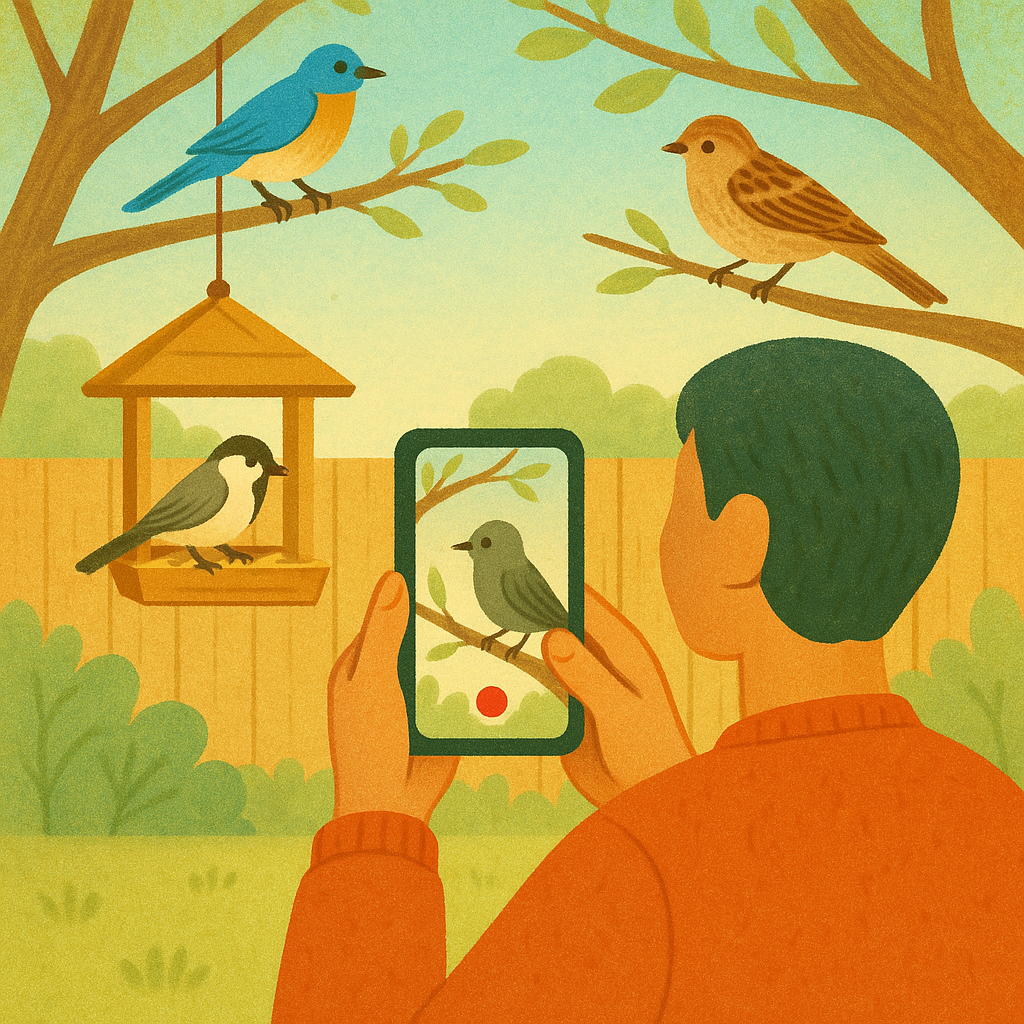
Setting up an account and submitting your first checklist takes less than 15 minutes. Here’s how to get started.
Step 1: Create Your Account
- Go to ebird.org or download the eBird app (iOS and Android, both free)
- Create a free account using your email address
- Set your home location — this helps personalize species lists for your area
Step 2: Submit Your First Checklist
- Start a checklist: In the app, tap “Start a Checklist” and confirm your location (your backyard, a local park, or wherever you’re watching)
- Choose observation type: Select “Stationary” for watching from one spot (like a window or patio) or “Traveling” for a walk
- Record what you see: Add each species you identify. Tap the species name and enter a count — even an approximate number is helpful
- Include effort details: How long did you watch? This context makes your data more scientifically useful
- Submit: Review and submit. Your sightings are now part of the global database
Step 3: Explore Your Local Hotspots
- Use the “Explore” tab to find nearby birding hotspots — parks, refuges, and preserves where other birders regularly report
- Browse recent sightings in your county to know what to expect this week
- View your own life list and backyard totals as your records grow
Tips for Making Your eBird Data More Valuable
Even simple observations are useful, but a few habits make your contributions significantly more valuable to researchers.
- Report zeros, not just sightings: eBird actually values records where you watched but didn’t see certain species — it helps researchers understand absence as much as presence.
- Be consistent about time and effort: A 15-minute stationary count at the same feeder every morning is more scientifically valuable than occasional irregular observations.
- Note unusual sightings with photos: If you see something unexpected, a photo through your phone window helps reviewers confirm the record.
- Submit year-round: Winter and off-season data are just as important as spring migration counts.
Pros and Cons of Using eBird
Completely free
No subscription, no in-app purchases. The full platform and app are free for all users.
Your data has real scientific value
Every checklist contributes to peer-reviewed research and conservation planning.
Builds your personal records automatically
eBird maintains your life list, year list, and backyard totals as you submit — no manual tracking needed.
Helps you discover more birds locally
Exploring nearby hotspots and recent reports shows you where to look for species you haven’t seen yet.
Learning the interface takes a session or two
The app has many features. Stick to basic checklist submission first — the rest can wait until you’re comfortable.
Unusual sightings may be flagged for review
If you report a rare species, a local reviewer may ask for confirmation. This is a feature, not a criticism — it protects data quality.
Requires reasonable ID confidence
eBird works best when you’re confident in your identification. “Unknown sparrow” can still be submitted, but species-level IDs are most useful.
Frequently Asked Questions
Do I need to be an expert to use eBird?
Not at all. Beginners are genuinely welcomed and their data is valued. Start with the common birds you already recognize — a dozen species is enough to begin contributing meaningfully.
Is eBird connected to the Merlin Bird ID app?
Yes. Both are developed by the Cornell Lab of Ornithology. Merlin helps you identify birds by sound, photo, or description. You can link your Merlin and eBird accounts to transfer sightings directly between them.
Can I submit backyard feeder observations, or does it need to be a special location?
Your backyard is a perfectly valid eBird location. Feeder watchers are among the most consistent and valuable contributors to the platform — especially for tracking common species year-round.
What if I’m not sure of a species identification?
Only submit species you’re reasonably confident about. If you’re uncertain, you can submit the genus (e.g., “Accipiter sp.”) or simply skip that bird. Accuracy matters more than completeness.
Final Thoughts
Birdwatching from your own backyard already brings its own quiet rewards. eBird simply adds another layer — the knowledge that those morning minutes at your feeder, those careful notes on the species visiting your yard, are reaching scientists and helping protect the birds you’ve come to love.
It takes five minutes to submit your first checklist. The birds will still be there. So will the researchers, grateful for exactly the kind of careful, consistent observation that backyard birders are uniquely positioned to provide.