

One of the most rewarding things about birdwatching is how naturally it pulls people together. When I first held up a pair of binoculars for my granddaughter Emma and whispered “There — look at those red wings,” her eyes went wide. That moment of shared wonder is what family birding is all about.
According to the U.S. Fish and Wildlife Service, 96 million Americans engaged in birdwatching in 2022. And more than ever, grandparents are finding it to be one of the most gentle, meaningful ways to spend time with the younger generation — no screens required.
Why Birdwatching Is Perfect for Grandparents and Grandchildren
Unlike many hobbies, birdwatching asks only for patience, a little curiosity, and open eyes. It moves at whatever pace the child needs. A three-year-old can clap at a cardinal; a twelve-year-old can log species on eBird. Everyone participates at their own level.
Birdwatching also creates a natural platform for storytelling. You can share what you know about migration, nesting, or the seasons — not as a lecture, but as a gentle conversation while you wait for the next visitor to arrive.
🌱 Getting Started Together: Simple First Steps
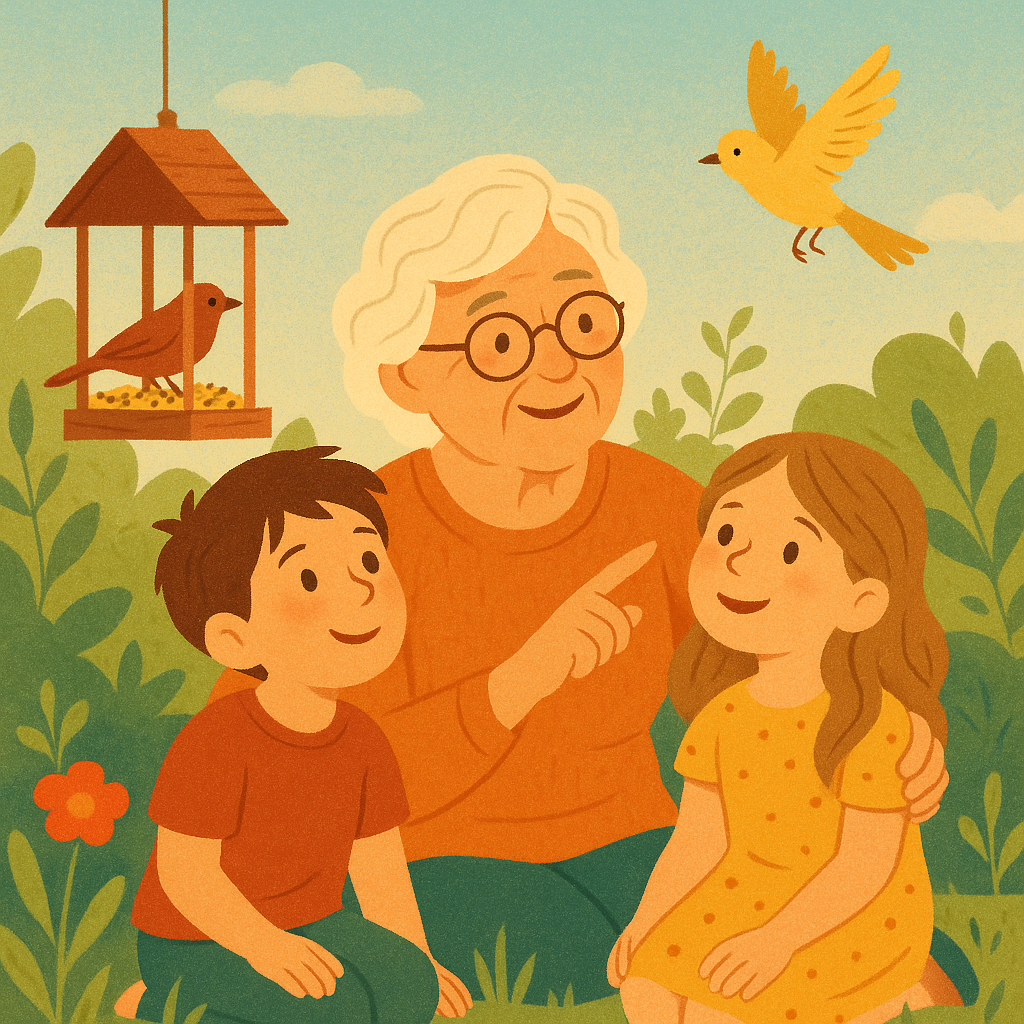
You don’t need elaborate setups to make birdwatching magical for kids. Start where you are, with what you have.
- Set up a seed feeder: A simple tube feeder with black oil sunflower seeds will attract chickadees, finches, and sparrows within days.
- Pick a window spot: Find a comfortable chair near the feeder where you can sit together without disturbing the birds.
- Get a small field guide or app: A regional children’s bird guide (Peterson Field Guides has a Junior edition) works well. Merlin Bird ID by Cornell Lab is free and great for all ages.
- Keep a shared notebook: Let your grandchild draw or write their sightings. Even simple sketches build observation skills and become cherished keepsakes.
- Start slow: Fifteen minutes is plenty for young children. Patience comes with time, not pressure.
🎯 Fun Activities to Try at Every Age
Keeping kids engaged means mixing observation with hands-on activities. Here are some favorites that work well across different ages.
Ages 3–6: Sensory Discovery
- Bird bingo: Make simple bingo cards with bird drawings or stickers. Call out what you see from the window.
- Feather collection: Collect fallen feathers safely (wear gloves) and identify the bird they came from together.
- Sound listening walk: Slow down in the backyard and count how many different bird sounds you hear. No names needed — just listening.
Ages 7–12: Skill Building
- Tally sheet watching: Give kids a simple chart to track which birds visit the feeder and how many times.
- Photography challenge: Let them use an old smartphone or tablet camera to capture birds. Even blurry photos lead to great conversations.
- Nature journaling: Date, location, weather, birds seen — a simple format that builds real scientific habits.
Teens: Deeper Engagement
- eBird checklists: Teens can submit real observations to Cornell Lab’s eBird platform, contributing to genuine bird science.
- ID challenges: “Spot the difference” between similar species (like Downy vs. Hairy Woodpecker) sharpens attention to detail.
- Bird photography projects: Creating a personal photo collection of species spotted becomes a meaningful and ongoing project.
Pros and Cons of Birdwatching with Grandchildren
All ages can participate
From toddlers to teens, everyone finds their own level of engagement with birds.
Builds lasting memories
Shared sightings and quiet morning moments become stories kids carry for life.
Low-cost and accessible
A feeder, a notebook, and a window are all you really need to begin.
Teaches patience naturally
Waiting for a bird to appear teaches children to slow down without being told to.
Young children have short attention spans
Keep early sessions brief — 10 to 15 minutes is ideal for children under 6.
Weather can limit outdoor time
Window watching is a great indoor alternative when it’s too hot, cold, or wet.
Some kids may prefer action
Active kids might need a scavenger hunt format or movement-based approach to stay interested.
Frequently Asked Questions
What is the best age to start birdwatching with grandchildren?
Any age works, but children as young as two or three can enjoy watching birds at a feeder through a window. The key is matching the activity to the child’s attention span and curiosity level.
Do I need binoculars for young children?
Not at first. Backyard window watching works perfectly for beginners. If you want to introduce binoculars, start with lightweight 8×25 models and show kids how to focus on a stationary object before trying moving birds.
What if my grandchildren live far away?
Share your birds remotely. Send them a photo of a morning visitor with a short note, or video call while watching the feeder together. Distance doesn’t have to interrupt the shared experience.
How do I keep a distracted child interested?
Games help enormously — bird bingo, species tallies, or photography challenges turn passive waiting into active participation. Follow the child’s energy rather than pushing for quiet observation too early.
Final Thoughts
Birdwatching with grandchildren isn’t just about birds. It’s about those quiet mornings together, the whispered excitement when a new species arrives, and the gentle lesson that the world rewards patient attention. Start small, stay curious, and let the birds do the rest.