
Bird photography for beginners can feel intimidating, but backyard birds are patient teachers. You do not need a safari trip or professional camera body to make meaningful pictures. A simple setup, good light, and a little patience can turn an ordinary feeder visit into a photograph that feels like a tiny gift from the natural world.
One of the smartest lessons from Audubon-style backyard bird photography is this: birds look best in natural surroundings, not clinging awkwardly to a plastic feeder. If you set up a pleasant perch nearby and give yourself a calm place to wait, your photos immediately look more natural and more personal.
📷 What Equipment Helps Most at the Beginning
The best camera for birds is the one you can hold comfortably and use without stress. A camera or phone with some zoom is enough to begin learning composition, timing, and light. If you do have a camera with lens control, a telephoto lens of about 200mm or more makes it easier to keep a respectful distance.
For many beginners, steady support matters more than expensive gear. A lightweight tripod, monopod, or beanbag on a windowsill reduces shake and lets you wait longer without getting tired.
Simple starter checklist
- Camera or phone with zoom: Start with what you already own before upgrading.
- Stable support: A tripod or windowsill beanbag can rescue many soft photos.
- Clean shooting position: A chair by the window or a shaded patio corner makes patience easier.
🌤️ Set Up the Scene Before the Birds Arrive
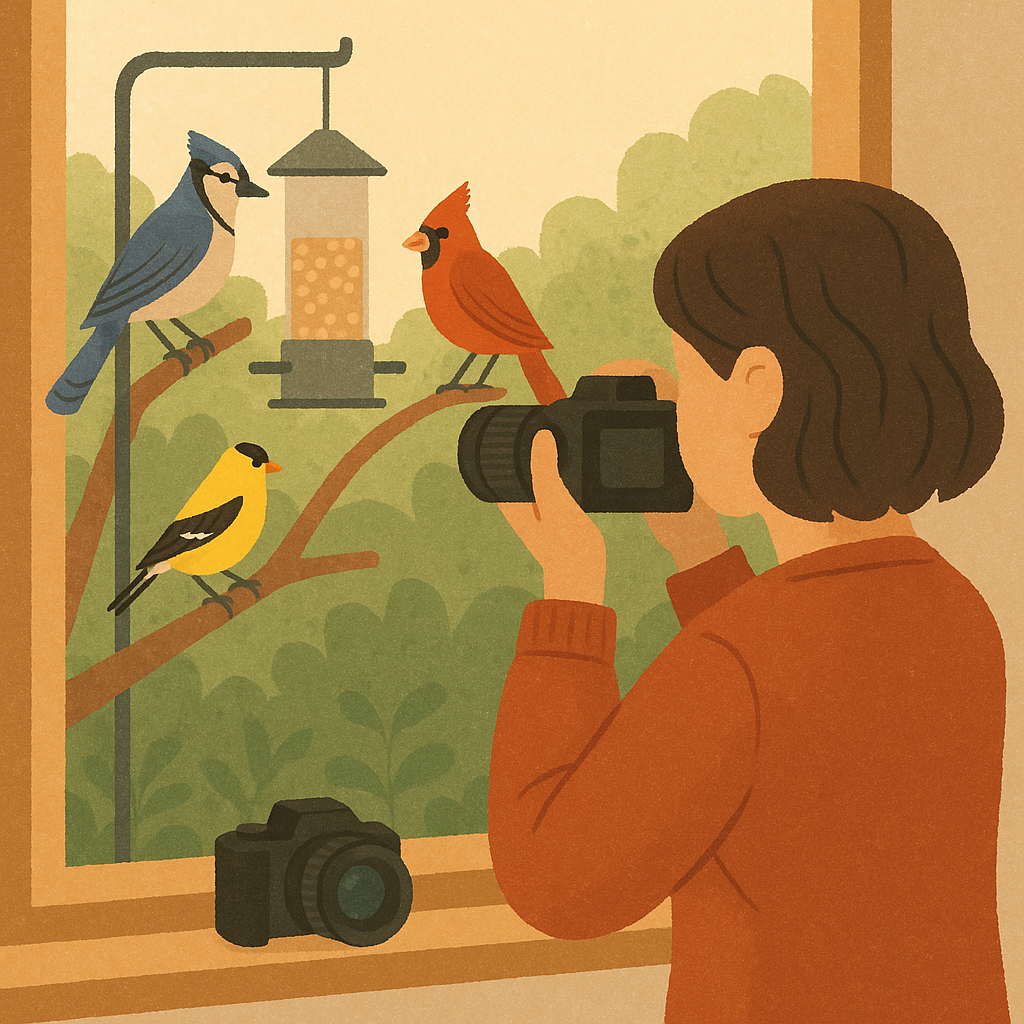
Good backyard bird photography starts before the bird lands. Place feeders near an attractive branch, shrub, or natural perch where birds can pause. Many species stop there briefly before moving to food, and that brief pause often makes the prettiest photograph.
Light and background matter more than you think
Morning is often the best time because birds are active and the light is softer. If possible, keep the sun behind you or slightly to the side. Busy fences, cars, and bright patio furniture in the background can distract from the bird, so a soft green backdrop usually works better.
🪟 Photographing Through a Window Without the Usual Problems
Many beginners photograph from indoors, especially in cold weather or when mobility is limited. That works surprisingly well if you manage reflections. Press the lens hood close to the glass, clean the window first, and keep bright indoor lights behind you turned off. Those simple steps reduce glare and improve contrast right away.
If your house is much warmer than the outdoors, slight distortion can appear through the glass. In that case, opening the window briefly or shooting during smaller temperature differences may help.
- Turn off indoor lights: Reflections sneak into dark bird feathers quickly.
- Clean the glass: Smudges soften detail more than many beginners realize.
- Focus on the eye: Sharp eyes make the whole image feel alive.
🐦 Camera Habits That Improve Beginner Bird Photos
You do not need to memorize every setting on day one. Focus on a few habits that consistently help.
- Use a fast shutter speed: Birds twitch, blink, and hop constantly, so extra speed keeps details crisp.
- Leave space in front of the beak: That little bit of room makes the frame feel balanced.
- Shoot several frames: Burst mode improves your chances of catching the best posture.
- Stay at eye level when possible: Images feel more intimate and less like surveillance.
Low-pressure practice
Regular feeder visitors give you repeated chances to learn timing, composition, and focus without leaving home.
Natural light improves color
Soft morning light brings out feather detail and keeps the scene feeling calm and lifelike.
Simple perches create better photos
A nearby branch can transform an ordinary feeder shot into a much more graceful portrait.
Standing too close
Birds notice sudden movement quickly, so crowding them usually ends the session before it begins.
Ignoring the background
A sharp bird against a distracting fence or trash can never feels as lovely as one framed by leaves and distance.
❓ Frequently Asked Questions
Can I start bird photography with a phone?
Yes. A phone works well for practicing patience, composition, and feeder setup, especially if birds come close and light is good.
What is the best time of day to photograph backyard birds?
Morning is usually best because birds are more active and the light is softer and more flattering than harsh midday sun.
Why do my bird photos look blurry through the window?
Common causes include dirty glass, reflections, slow shutter speed, or slight camera shake. Fixing just one of those often helps right away.
Should I photograph birds on the feeder itself?
You can, but many of the nicest images happen on a nearby perch where the bird looks more natural and the scene feels less cluttered.
🌿 Final Thoughts
Backyard bird photography grows slowly, and that is part of its charm. The more quietly you prepare the space and the more gently you practice, the more often your visitors reward you with small, unforgettable moments worth keeping.