
There’s something almost magical about looking out your window on a gray January morning and spotting a flash of brilliant red against the snow. Winter birdwatching surprises many beginners — they expect birds to disappear with the warm weather, but the reality is quite the opposite. Some of your most memorable sightings are waiting for you right now, in the coldest months of the year.
The bare trees, the quiet mornings, and the focused activity at feeders make winter one of the best times to begin watching birds. Without summer’s dense foliage blocking the view, birds that were hiding all spring and fall are suddenly easy to spot perched on bare branches or clustered around your feeder.
Why Winter Is a Great Time to Watch Birds 🌨️
Many new birdwatchers assume winter is the “off season.” But experienced birders know it’s one of the most rewarding times to be outside with binoculars. Here’s why:
- No leaves blocking the view: Bare branches give you clear sightlines you simply can’t get from May through October.
- Birds gather at feeders: With natural food scarce, backyard feeders become wildlife magnets. More birds, more often, right outside your window.
- Unexpected visitors appear: Winter brings irruptive species — birds that only visit when their northern food sources fail. Redpolls, Pine Siskins, and Evening Grosbeaks can show up in your yard out of nowhere.
- Less crowded birding spots: Parks and trails have fewer people, making birds calmer and easier to approach quietly.
🏡 The Year-Round Residents: Birds That Never Leave
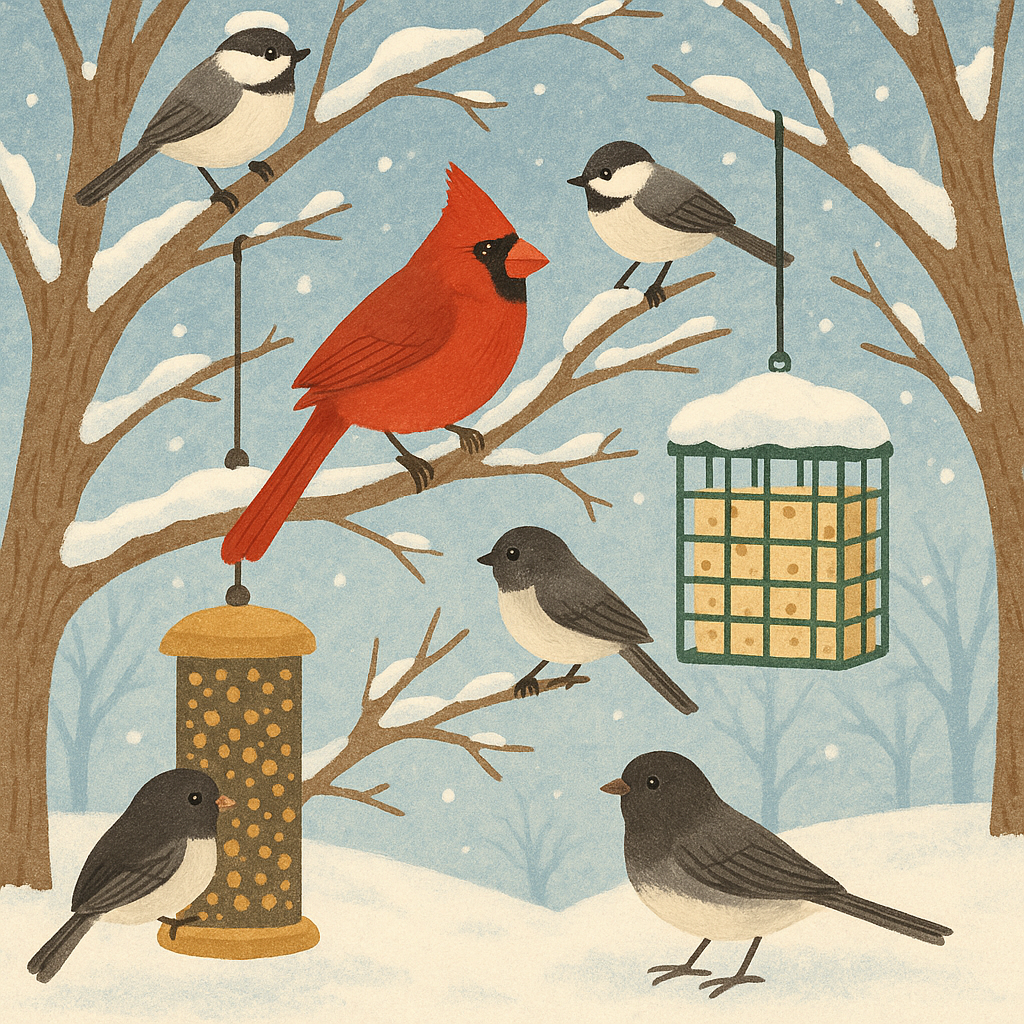
These reliable backyard birds stay put through every season. Learning to recognize them is the perfect foundation for any birdwatcher, because once you know your “regulars,” any new visitor stands out immediately.
Northern Cardinal
The male cardinal — bright scarlet against white snow — might be the most iconic winter bird sight in North America. Cardinals don’t migrate, making them one of the most reliable winter feeder birds across the eastern and central United States. The female is equally beautiful, with warm tan plumage accented by reddish tinges on her wings and crest. They love black oil sunflower seeds and tend to visit feeders at dusk and dawn.
Black-Capped Chickadee
Bold, curious, and completely unfazed by cold weather, chickadees are winter’s most cheerful companions. These tiny birds have an extraordinary superpower: they can lower their body temperature at night to conserve energy — a process called torpor. Watch them cache seeds in bark crevices throughout the day; they remember thousands of hiding spots and return to them throughout winter. If you hold out your hand with sunflower seeds, a chickadee may land on your palm within minutes.
Downy Woodpecker
The smallest woodpecker in North America is a year-round presence across most of the country. In winter, Downies become especially visible because they rely heavily on suet feeders and dead wood for the insects hiding beneath the bark. The male has a small red patch on the back of his head — a detail worth looking for as he hitches up and down your backyard trees.
White-Breasted Nuthatch
The nuthatch has one of the most distinctive behaviors in birding: it walks headfirst down tree trunks. This acrobatic technique lets it find food that woodpeckers miss by only moving upward. Nuthatches are year-round residents across much of the U.S. and are almost always present where there are mature trees and suet or sunflower feeders nearby.
❄️ Winter Surprises: The Irruptive Species
Beyond the regulars, winter occasionally brings remarkable visitors from the north. These “irruptive” species don’t follow predictable migration routes — instead, they move south when food runs short in their northern boreal and tundra habitats. You might go five winters without seeing one, then suddenly have dozens at your feeder.
- Dark-Eyed Junco: The classic “snowbird” — a ground-feeding sparrow with white outer tail feathers that flash in flight. Juncos arrive each November and leave by April.
- American Goldfinch (winter plumage): In winter, males trade their brilliant yellow for a dull olive-green. Many people don’t recognize them at their nyjer feeders until spring when the color returns.
- Pine Siskin: A small, streaky finch that arrives in irruptive flocks during cone-crop failure years up north. They look like female goldfinches with more streaking and yellow wing flashes.
- Red-breasted Nuthatch: Smaller than its white-breasted cousin, with a rusty-orange belly and a bold black eye stripe. They invade southward during years when spruce cone crops fail.
Setting Up for Winter Success 🌿
A few simple adjustments to your backyard setup can dramatically increase the number and variety of birds you attract during cold months.
- Add suet: Suet cakes are pure high-energy fat that woodpeckers, nuthatches, and chickadees crave in cold weather. One suet cage hung from a branch or shepherd’s hook can transform your winter birdwatching.
- Keep water from freezing: Unfrozen water is even more valuable to birds in winter than food. A simple heated birdbath element (available at hardware stores for about $20) keeps water liquid even in freezing temperatures.
- Leave the brush piles: Resist the urge to clean up fallen branches and leaf piles. Sparrows, wrens, and towhees use dense brush as protective cover from wind and predators.
- Add nyjer seed: American Goldfinches and Pine Siskins are drawn specifically to this tiny seed. A dedicated nyjer tube feeder can attract species you’d otherwise never see in your yard.
Pros and Cons of Winter Birdwatching
Unobstructed views
Bare trees mean you can spot and study birds that would be hidden by foliage in warmer months, making identification much easier.
Concentrated feeder activity
With natural food sources depleted, birds visit feeders more frequently and stay longer, giving you extended observation time.
Irruptive species excitement
Winter brings the chance of rare northern visitors that you simply cannot see at any other time of year — every morning can bring a surprise.
Cold and shorter days
Peak activity happens at dawn and dusk — often the coldest, darkest times. Dress in layers and keep sessions short when starting out.
Fewer total species
The full diversity of spring migration isn’t there. Winter birding is about depth of observation, not species count.
Frequently Asked Questions About Winter Birdwatching
Do birds really need my help in winter, or can they survive on their own?
Most healthy birds can survive without feeders — they evolved long before humans put seeds out. But feeders do provide a reliable energy source during the most difficult weather events, like ice storms, when natural food is completely buried. They also bring birds close enough for you to observe them, which is the real gift.
Should I stop feeding birds in late winter so they don’t become dependent?
This is a common concern, but birds don’t become dependent on a single food source. They naturally forage across a wide range. If you stop filling your feeder, birds will simply shift to other food sources — they won’t starve. Feel free to take breaks without guilt.
What are irruptive birds, and how do I know if I might see them this winter?
Irruptive birds are northern species that move south in large numbers when their usual food supplies — mainly tree seeds and cones — fail in their home range. Websites like FinchResearch.org post annual “finch forecast” reports in fall that predict which irruptive species are likely to move south that winter. It’s worth checking every October.
How do small birds survive nights when temperatures drop below freezing?
Small birds use several remarkable strategies: they fluff their feathers to trap warm air, roost together in tree cavities for shared warmth, and some (like chickadees) enter a mild state of torpor — lowering their body temperature to conserve energy overnight. It’s one of the most fascinating adaptations in the natural world.
Final Thoughts ✨
Winter birdwatching teaches patience, attentiveness, and a deep appreciation for the quiet beauty that’s always present outside your window — if you slow down enough to notice it. The cardinal at your feeder on a snowy morning isn’t just a pretty bird; it’s a neighbor who has decided to stay through the hardest season, and there’s something quietly inspiring about that.
Start with what’s already there. Learn your regulars by name. Keep your feeders and water clean. And on that unexpected morning when a dozen Pine Siskins descend on your nyjer feeder for the first time, you’ll understand exactly why winter birders are some of the most devoted in the hobby.