
Fall migration unfolds quietly compared to spring’s urgent rush north. Birds move south at a leisurely pace, stopping frequently to refuel and rest. Your backyard becomes a gas station for travelers heading to Central America and a gathering place for year-round residents stocking up before winter arrives.
What Is Fall Migration?
Fall migration is the southward movement of birds from breeding grounds to wintering territories, driven by decreasing daylight, cooling temperatures, and disappearing food sources. Unlike spring migration, which races against breeding deadlines, fall migration stretches across months—from late August through November.
Many species take completely different routes south than they used flying north, forming clockwise loops to take advantage of prevailing winds and seasonal food availability. This explains why you might see species in fall that never appeared during spring.
Juveniles make their first migration instinctively, navigating thousands of miles without prior experience. Watching these young birds fuel up in your backyard connects you to one of nature’s most remarkable inherited behaviors.
Why Fall Migration Matters for Backyard Birders
Fall offers extended opportunities to observe migrants because birds move slower and linger longer at stopover sites. A warbler that passed through in one day during spring might spend three days resting and feeding in fall.
Mixed flocks become common as multiple species travel together for safety and food-finding efficiency. Chickadees, titmice, nuthatches, and kinglets form roving bands that sweep through backyards, probing bark and foliage for insects.
Supporting fall migrants also helps conservation. Providing high-energy food and clean water directly improves survival rates during this energy-intensive journey when birds burn through fat reserves built up during summer.
Recognizing Fall Migration Behaviors
Three distinct behavior patterns signal that migration is underway and birds are preparing for winter challenges ahead.
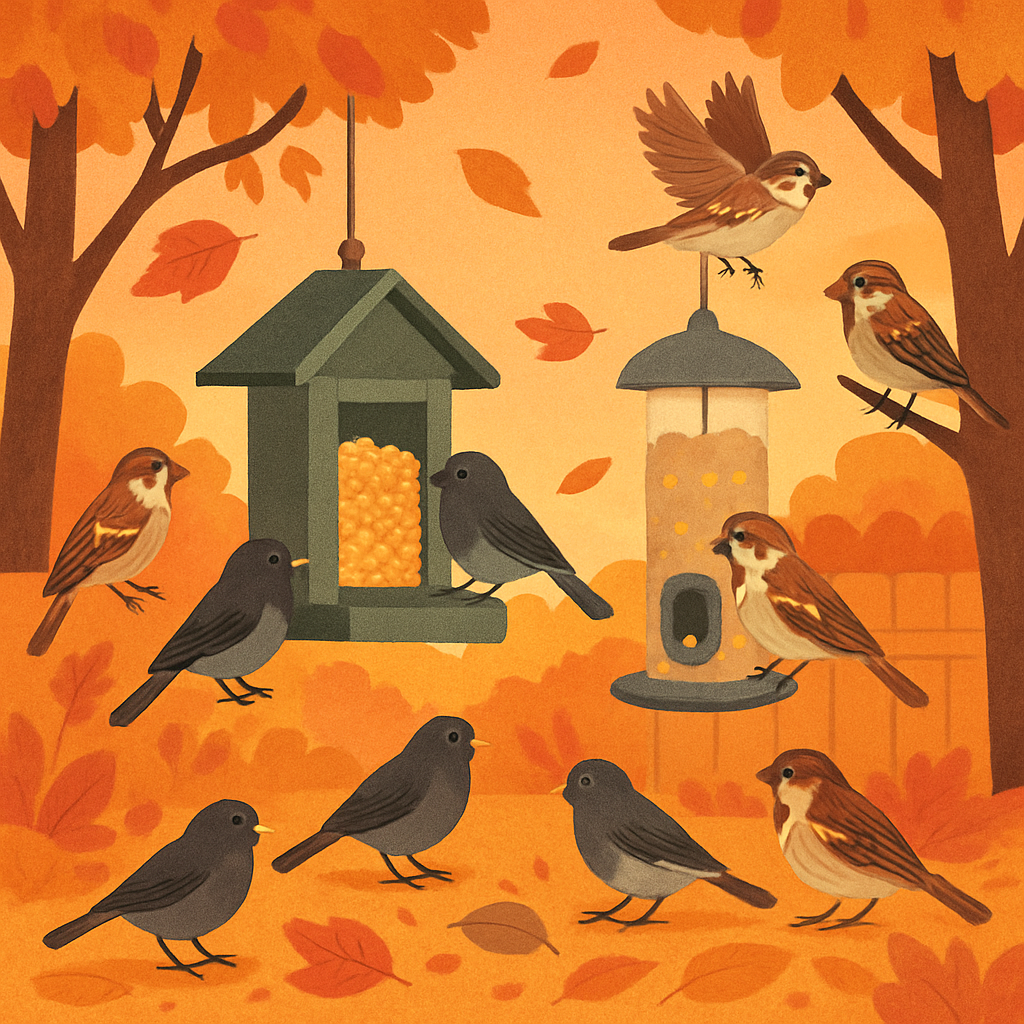
Frantic feeding activity: Migrants and residents both increase feeding urgency as fall progresses. Watch for birds visiting feeders more frequently and consuming larger quantities. This hyperphagia (excessive eating) builds fat reserves essential for migration or surviving cold winter nights.
Flocking behavior: Species that lived in breeding pairs during summer now join large flocks. Dark-eyed Juncos arrive from Canada in groups, American Robins gather in berry-eating flocks of 50+ birds, and blackbirds form massive mixed flocks with starlings and grackles.
Quieter mornings: Unlike spring’s dawn chorus, fall brings silence. Most birds have stopped singing because territorial defense and mate attraction no longer matter. Listen instead for soft contact calls that help flock members stay together.
Fall Migrants to Watch For
- Warblers (September): Same species as spring but in dull fall plumage without bright breeding colors. ID becomes harder.
- Sparrows (October): White-throated, White-crowned, and Fox Sparrows arrive from northern breeding grounds.
- Dark-eyed Juncos (October-November): “Snowbirds” from Canada signal winter’s approach; stay until March.
- Ruby-crowned Kinglets (October): Tiny, hyperactive birds that constantly flick wings while foraging.
- Yellow-rumped Warblers (October-November): Last warblers to leave; can survive on berries when insects disappear.
Watch for sudden increases in backyard activity after cold fronts push through. These weather events concentrate migrants looking for shelter and food before continuing south.
Pros and Cons of Fall Backyard Birding
Extended migration window (3+ months vs 6 weeks in spring)
Birds linger longer at stopover sites
Mixed flocks provide variety in single sightings
Juvenile birds easier to observe than wary adults
Duller plumage makes identification harder
Reduced singing eliminates helpful ID clues
Fewer total species than spring migration
Overcast fall weather limits visibility
Preparing Your Yard for Fall Migrants and Winter Residents
Simple adjustments transform backyards into critical stopover habitats that increase bird survival during migration and winter.
High-energy food becomes essential: Offer black oil sunflower seeds, suet, peanuts, and sunflower chips. Suet provides pure fat—critical when insects vanish and temperatures drop. Add dried mealworms to attract bluebirds and robins shifting from insects to alternative protein sources.
Water availability matters more than you think: Natural water sources freeze or disappear in fall. A simple birdbath attracts migrants and residents desperately seeking drinking water. Adding a solar bubbler prevents freezing and attracts attention from passing birds.
Leave the mess: Resist fall cleanup urges. Seed heads on coneflowers, sunflowers, and asters provide natural food through winter. Leaf litter harbors insects that wrens, towhees, and sparrows hunt. Brush piles offer roosting shelter during cold nights.
Native berries fuel migration: Dogwoods, viburnums, hollies, and serviceberries produce berries precisely timed for fall migration. Robins, waxwings, and catbirds devour these high-energy fruits before heading south.
FAQ
Why do some birds migrate while others stay?
Migration evolved as a strategy to escape winter food scarcity, not cold temperatures. Birds that can find enough food year-round—like chickadees eating seeds and insects from bark—don’t migrate.
When should I start fall feeding?
Keep feeders stocked year-round. Early migrants like hummingbirds leave in August, while late migrants and winter residents rely on feeders through November and beyond.
Do migrating birds use the same yards every year?
Individual birds often return to successful stopover sites annually. Banding studies show migrants recognize and revisit yards that provided good food and shelter in previous years.
Final Thoughts
Fall migration and winter preparation reveal how birds solve survival challenges through inherited behaviors refined over millions of years. Your backyard can become a reliable stopover that migrating birds count on annually and a winter refuge that improves survival for resident species. Every feeder refilled, birdbath refreshed, and native plant left standing contributes to conservation efforts that span continents.