

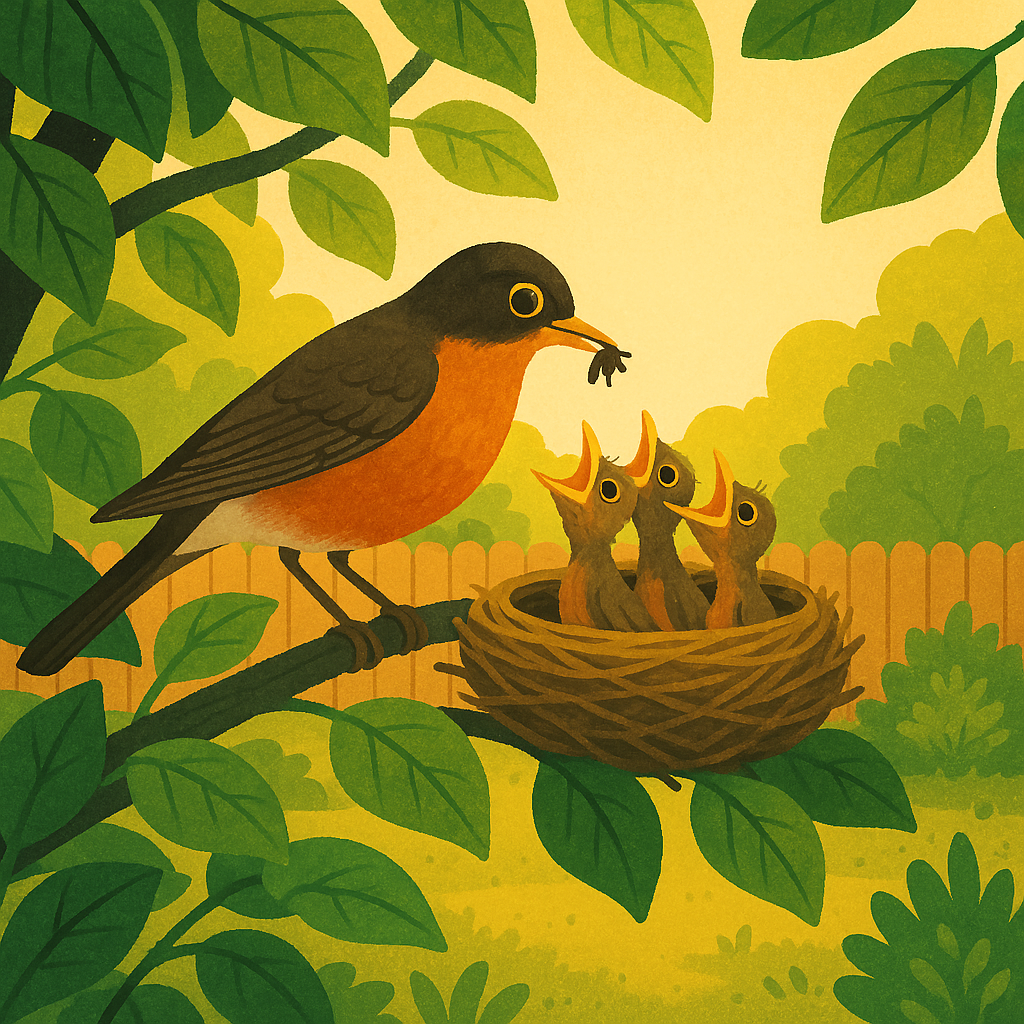
Summer backyards transform into bird nurseries where parent birds work nonstop to raise the next generation. Watching a robin carry caterpillars to hidden nestlings or hearing the persistent begging calls of fledgling cardinals offers an intimate view into breeding behaviors rarely witnessed in other seasons.
What Is Breeding Season?
Breeding season spans late April through August, with peak activity concentrated in June and July. During this window, birds pair up, defend territories, build nests, incubate eggs, and raise young—all while dealing with predators, weather, and the demands of feeding growing chicks.
Unlike spring migration, which brings new species daily, summer birding focuses on resident birds exhibiting complex behaviors tied to reproduction. The same cardinals and robins you see year-round become remarkably busy and vocal during breeding season.
Many species raise multiple broods. Mourning Doves can nest up to six times between March and September, while American Robins and Northern Cardinals commonly attempt two or three broods in a single summer.
Why Summer Breeding Behavior Fascinates Birders
Observing breeding behavior teaches you how birds solve survival challenges—from choosing safe nest sites to coordinating food delivery between mates. These behaviors evolved over millions of years and reveal problem-solving intelligence often underestimated in birds.
Summer also offers fledgling season, when young birds leave nests but still depend on parents. Watching clumsy fledglings practice flying while begging for food provides comic relief and heartwarming moments.
Key Breeding Behaviors to Recognize
Five distinct behaviors dominate summer bird activity, each serving a specific role in successful reproduction.
Territorial defense: Males sing loudly from prominent perches to announce territory boundaries and warn competitors. Cardinals, robins, and wrens become especially aggressive, chasing intruders relentlessly. This behavior peaks early morning and resumes late afternoon.
Nest building: Watch for birds carrying nesting material—grass, twigs, mud, feathers, or spider silk. Females do most construction while males guard nearby. Robins build cup nests from grass and mud in shrubs or on ledges. Goldfinches wait until July to nest, using milkweed fluff and thistle down for their intricate cups.
Courtship feeding: Males bring food gifts to females during pair bonding and throughout incubation. Cardinals are famous for this behavior—watch for bright red males offering seeds to brown females.
Repeated feeding trips: Once chicks hatch, parents make dozens of feeding trips daily. A robin may visit the nest every 10-15 minutes carrying caterpillars, worms, or berries. This behavior signals an active nest nearby.
Fledgling care: Young birds leave nests before fully capable of flight. Parents continue feeding fledglings for 1-3 weeks while teaching foraging skills. Fledglings often perch conspicuously and beg loudly with wing-fluttering displays.
Summer Nesting Species in Backyards
- American Robin: Multiple broods from April-August; mud-and-grass cup nests in shrubs or on ledges.
- Northern Cardinal: 2-3 broods; dense shrub nests; male feeds female on nest during incubation.
- Mourning Dove: Up to 6 broods; flimsy platform nests; often nests on porch lights or gutters.
- American Goldfinch: Late nesters (July-August); waits for milkweed and thistle seeds; intricate woven cups.
- House Wren: Cavity nester; extremely aggressive territory defense; stuffs birdhouses with sticks.
Late nesters like goldfinches and Indigo Buntings may still have dependent young in late August, extending the breeding season well into late summer.
Pros and Cons of Summer Backyard Birding
Witness complete breeding cycle up close
Active nests easier to locate via parent behavior
Fledgling season provides entertaining observations
Consistent species allow detailed behavior study
Heat limits peak activity to early mornings
Dense foliage hides nests and adult birds
Molting adults look scruffy and sing less
Fewer species than spring migration
Supporting Breeding Birds Safely
Simple yard choices significantly improve nesting success without interfering with natural behaviors.
Native plants provide both nesting sites and insect-rich foraging areas. Oaks, dogwoods, and serviceberries host thousands of caterpillars—critical protein for growing chicks. Dense shrubs like viburnum or native holly offer protected nest locations.
Fresh water becomes essential as temperatures rise. Birdbaths provide drinking water and help birds cool down. Adding a solar bubbler attracts attention and keeps water fresh.
Delay pruning shrubs until late summer. Many birds nest in hedges and ornamental shrubs through July. Wait until August to trim after fledglings have left nests.
Keep cats indoors during breeding season. Outdoor cats kill millions of fledglings annually. Young birds spend days on the ground learning to fly, making them especially vulnerable.
FAQ
Should I put out nesting material?
Yes, but use natural materials only. Offer short lengths of natural fiber, soft grasses, feathers, or coconut fiber. Avoid yarn, dryer lint, or synthetic fibers that can entangle chicks.
What if I find a baby bird on the ground?
Most are fledglings learning to fly. Parents watch from nearby. Leave them alone unless in immediate danger from cats or traffic. Never remove young birds from yards.
Why do birds sing less in late summer?
After chicks fledge, territorial defense becomes less urgent. Many adults also enter molt, replacing worn feathers. This energy-intensive process reduces singing.
Final Thoughts
Summer breeding season turns backyards into bird family nurseries where the challenges and rewards of raising young unfold daily. Watching parent birds navigate these demands—building nests, defending territories, feeding chicks—offers a masterclass in avian intelligence and dedication. Your yard can become a safe haven that improves survival for the next generation of backyard birds.