
There’s something wonderful about watching birds flock to your feeders every morning. But here’s a truth every backyard bird lover needs to know: dirty feeders can make birds sick—and sometimes, they can even spread diseases that kill. The good news? Keeping your feeding station clean is simpler than you think, and it only takes a few minutes each week.
I learned this lesson the hard way when I noticed birds avoiding my feeders one summer. Mold had crept into the corners of my tube feeder, and the birdbath had turned into a breeding ground for bacteria. After a thorough cleaning, the birds returned within hours. That’s when I realized: clean feeders aren’t just nice to have—they’re essential.
Let me show you how to maintain a feeding station that keeps birds healthy and coming back season after season.
Why Clean Feeders Matter (More Than You Think)
Birds gather at feeders, which means diseases can spread quickly when hygiene fails. A single sick bird visits your feeder, leaves behind contaminated droppings or saliva, and suddenly every bird that feeds there is at risk.
Common diseases spread through dirty feeders include:
- Salmonellosis: Bacterial infection causing lethargy, fluffed feathers, and death. Spreads through contaminated food and droppings.
- Aspergillosis: Fungal disease from moldy seeds, affecting birds’ respiratory systems. Often fatal.
- Avian pox: Viral disease causing wart-like growths around eyes and beak, spread through contaminated surfaces.
- Trichomoniasis: Parasitic infection common in hummingbird feeders, causing lesions in throat and crop.
These aren’t rare occurrences. State wildlife agencies regularly report disease outbreaks traced back to poorly maintained feeding stations. The solution is straightforward: regular cleaning dramatically reduces disease transmission.
How Often to Clean Different Feeder Types
Not all feeders need cleaning on the same schedule. Frequency depends on feeder type, weather, and how heavily it’s used:
Seed Feeders (Tube, Hopper, Platform)
Frequency: Every 2 weeks minimum; weekly in wet or humid weather.
Seed feeders accumulate seed hulls, droppings, and moisture. When wet seeds sit in a feeder, mold grows quickly—especially in summer humidity or spring rains. Tube feeders are particularly prone to moisture buildup at the bottom where seeds compact.
Extra attention: Empty, clean, and refill more often during wet weather. If you notice any mold or clumping, clean immediately.
Suet Feeders
Frequency: Every 2-3 weeks; more often in warm weather.
Suet melts in heat, leaving behind oily residue that traps dirt and bacteria. Woodpeckers and other suet-eaters are generally hardy, but a filthy suet cage can still harbor disease.
Summer tip: Switch to no-melt suet cakes or take suet feeders down entirely when temperatures exceed 70°F. Melted suet can mat birds’ feathers.
Hummingbird Feeders
Frequency: Every 3-4 days; every 2 days in temperatures above 85°F.
Hummingbird feeders require the most attention. Sugar water ferments rapidly in heat, creating black mold that’s toxic to hummingbirds. Trichomoniasis spreads easily through contaminated nectar ports.
Critical rule: If you see any black mold or cloudy nectar, clean immediately. Don’t top off old nectar with fresh—always empty and clean first.
Birdbaths
Frequency: Every 2-3 days; daily in hot weather.
Birdbaths become stagnant quickly, breeding algae, bacteria, and mosquito larvae. Birds drink this water and bathe in it, making cleanliness crucial for preventing disease spread.
Quick daily routine: Dump old water, scrub sides with a brush, refill with fresh water. Full cleaning (with bleach solution) weekly.
Supplies You Need (Keep Them Handy)
Feeder cleaning is easier when you have the right tools ready. Here’s what I keep in a bucket under my kitchen sink:
- Bottle brushes: Long, flexible brushes for tube feeders. Get multiple sizes for different feeder ports.
- Dish soap: Regular unscented dish soap works fine. Avoid antibacterial soaps—they’re unnecessary and can leave harmful residues.
- Bleach: Household bleach for disinfecting. You’ll dilute it 1:9 (one part bleach to nine parts water).
- Large bucket or tub: For soaking feeders in cleaning solution.
- Nitrile gloves: Protect your hands from bacteria and bleach. Bird droppings carry pathogens.
- Old toothbrush: Perfect for scrubbing nectar ports and small crevices.
- Towels or drying rack: Feeders must dry completely before refilling to prevent mold.
Optional but helpful: a dedicated scrub brush for birdbaths, and a small wire brush for cleaning mesh or screen feeders.
Step-by-Step Cleaning Process
This process works for all feeder types. Adjust as needed based on what you’re cleaning:
Step 1: Empty and Disassemble
- Dump remaining seed or nectar (compost moldy seed; toss fermemted nectar).
- Take feeders apart completely—remove perches, lids, feeding ports, and any removable parts.
- Shake out loose debris.
Step 2: Scrub with Soap and Water
- Fill a bucket with hot, soapy water.
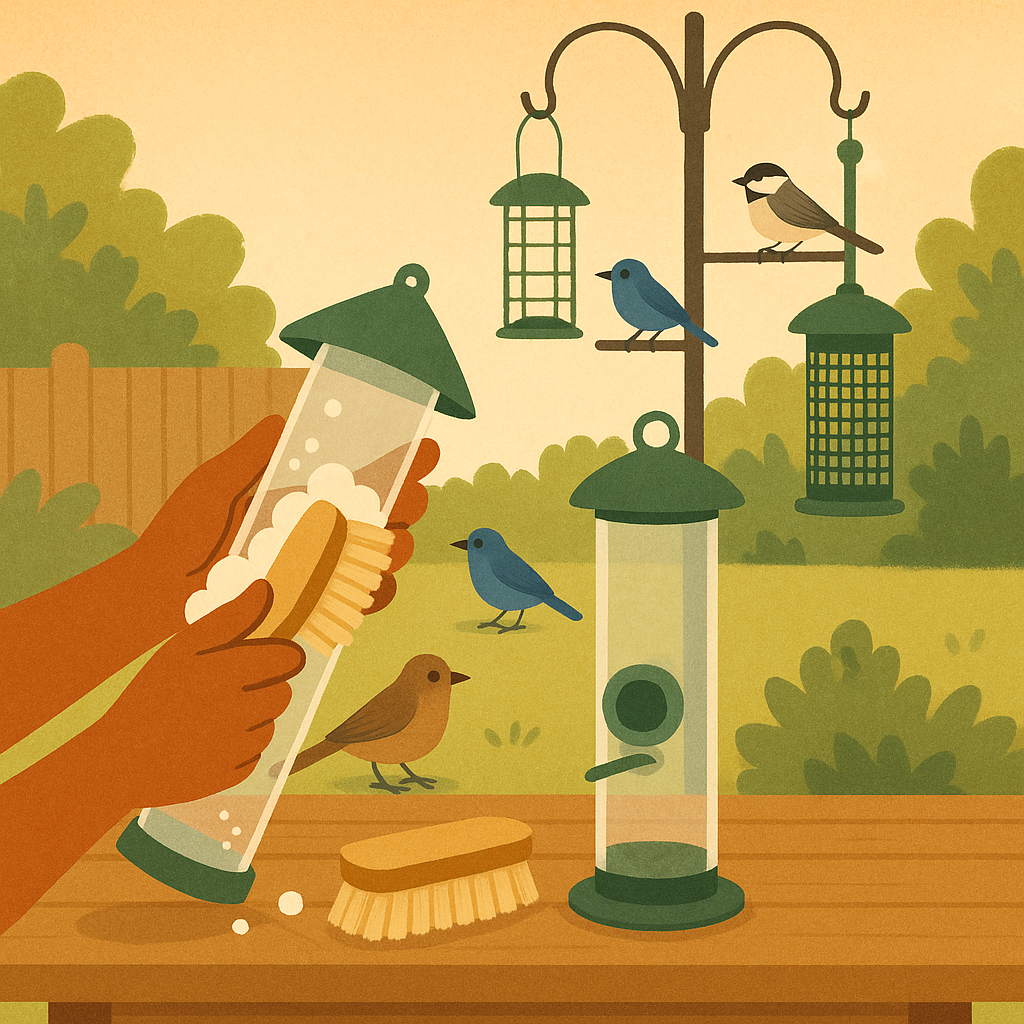
- Scrub every surface with bottle brushes—get into corners, ports, and crevices where mold hides.
- For tube feeders, run a bottle brush up and down the entire length multiple times.
- Rinse thoroughly under running water until no soap remains.
Step 3: Disinfect with Bleach Solution
- Mix bleach solution: 1 part household bleach to 9 parts water (example: ½ cup bleach + 4½ cups water).
- Submerge feeder parts in the solution and soak for 2-3 minutes. This kills bacteria and fungal spores.
- For birdbaths, pour solution into the bath and scrub all surfaces.
- Rinse exhaustively with clean water—bleach residue harms birds. Rinse twice if unsure.
Step 4: Dry Completely
- Air dry on a rack or towel in a clean area. Sunlight helps kill remaining pathogens.
- Critical: Feeders MUST be bone dry before refilling. Moisture + fresh seed = instant mold.
- If you’re in a hurry, towel-dry thoroughly, but air drying is better.
Step 5: Reassemble and Refill
- Put feeders back together.
- Fill with fresh seed or clean nectar.
- Hang in the same spots—birds will remember.
Dishwasher shortcut: Many plastic and some metal feeders are dishwasher-safe. Run them on the hot cycle without soap (or with a tiny amount). Still rinse well afterward and dry completely. Check manufacturer instructions first.
Dealing with Mold and Stubborn Residue
Sometimes soap and bleach aren’t enough. Here’s how to tackle common cleaning challenges:
Black mold in hummingbird feeders: Fill feeder with hot water and add uncooked rice. Shake vigorously—the rice scrubs mold off hard-to-reach areas. Dump, rinse, and follow with bleach soak.
Sticky suet residue: Soak in very hot water with dish soap for 10-15 minutes. The heat melts residual fat. Use a stiff brush to scrub. For extreme cases, add a splash of white vinegar to the hot water.
Algae in birdbaths: Make a paste of baking soda and water. Scrub algae with the paste and an old toothbrush. Rinse thoroughly. For stubborn algae, use the bleach solution and let sit for 5 minutes before scrubbing.
Seed hulls stuck to feeders: Soak in warm water for 5-10 minutes to soften, then scrub. A plastic scraper (like an old credit card) can help remove compacted hulls without scratching the feeder.
Signs Your Feeder Needs Immediate Attention
Between regular cleanings, keep an eye out for these warning signs that mean “clean me now”:
- Visible mold: Black, green, or white fuzzy growth anywhere on the feeder.
- Clumped or wet seed: Seeds sticking together or looking damp.
- Cloudy nectar: Hummingbird nectar should be crystal clear. Cloudiness means fermentation.
- Foul smell: Fresh seed and nectar have no smell. If it smells bad, it is bad.
- Bird droppings on or around feeding ports: Fecal matter spreads disease.
- Insects swarming: Ants and wasps are attracted to spilled nectar and sticky residue.
- Birds avoiding the feeder: If they’re landing and flying away, something’s wrong.
Trust your instincts. If a feeder looks questionable, take it down and clean it. Better safe than sorry.
Comparing Bleach vs. Vinegar for Cleaning
Kills all bacteria, viruses, and fungi
Bleach is a powerful disinfectant that eliminates pathogens responsible for bird diseases like salmonella and aspergillosis.
Recommended by wildlife agencies
National Wildlife Health Center, Audubon, and most state agencies recommend bleach for feeder sanitation.
Fast and effective
2-3 minute soak is sufficient; no need for extended soaking or scrubbing.
Requires thorough rinsing
Bleach residue is toxic to birds. You must rinse exhaustively, which takes time and water.
Strong fumes and harsh on hands
Work in a well-ventilated area and wear gloves. Not pleasant to work with.
Non-toxic and bird-safe
Vinegar is food-safe; even if small amounts remain, they won’t harm birds.
Effective against mold and mineral deposits
Vinegar’s acidity breaks down mold and prevents scale buildup in hummingbird feeders.
Pleasant to work with
No harsh fumes or gloves required. Mild smell dissipates quickly.
Less effective against bacteria
Vinegar doesn’t kill salmonella and other bacterial pathogens as reliably as bleach does.
Not recommended during disease outbreaks
If sick birds are visiting, bleach is the only solution strong enough to break the disease cycle.
Common Questions About Feeder Cleaning
Can I just rinse feeders with water instead of using bleach?
Water alone won’t kill disease-causing bacteria and fungi. For routine cleaning when birds are healthy, hot soapy water is okay between deeper cleanings. But at least every 2-4 weeks, use bleach solution to truly disinfect. If you’ve seen sick birds, bleach is mandatory.
Is it safe to clean feeders in my kitchen sink?
Yes, but take precautions. Bird droppings can carry salmonella that’s harmful to humans. Wear gloves, clean feeders before washing dishes, and disinfect your sink afterward with bleach or antibacterial cleaner. Many people prefer cleaning feeders outside with a hose and bucket.
How do I clean a platform feeder or bird table?
Brush off debris daily. Weekly, scrub with hot soapy water and rinse. Monthly, scrub with bleach solution (1:9), let sit for 2-3 minutes, and rinse thoroughly. Platform feeders get messy fast because birds stand directly on them, so frequent maintenance is critical.
What should I do with old seed from a dirty feeder?
Toss it. Don’t put moldy or wet seed back in a clean feeder, and don’t dump it on the ground for birds—you’ll just spread disease. Compost it if possible (heat from composting kills pathogens), or bag it and trash it.
Final Thoughts: Small Effort, Big Impact
Every Saturday morning, I clean my feeders while my coffee brews. It’s become a ritual: dump old seed, scrub with soap, quick bleach soak, rinse, and let them dry while I enjoy breakfast. By lunchtime, the feeders are back up, and by mid-afternoon, the chickadees and cardinals return.
It takes maybe 20 minutes a week. That’s all. Twenty minutes to ensure that the birds I’ve invited into my yard don’t get sick from my negligence.
You’re not just cleaning feeders—you’re protecting the birds who trust you enough to visit every day. They rely on you for clean, safe food and water. When you maintain your feeding station properly, you’re doing more than enjoying a hobby—you’re being a responsible steward of your backyard wildlife.
Start this weekend. Pick one feeder, clean it thoroughly, and see how good it feels to know you’re doing right by your birds. Then make it a habit. They’ll thank you by coming back, healthy and thriving, season after season.