
Imagine stepping into your backyard in January and seeing cardinals feasting on bright red winterberries, then returning in June to watch goldfinches pulling seeds from swaying coneflowers. This isn’t a fantasy—it’s what happens when you design a garden that works with nature’s rhythms instead of against them.
Most backyards offer birds just one season of interest, maybe two. But a thoughtfully planned four-season bird garden becomes a place where birds want to stay all year, not just pass through. The secret isn’t spending more money—it’s choosing plants that naturally provide what birds need when they need it most.
Let me show you how to create a backyard that welcomes birds through every season, from spring’s first migrants to winter’s hardy residents.
Understanding Seasonal Bird Needs
Birds don’t want the same things in January that they want in June. Their needs shift dramatically as seasons change, and a truly bird-friendly garden anticipates these changes:
Spring: Nesting Materials and Protein
As birds return from migration or emerge from winter survival mode, they’re looking for two things: places to build nests and protein to feed growing chicks. Native plants that attract insects—caterpillars especially—become critical. Dense shrubs and small trees offer nesting sites and shelter.
Summer: Water and Continued Food Supply
When temperatures soar, water becomes as important as food. Birds need reliable sources of clean water for drinking and bathing. Native flowers that bloom through summer heat provide nectar for hummingbirds and seeds for finches. Insect populations peak, feeding warblers, chickadees, and wrens.
Fall: Energy-Rich Seeds and Berries
Migrating birds need to pack on weight fast, and resident birds are preparing for winter. Fall is all about high-calorie foods: seeds from sunflowers and coneflowers, berries from dogwoods and viburnums. Leave seed heads standing instead of deadheading—birds will thank you.
Winter: Shelter and High-Fat Foods
Survival mode kicks in. Birds need dense evergreens for windbreaks and roosting spots, plus persistent berries and seeds that cling to plants through snow and ice. Holly berries, juniper berries, and ornamental grasses provide critical winter calories when little else is available.
Native Plants for Year-Round Interest
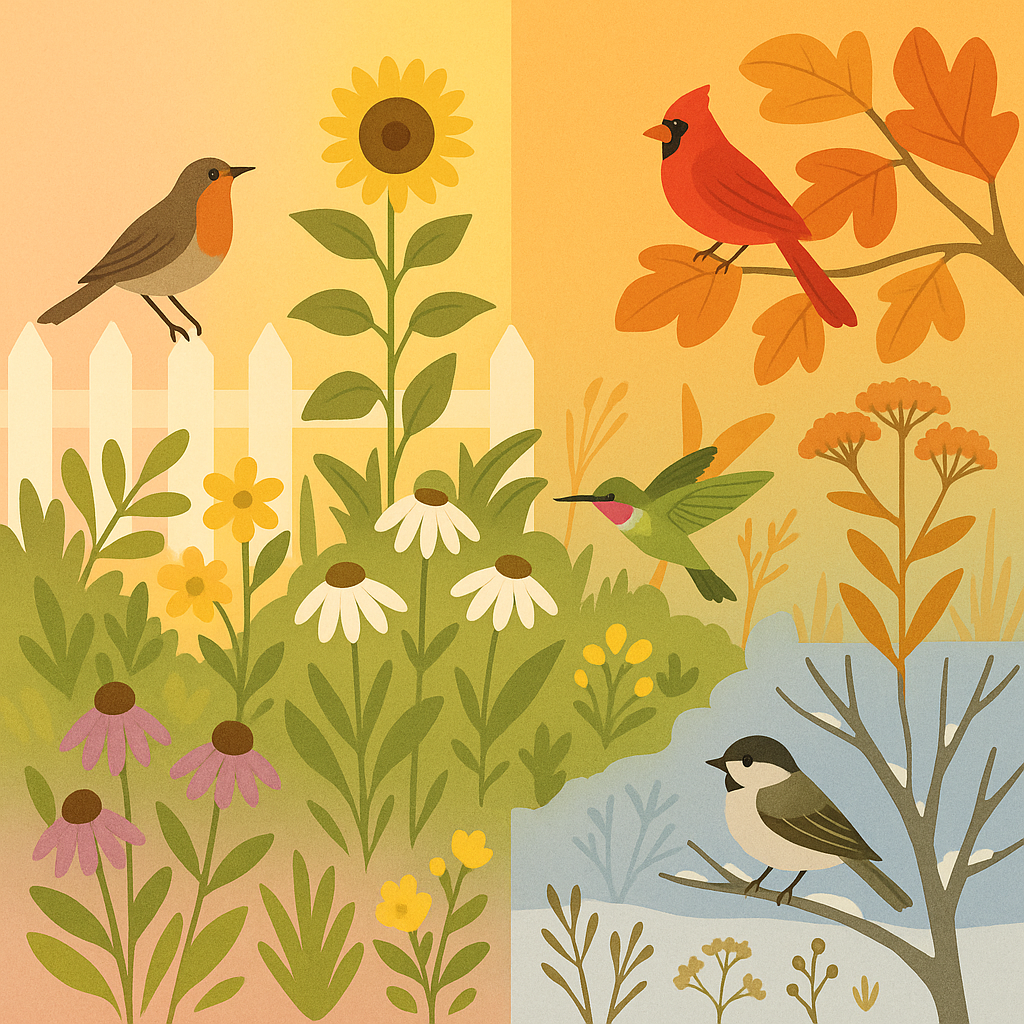
Building a four-season garden starts with choosing plants that offer food or shelter across multiple seasons. Here’s how to think regionally and plan for continuous value:
🌳 Trees: The Foundation (Multi-Season Value)
- Oak species (Quercus): Support 500+ caterpillar species in spring/summer, drop acorns in fall that jays and woodpeckers cache for winter.
- Serviceberry (Amelanchier): Early spring flowers attract insects, June berries feed robins and cedar waxwings, fall color provides beauty.
- Crabapple (Malus species): Spring blooms, small fruits persist into winter when other food is scarce.
- Pine/Spruce (evergreen conifers): Year-round shelter, seeds in cones feed crossbills and siskins, dense branches protect from winter wind.
🌿 Shrubs: Mid-Layer Structure
- Winterberry Holly (Ilex verticillata): Berries ripen in fall, persist through winter when robins and waxwings strip them.
- Elderberry (Sambucus): Summer berries attract 45+ bird species, flowers bring insects for protein.
- Dogwood species (Cornus): Spring flowers, fall berries, winter interest from bare red stems.
- Viburnum species: Berries ripen at different times depending on species—plant multiple types for continuous food.
🌸 Perennials and Grasses: Ground Layer
- Purple Coneflower (Echinacea): Summer nectar, fall seeds for goldfinches, winter seed heads provide food even under snow.
- Black-Eyed Susan (Rudbeckia): Long blooming season, seeds attract finches and sparrows into fall.
- Native Sunflower (Helianthus): Massive seed production in fall, goldfinches and chickadees feast.
- Little Bluestem Grass: Seeds feed sparrows through winter, copper color adds winter beauty.
Spring Plantings: Nesting and Protein Sources
Spring is when the magic begins. Returning birds need two things immediately: safe places to nest and high-protein food for chicks. Baby birds require an insect-based diet, which means your garden’s value in spring is measured by how many caterpillars, beetles, and spiders it supports.
Native trees and shrubs are caterpillar factories. A single oak tree can host over 500 species of caterpillars, while ornamental imports like Bradford pear host almost none. When you plant native, you’re creating a bird nursery.
- For nesting sites: Dense shrubs (viburnum, ninebark, elderberry) and small trees (serviceberry, dogwood, redbud) offer secure spots.
- For protein: Anything that attracts insects—native azaleas, blueberries, wild cherry, and willows are top performers.
- Don’t spray pesticides: Those caterpillars you’re tempted to kill are exactly what chickadees need to raise healthy chicks.
Summer Abundance: Nectar and Water
Summer can be tough on birds. Heat stress is real, and water becomes scarce. Your garden’s summer job is providing reliable water sources and continuous food through the hottest months.
Water is non-negotiable. A simple birdbath with fresh water changed daily will attract more birds than the fanciest feeder. Add a dripper or small fountain to create movement—the sound of splashing water draws birds from surprising distances.
For food, focus on plants that bloom mid-to-late summer when many spring flowers have faded:
- Bee Balm (Monarda): Hummingbird magnet, blooms all summer.
- Cardinal Flower (Lobelia cardinalis): Brilliant red, hummingbirds can’t resist.
- Joe Pye Weed (Eutrochium): Tall, late summer bloomer, attracts butterflies (which become food for birds).
- Trumpet Vine (Campsis radicans): Aggressive grower, but hummingbirds love it.
Resist the urge to deadhead everything. Let flowers go to seed—goldfinches will start feeding on coneflower and sunflower seeds even before they’re fully ripe.
Fall Preparations: Seeds and Berries
Fall is when your four-season garden really proves its worth. As insects decline and flowers fade, birds shift to seeds and berries—and your garden either has them or it doesn’t.
Leave seed heads standing. This is the single most important fall garden task. Those “messy” coneflowers and sunflowers are feeding stations for finches, chickadees, and sparrows. Ornamental grasses provide seeds through autumn and into winter.
Berries ripen on schedule to feed migrants:
- Dogwood berries: High-fat, perfect for migrants building energy reserves.
- Viburnum berries: Different species ripen at different times—plant several for continuous availability.
- Elderberries: Gone quickly when ripe; thrushes and waxwings devour them.
- Virginia Creeper: Dark blue berries feed woodpeckers and bluebirds in fall.
Don’t clean up the garden in October. Dead flower stalks, leaf litter, and brush piles become winter shelter for insects (which birds eat) and for birds themselves.
Winter Essentials: Evergreens and Persistent Berries
Winter is when birds truly appreciate your planning. A four-season garden in January looks brown and dormant to humans, but to birds it’s a survival station packed with resources.
Evergreens are winter lifesavers. They provide:
- Windbreaks: Dense branches block cold winds and create microclimates 10-15°F warmer.
- Roosting sites: Birds huddle in evergreens overnight to conserve body heat.
- Seed-bearing cones: Pine, spruce, and fir cones feed crossbills, siskins, and nuthatches.
Persistent berries that cling to branches through snow become critical:
- Winterberry Holly: Named for a reason—bright red berries last until robins and waxwings strip them in late winter.
- Crabapple: Small fruits soften after frost; bluebirds and cedar waxwings eat them.
- Juniper: Waxy blue berries persist all winter, feeding robins and waxwings.
- Sumac: Fuzzy red seed heads remain edible through winter; bluebirds love them.
Ornamental grasses stand tall through snow, their seed heads still accessible to juncos and sparrows.
Comparing Native vs. Non-Native Plantings
Support 10-50x more caterpillars
Native oaks host 500+ caterpillar species; ornamental imports host fewer than 10. Baby birds need caterpillars.
Fruiting/flowering times match bird needs
Evolved together over millennia—berries ripen exactly when migrants need them most.
Lower maintenance and water needs
Adapted to local climate, rainfall, and soil—less work for you, better for birds.
Support entire food web
Native plants feed insects, which feed birds, which feed hawks—creates healthy ecosystem.
May be harder to find at nurseries
Big box stores favor ornamentals; seek out native plant nurseries or native plant sales.
Initial establishment period
First year they sleep, second year they creep, third year they leap—patience required.
Widely available and affordable
Every garden center carries them; sales and discounts common.
Immediate visual impact
Often bred for showy flowers and fast growth—look great quickly.
Support few or no caterpillars
Birds can’t raise chicks without insect protein; ornamentals fail this critical test.
Often require more water and care
Not adapted to local conditions—need fertilizers, pesticides, and constant attention.
Some become invasive
Bradford pear, burning bush, and others escape cultivation and damage native ecosystems.
Common Questions About Four-Season Bird Gardens
Do I need to remove all my non-native plants?
No. Start by adding natives to what you have. Even 20-30% native plants make a significant difference for birds. As non-natives need replacement, swap them for native alternatives. Gradual transition works better than complete overhaul.
How do I find native plants for my region?
Contact your local Audubon chapter or native plant society—they often host plant sales. The National Wildlife Federation’s native plant finder (nwf.org/nativeplantfinder) lets you search by zip code. Many states have native plant nursery directories online.
Won’t my yard look messy if I leave seed heads standing?
It depends on your perspective. To birds, standing seed heads are grocery stores. If aesthetics matter, compromise: leave seed heads in the backyard where neighbors won’t see, and clean up the front. Or embrace the “wild” look—many people find winter seed heads and grasses beautiful.
Can I create a four-season garden in a small space?
Absolutely. Even a 10×10 foot area can include a small serviceberry tree, a few native shrubs (winterberry, viburnum), and perennials (coneflower, black-eyed susan). Vertical space matters more than square footage—layer plants from ground to canopy.
Final Thoughts: Planting for Generations
Last winter, I watched a flock of cedar waxwings descend on my winterberry holly. They’d arrived precisely when the berries reached peak ripeness—not a week early, not a week late. I didn’t plan that timing; the plants and birds did. They’ve been coordinating this dance for thousands of years.
That’s the beauty of a four-season bird garden: You’re not forcing nature to fit your schedule—you’re joining a rhythm that existed long before you planted your first seed. The oak you plant today will feed caterpillars that feed baby birds for the next 300 years. The winterberry you tuck into a corner will save a robin’s life during a harsh February.
Start small. Add one native tree this year. Plant a few native shrubs next spring. Let your coneflowers go to seed instead of deadheading them. Each change makes your yard a little more welcoming, a little more valuable, to the birds who depend on places like yours.
You’re not just gardening—you’re creating habitat. And that’s something worth doing, one native plant at a time.